


Church of San Gregorio (San Ginesio)
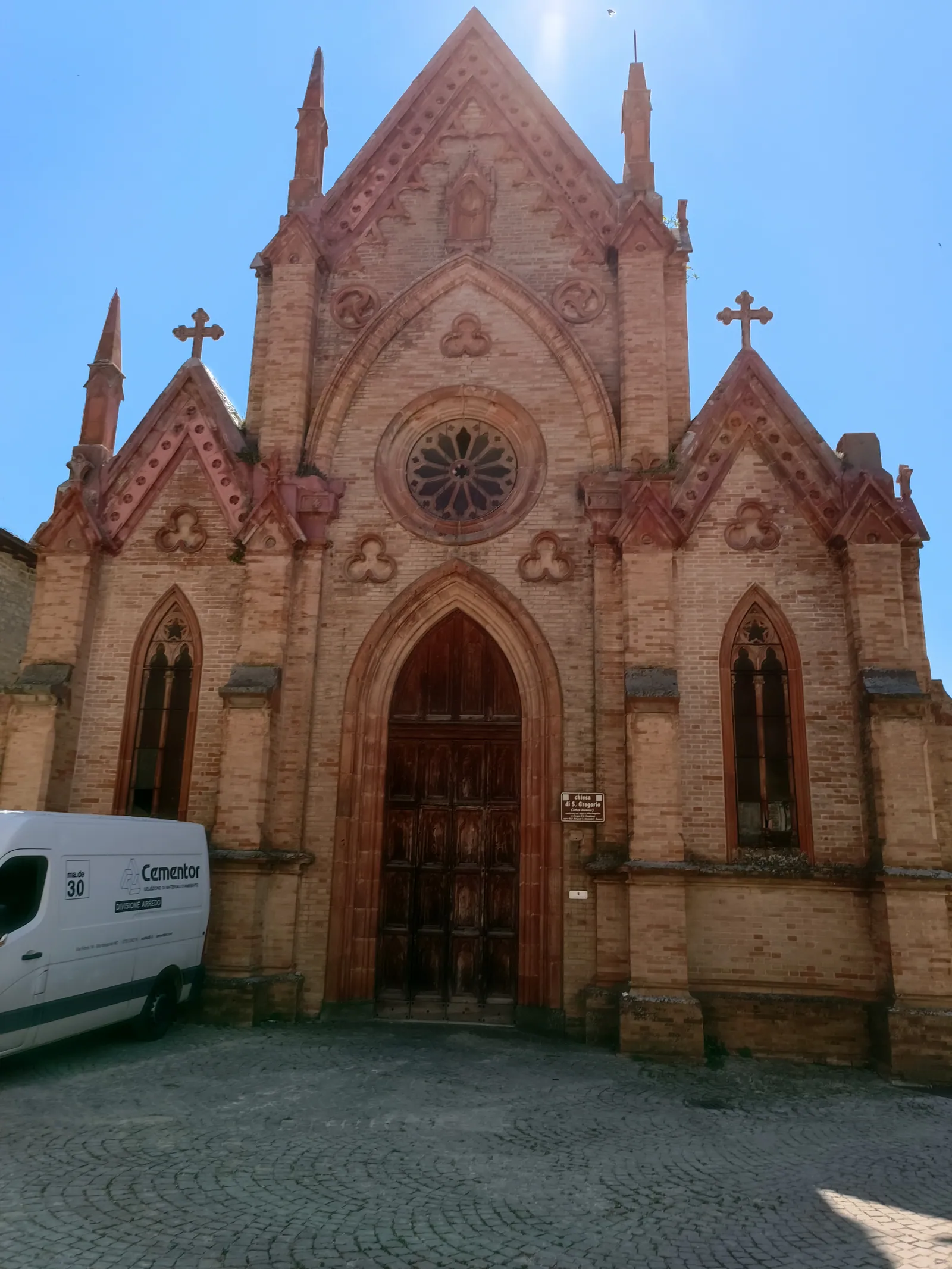
The Church of San Gregorio (Chiesa di San Gregorio), dedicated to St. Gregory the Great, is in San Ginesio, in the province of Macerata. The town is nicknamed "il paese delle 100 chiese" (the town of 100 churches). The building is Neo-Gothic, with three aisles and a terracotta facade. Since the 2016 earthquake it has been unsafe and closed. In February 2025 the repair project was approved.
Church of San Gregorio (San Ginesio)
- Type
- Church
- Municipality
- San Ginesio (MC)
Source: site database, © OpenStreetMap contributors (ODbL).
On the map
Points from the site database. Map © OpenStreetMap contributors · Protomaps.
History of the Church of San Gregorio
The church was first built in 1295. The original building had a plan and heights very different from today's. It was restored several times, in 1599, 1612 and 1766. It was then completely rebuilt in Neo-Gothic style between the late 19th century and 1905.
The 2016 earthquakes damaged the church, as they did much of San Ginesio's heritage. The roof is badly damaged over the central hall, the side aisles, the transept and the apse. The inner facade wall has a crack running from the doorway up to the rose window and beyond. In February 2025 the Conferenza dei servizi (the joint planning board) approved the local repair project.
What to see in the Church of San Gregorio
The most recognizable feature is the terracotta facade, decorated with friezes and pointed windows. The upper part is divided into five panels. After the earthquake it was secured with an imposing metal support structure, which partly blocks the view.
The interior has three aisles. Walls and columns are painted with horizontal black and white bands, which contrast with the vertical thrust of the building. The sacristy is in the apse area. The bell chamber is on the side, set back. The restoration project involves dismantling and cataloging the roof elements decorated with geometric patterns. It also plans to reopen the rose windows, to return the church to its original configuration.
How to visit the Church of San Gregorio
The church has been unsafe since the 2016 earthquake, so the interior cannot be visited. The work approved in 2025 may not yet be finished. Before planning a visit, it is advisable to check the progress of the work and whether it has reopened.
Where the Church of San Gregorio is located
The church stands in the historic center of San Ginesio, near the house of Alberico Gentili. It is not in a central position and is somewhat hidden. The town is at 690 m above sea level, 25 km from Macerata and 60 km from Ancona. It is reached via the Via Picena (SS 78), which links the Macerata area to the Sibillini Mountains.
Around the Church of San Gregorio in San Ginesio
The center of San Ginesio is easy to explore on foot. Not far away, on Piazza Alberico Gentili, stands the Collegiata, the only church in Le Marche in florid Gothic style. The town also has its circuit of walls with Porta Picena, the Ospedale dei Pellegrini (pilgrims' hospital) and the Teatro Storico, opened in 1877 and unsafe since the 2016 earthquake: before visiting, check whether it is open. From the town, known as "il balcone dei Sibillini" (the balcony of the Sibillini), the view reaches the peaks of the National Park. To continue, head to the Abbey of Santa Maria delle Macchie. Other churches in the area are on the page about the churches of the Sibillini Mountains.
Frequently asked questions
Is the Church of San Gregorio in San Ginesio open to the public?
When was the Church of San Gregorio built?
What style is the Church of San Gregorio?
What can be seen near the Church of San Gregorio?
Nearby
What to see nearby
- Giacomo Leopardi Municipal TheaterTheater or auditoriumunder 100 m
- 200 m
- "Scipione Gentili" Museum and Art Gallery (San Ginesio)Museum or art gallery200 m
Where to stay
- 100 m
- 200 m
- 200 m
Where to eat
- Bar Centrale di Incicco Luca, San GinesioBar and café100 m
- Bar Pizzeria Le Logge, San GinesioBar and café100 m
- Pizzeria La Fornarina, San GinesioRestaurant500 m
Straight-line distances.