


Umbria Weather and Climate
Umbria weather changes more with altitude than with distance. Umbria is a landlocked region of central Italy, with no coastline: its landscape alternates hills, wide valleys such as the Valle Umbra and the Tiber valley, Lake Trasimeno to the west and the Apennine mountains along the eastern border with Le Marche. Temperatures drop with altitude: in the Sibillini the valley floor is on average 2-4 °C warmer than the summits, and the mountains of the east are the coldest and snowiest part of the region. This site covers the Sibillini Mountains and their surroundings, so this page describes the climate of the region in general terms and then focuses on the Umbrian side of the range. The forecast on this page shows the coming days.
On the map
Points from the site database. Map © OpenStreetMap contributors · Protomaps.
Umbria weather through the seasons
Spring. From April to June the mountain grasslands turn green again and the snow at altitude gives way to flowers, although winter can return even in April. On the Piani di Castelluccio the flowering starts at the end of May.
Summer. The regional tourism board describes summer as the season for the hills, mountains, lakes and waterfalls, with cooler air in the mountains. It is the time for boat trips on Lake Trasimeno, rafting on the Nera and trekking in the parks, from Mount Subasio and Mount Cucco to the Sibillini. In the valleys summer can be hot: in Norcia, at about 600 m, July and August reach average highs of 30 °C.
Autumn. September and October are the months of the grape harvest, and between October and November comes the olive harvest. In October the saffron flowers are picked around Cascia and Città della Pieve. The woods change color from Mount Subasio to the Sibillini, and Lake Trasimeno becomes a stopover for migrating birds.
Winter. In the mountains winter is cold and often snowy. In Norcia, between 2010 and 2020, January had average lows of -2 °C and highs of 8 °C.
Best time to visit Umbria
The best time to visit Umbria depends on the trip. For a mountain town such as Cascia, spring and autumn are generally the most balanced seasons, with fewer people and clear light; summer is the season for lakes, rivers and festivals. For the Castelluccio flowering, the period runs from late May to July, with the peak usually in the last week of June. For hiking at altitude, July and August are the high season, with mountain huts open and trails free of snow. The colors of the beech woods appear between September and November. The page on the best time to visit the Sibillini Mountains goes into detail season by season.
Umbria snow and the Apennines
Umbria snow falls mainly on the Apennines in the east of the region. The daily bulletins of the regional Centro Funzionale often describe precipitation that turns to snow on the Apennine peaks, with a snow line that can drop quickly during cold spells, for example to 600-800 meters. In Umbria, above 500 m, snowfall is fairly frequent when cold air arrives, and it is sometimes heavy. On January 23, 2023 Cascia, Norcia, Preci and the other villages of the Valnerina woke up under about 40 cm of snow.
In the Sibillini, snow falls mainly from November to April, peaking between January and February. Above 600 m, average lows drop below freezing in January and February; above 1,000 m this also happens in December and March. The page on Sibillini Mountains snow explains how to read the snow line and the conditions on the slopes.
Weather in Norcia, Cascia and Castelluccio
The towns of the Umbrian Sibillini have quite different climates. Norcia weather is that of a mountain town: cold winters and summers that can be very hot. Cascia weather is similar, and in winter Cascia is among the coldest towns in the region: during one cold spell, -14.3 °C was measured there.
Higher up, Castelluccio weather is harsh. The village stands at 1,452 meters above the Pian Grande. In the 1961-1990 average, January has a mean temperature of -2.9 °C and July +16.0 °C. The basin is known for strong wind, with gusts easily above 100 km/h during storms, and for thick fog. In winter, snow and ice can close mountain roads for hours or days.
Weather in the Sibillini as a whole
For forecasts by town and altitude across the whole range, on both the Umbrian and the Marche side, see the page on Sibillini Mountains weather. Before a winter outing on snow, the avalanche bulletin should also be read. For the rest of the region, the things to do in Umbria page gives an overview of the places to visit in each season.
Villages in the region
4 results
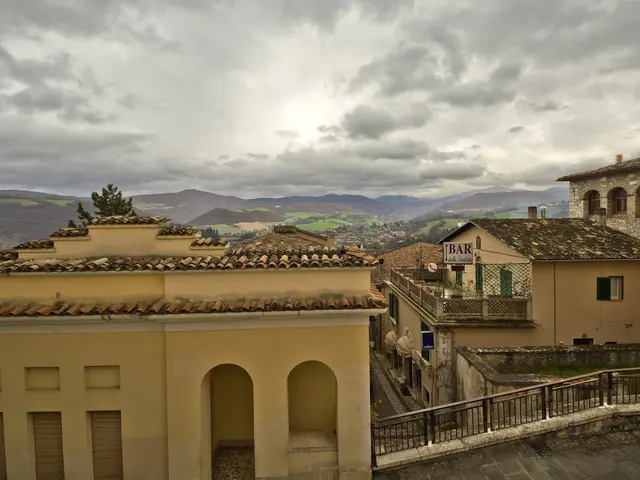 Cascia, ItalyUmbria · Perugia
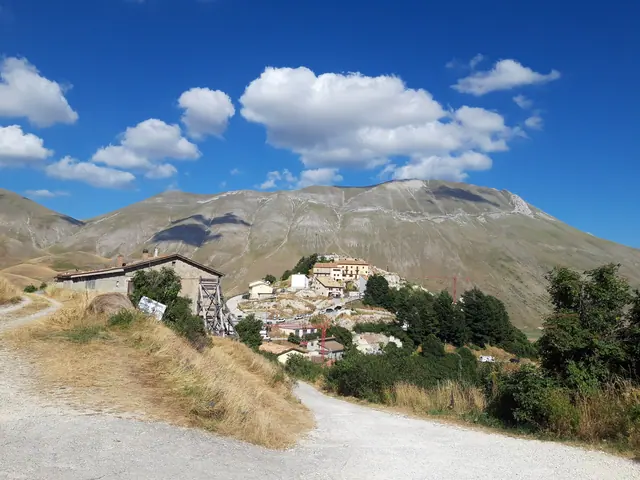 Castelluccio di NorciaUmbria · Perugia
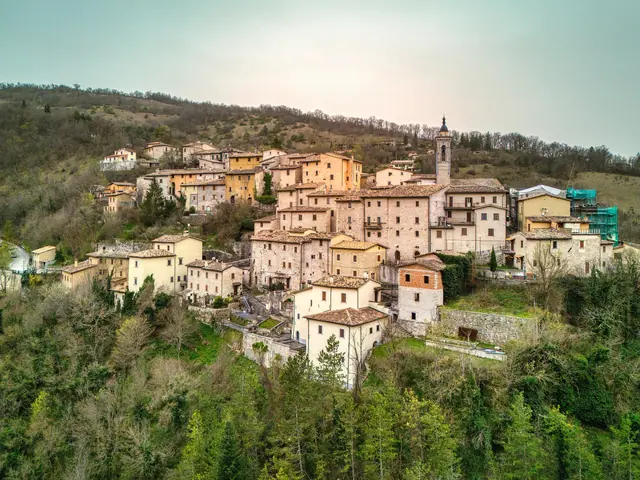 PreciUmbria · Perugia
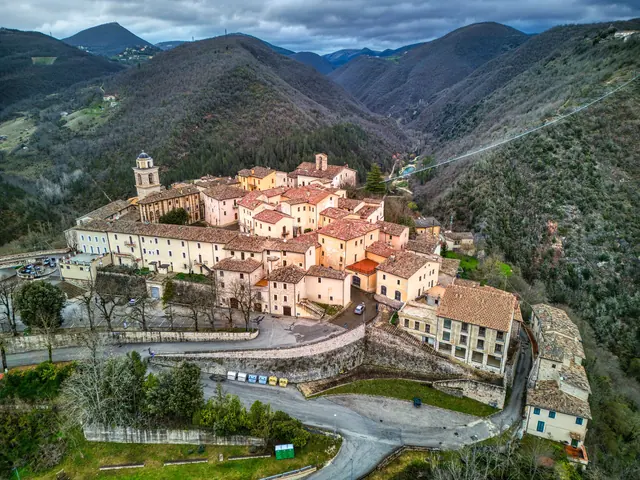 SellanoUmbria · Perugia
No results with these filters.