


Things to Do in Umbria
Things to do in Umbria range from art towns and hill villages to lakes, river valleys and high mountain plains. Umbria is a region of central Italy with Perugia as its capital, divided into the provinces of Perugia and Terni. It is the only Italian region with neither a coastline nor a border with another country, and it is often called the green heart of Italy. This site covers the Sibillini Mountains and their surroundings, which take in the eastern edge of Umbria around Norcia and Cascia. This page gives a picture of the whole region and points to the detailed pages for the Umbrian side of the Sibillini.
On the map
Points from the site database. Map © OpenStreetMap contributors · Protomaps.
Umbria villages and art towns
The best-known Umbria villages and towns sit on hills above the Valle Umbra and the Tiber valley. In Perugia, Corso Vannucci leads to Piazza IV Novembre, with the cathedral, the Fontana Maggiore and the Palazzo dei Priori, home of the National Gallery of Umbria. In Assisi the Basilica of Saint Francis is made of two churches built one on top of the other, with frescoes by Giotto, Cimabue and Simone Martini. Spoleto has the Ponte delle Torri, both bridge and aqueduct, and the Rocca Albornoziana. Orvieto is known for its Gothic cathedral and for St. Patrick's Well, with its double-helix staircase. Montefalco, called the "balcony of Umbria", looks over the valley toward Perugia and Spoleto, and Gubbio has the Palazzo dei Consoli and Piazza Grande.
In the southeast of the region the landscape turns mountainous. Norcia, at about 600 meters, is the birthplace of Saint Benedict and the home of norcineria, the craft of curing pork. Cascia is the town of Saint Rita, born in 1381 at Roccaporena. Preci, at 596 meters, is linked to an old school of surgery, while Sellano draws visitors with a Tibetan bridge hanging 175 m above the Vigi valley. The page on villages of the Sibillini Mountains covers these places on both the Umbrian and the Marche side.
Umbria lakes, rivers and waterfalls
The main Umbria lakes are two. Lake Trasimeno (Lago Trasimeno), on the border with Tuscany, is the fourth-largest lake in Italy. Its regional park covers just over 13,000 hectares, takes in five municipalities and three islands, and was established in 1995. Ferries reach Isola Maggiore and Isola Polvese, and the Trasimeno Trail runs for 160 km in seven stages for walkers and cyclists. Lake Piediluco, a few kilometers from Terni, is the second-largest natural lake in the region. It lies at 375 meters, reaches a maximum depth of about 19 meters and is a leading venue for rowing.
Water also shapes the Valnerina, the valley of the Nera river. The Valnerina holds the Marmore Falls (Cascata delle Marmore), a work of Roman engineering, and villages such as Scheggino, Vallo di Nera and Ferentillo. In summer the Nera is used for rafting, hydrospeed and canyoning. The only natural high-altitude lake of the Sibillini, Lago di Pilato, lies on the Marche side, just beyond the regional border: the page on lakes of the Sibillini Mountains explains how to reach it.
Umbria itinerary and road trip ideas
A one-week Umbria itinerary proposed by the regional tourism board gives a day each to Perugia, Assisi, Spoleto and Orvieto, Montefalco with Bevagna or Trevi, the Valnerina, Lake Trasimeno and Gubbio. Assisi and Spoleto are about 30 minutes apart by car, so they can be paired in a single day.
An Umbria road trip can then continue east into the mountains. Norcia is 96 km from Perugia. From there a scenic road climbs to Castelluccio di Norcia, at 1,452 meters, facing the Cima del Redentore (2,448 m), the highest peak in Umbria. For a longer drive, the Grande Via del Parco loops for more than 190 km around the range: it is described on the Sibillini Mountains road trip page.
Umbria wildflowers on the Castelluccio plains
The best-known Umbria wildflowers are those of the Piani di Castelluccio. Between late May and mid-July the Pian Grande changes color week by week. The colors come from lentil fields mixed with poppies, cornflowers and mustard. The Castelluccio flowering page explains when the colors are usually most intense and how to visit the plain without damaging the crops.
Umbria with kids and with a dog
For Umbria with kids, the regional tourism board suggests Lake Trasimeno, with boat trips to Isola Maggiore, which can be explored on foot, and lakeside walks. In the mountains, the walks on the Pian Grande and other short routes are collected on the page about the Sibillini Mountains with kids.
Umbria with a dog is possible in much of the countryside, but national parks have their own rules. In the Sibillini National Park dogs must be on a leash, and some protected areas are closed to them except on official routes. The details are on the page about the Sibillini Mountains with a dog.
Umbria tours and where to go next
Umbria tours, guided visits and packages for the whole region are listed by the official tourism website, Umbriatourism. For the Umbrian side of the Sibillini, this site has pages on the Umbria map, where to stay in Umbria, Umbria food, Umbria weather and walks in Umbria.
Villages in the region
4 results
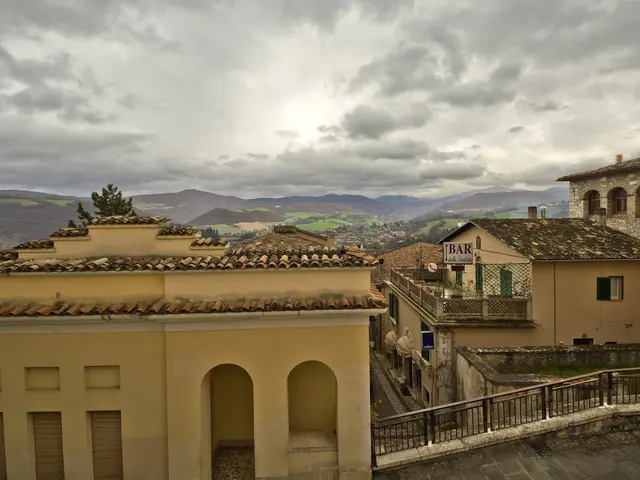 Cascia, ItalyUmbria · Perugia
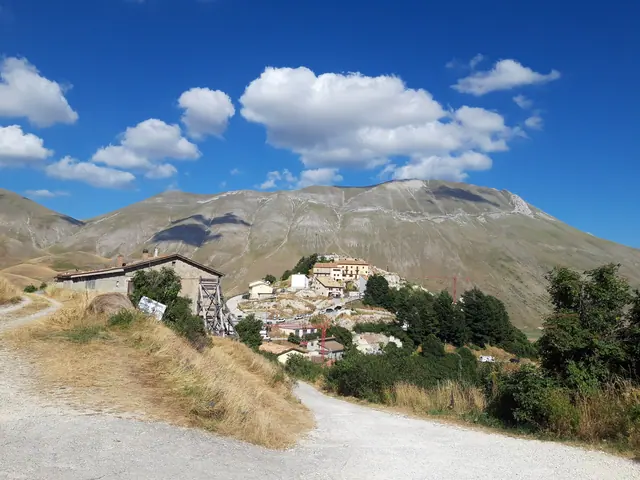 Castelluccio di NorciaUmbria · Perugia
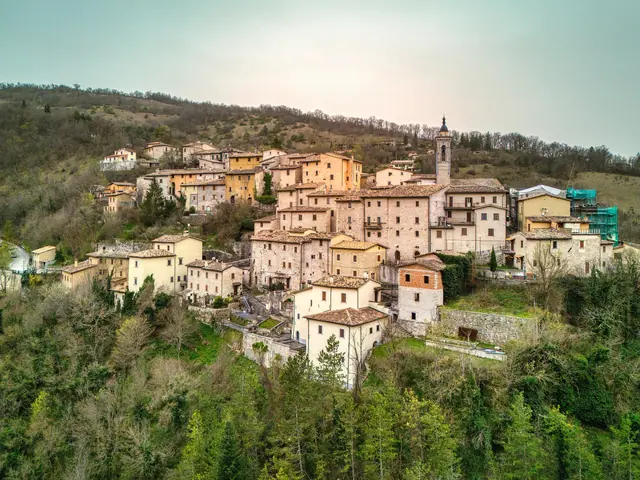 PreciUmbria · Perugia
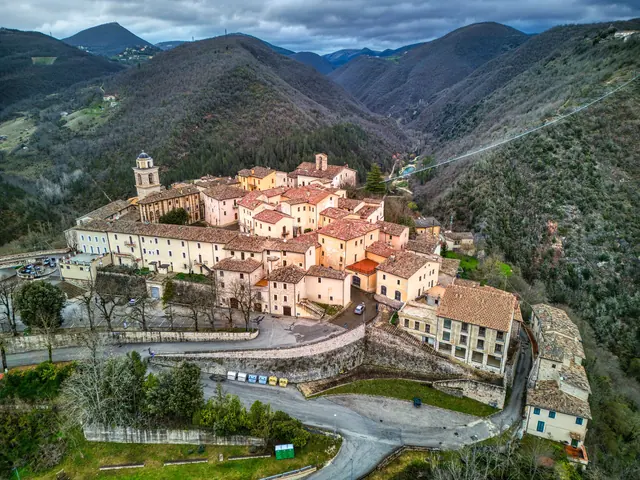 SellanoUmbria · Perugia
No results with these filters.