


Cascia, Italy: things to see and do
At a glance
- Municipality
- Cascia
- Province
- Perugia
- Region
- Umbria
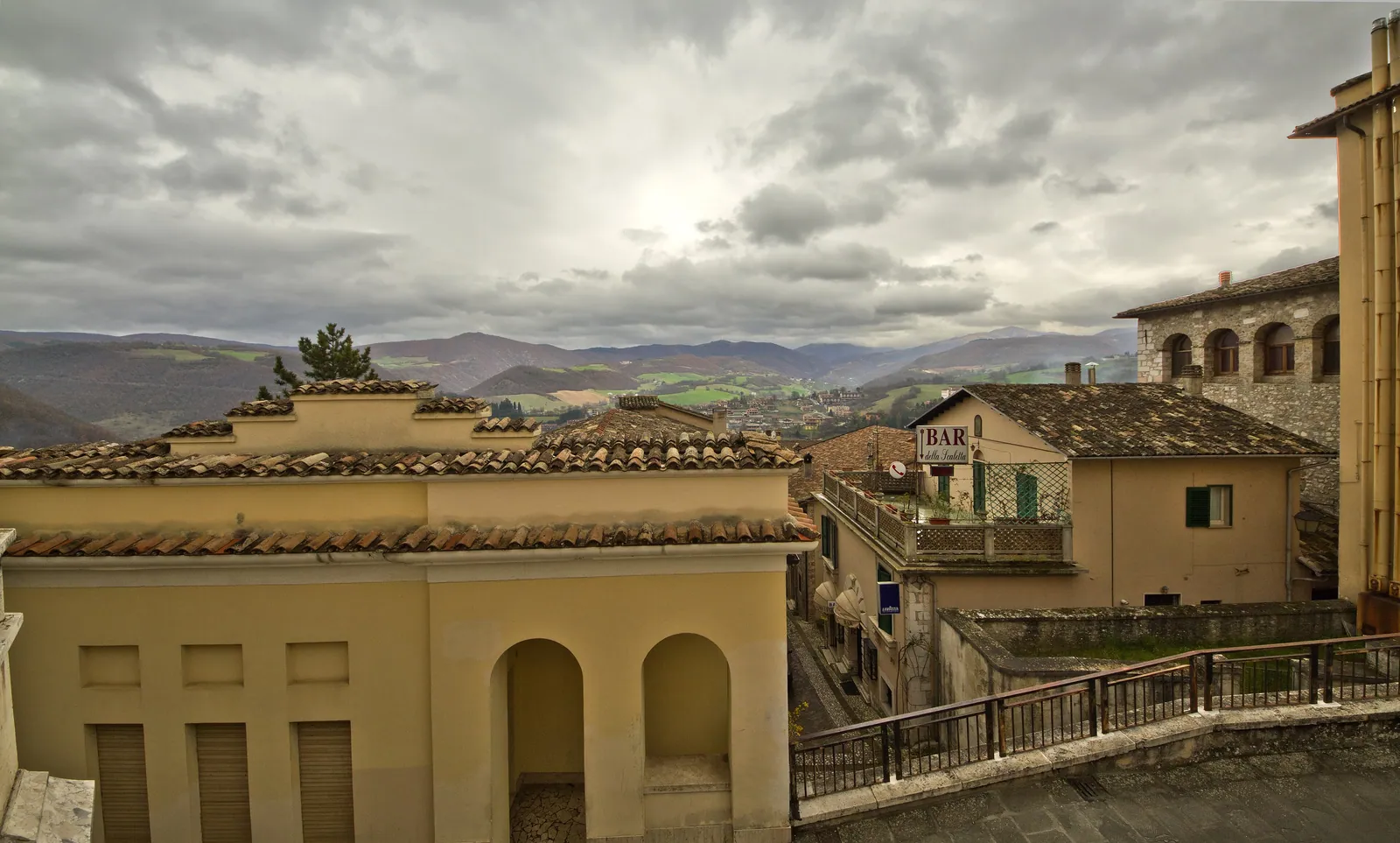
Cascia is the town of Saint Rita: a municipality in the Valnerina, in the province of Perugia, with its center at 653 meters above sea level, on the border with Lazio. At the entrance to the town stands a large statue of the saint with her symbols: bees, roses and the thorn. Higher up is the sanctuary that holds her body. Rita lived for about forty years in the Augustinian monastery of Santa Maria Maddalena and died here. According to the chronology supported by Pope Leo XIII, who canonized her in 1900, she was born in 1381 at Roccaporena and died in 1457. Roccaporena is a hamlet a few kilometers from Cascia, where visitors still climb the Scoglio, the rock on which the saint used to pray.
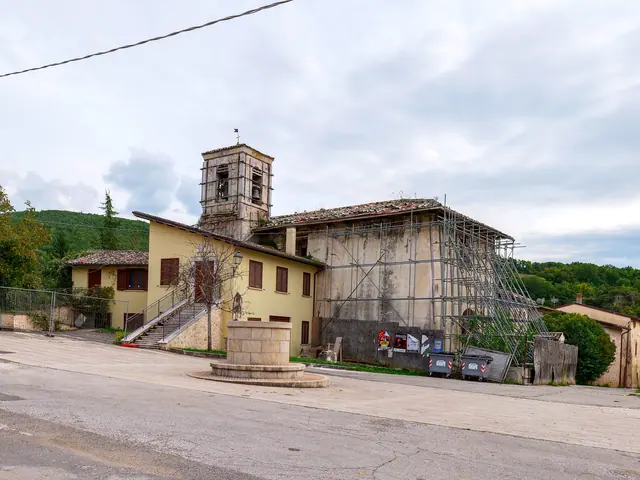
The history of Cascia, however, is older than the devotion. On the left bank of the Corno river, tombs carved into the rock dating from the 2nd century BC have been found. In the Middle Ages Cascia was an independent commune and came to control more than forty castles in the surrounding area. In 1596 Pope Clement VIII raised it to the rank of city. Today the town still bears the marks of the 2016 earthquakes, but reconstruction is moving forward: in 2025 the church of San Francesco and Palazzo Frenfanelli, the historic seat of the municipality, reopened. Other buildings are still under restoration. Many visitors also come for the produce of the land, above all saffron.
On the map
Points from the site database. Map © OpenStreetMap contributors · Protomaps.
What to see in Cascia
The starting point is the Sanctuary of Santa Rita in Cascia. The basilica was built between 1937 and 1947 to welcome the pilgrims who arrived after the canonization. It was consecrated in 1947 and received the title of basilica in 1955. The saint's body lies in a crystal and silver urn from 1930, in a Neo-Byzantine chapel, dressed in the Augustinian habit sewn by the nuns. The lower basilica holds the tomb of Mother Maria Teresa Fasce, abbess of the monastery, beatified in 1997 by Pope John Paul II.
Next to the basilica is the Monastery of Santa Rita. The monastery preserves the cell where Rita prayed and died. It also keeps the "cassa solenne", the wooden sarcophagus from 1457 that bears the oldest image of the saint and held her body for centuries. The monastery also has a rose garden recalling the miracle of the roses. In the cloister grows a 19th-century vine, linked to the story of the dry vine that Rita watered out of obedience until it bore fruit again.
On Piazza Garibaldi, the main square, stands the church of San Francesco. The present building was begun in 1339 and completed in 1424, on the site of a 13th-century church. Inside are many paintings, including an "Ascension" by Niccolò Pomarancio. The church had been unsafe since the earthquake of August 24, 2016, which made the bell tower unstable, and reopened in July 2025.
The church of Santa Maria della Visitazione is first mentioned in a document from 856. The oldest parts of the present building date back to a 12th-century Romanesque parish church. This is where the font in which Saint Rita was baptized is found. The church has been closed since October 30, 2016, and in September 2024 work began on its restoration.
Since 1997 the civic museum has been housed in Palazzo Santi in Cascia, restored after the 1979 earthquake. It gathers works from the churches of the area, divided into four sections:
- the grave goods from the tomb of Maltignano, from the 2nd century BC;
- fragments of temples and of a Roman forum from Villa San Silvestro;
- wooden sculptures;
- a picture gallery with paintings from the 15th to the 18th century.
The former church of Sant'Antonio Abate, now a museum, was built in the 15th century and remodeled in the Baroque period. It holds a cycle of canvases on the life of the saint. The historic center is also home to the church of Sant'Agostino and the remains of the Rocca (the fortress), and the surrounding area to the hermitage of the Madonna della Stella. Before visiting, it is best to check whether they are open, as opening times can change because of reconstruction work.
On the Chiavano plateau, in the hamlet of Villa San Silvestro, at 991 meters, are the remains of a Roman temple. More on the individual sites is on the page things to do in Cascia.
Nature and trails near Cascia
The best-known destination is Roccaporena, about 6 km from Cascia and at 707 meters above sea level. Rita was married in the small church of San Montano. The house where she lived with her husband and children is now a chapel. Above the village, the Scoglio Sacro (Sacred Rock) rises 120 meters. The top is reached by a path of about 300 steps, along the Stations of the Cross. At the summit, inside a small chapel, is the rock with two hollows identified as the marks of the saint's knees and elbows. A little lower down is a small fountain called "acqua di Rita" (Rita's water). From the top there is a view of the village, the sanctuary and the whole valley.
The Sentiero di Santa Rita (Saint Rita's Trail) links Cascia to Roccaporena. It runs mostly through woodland, along the Corno river. It is marked in yellow, with the symbol of a cross crossed with the letter R. The earthquake and bad weather damaged it, and the Region has allocated funds to make it safe again. Before setting out, it is best to check the condition of the trail and any closed sections.
For climbers there is a dedicated page on the Falesie Roccaporena, the climbing crags near Cascia. The Cascia area also rises above a thousand meters: Civita, the hamlet where roveja is grown, is at 1,171 meters. To the south, the elevation increases toward the Leonessa plateau. As for any outing in the mountains, it is best to check the weather and wear suitable footwear before setting out.
Where to stay in Cascia
In Cascia, hospitality has always been tied to pilgrims: the sanctuary itself includes some facilities to host them. The center is convenient for seeing the places of Saint Rita on foot and then moving on to Roccaporena and the hamlets. The feast of the saint, the town's patron, is celebrated on 22 May. Anyone planning to come during those days would do well to book in advance. The full list of accommodations is on the page where to stay in Cascia.
Where to eat in Cascia
Bars and restaurants line Piazza Garibaldi, a few steps from the church of San Francesco. These are the typical dishes of the local cuisine:
- crostini alla ghiotta, with prosciutto and chicken livers;
- torta al testo, a flatbread named after the tool used to cook it;
- spelt and lentil soups;
- strascinati di Cascia, scraps of egg pasta often dressed with truffle;
- farrecchiata, made with roveja flour;
- rocciata, the festive dessert.
Cascia saffron is widely used in restaurants, also outside the area. Addresses are on the page Cascia restaurants.
Local products of Cascia
The signature product is saffron, once called "zafferame" locally. In the past Cascia had one of the most important markets for this spice, and much of its economy was based on this trade. A report by Piccolpasso from 1565 already describes it. Cultivation resumed in 2000 thanks to more than twenty farmers. In September 2003 the producers' association Zafferano di Cascia – Zafferano purissimo dell'Umbria was founded. Since that same year Cascia saffron has been listed among the Traditional Agri-Food Products of Umbria. It is sold as threads (stigmas), under a single registered trademark. By medieval tradition, the minimum price is set every year on 25 November, the feast of Saint Catherine of Alexandria. Between late October and early November, the historic center hosts the Mostra mercato dello zafferano (saffron fair), with visits to the fields and tastings.
The other typical product is the roveja of Civita di Cascia, a Slow Food Presidium. It is an ancient legume, similar to a small wild pea. In the Cascia area it is grown between 600 and 1,200 meters: it is sown in March and harvested between late July and early August. The local pantry is completed by spelt, lentils, cicerchia (grass pea), Valnerina black truffle, meats and cured meats. Shops and producers are listed on the page Cascia local products and food shops.
Weather and how to get to Cascia
Cascia is a low-mountain town: the town is at 653 meters, but its hamlets rise above a thousand meters. Conditions can therefore vary a lot between the center and the plateau. It can be visited all year round, as the sanctuary draws pilgrims in every season. Before setting out, especially in winter, it is best to check the weather and road conditions.
Getting there by car:
- from Rome: take the Autostrada del Sole to the Orte exit, then head toward Terni and go up the Valnerina on the SS 209 to the SS 320 for Cascia. Alternatively, take the Via Salaria to Rieti and continue toward Leonessa: by this route Cascia is about 140 km from Rome.
- from Perugia: about 108 km, roughly 1 hour and 45 minutes.
- from Spoleto: about 53 km of road, in less than an hour.
- from Norcia: about 21 km, on the road to Rieti.
Getting there by train and plane: the nearest station is Spoleto, on the Rome-Ancona line. From there, continue by bus or taxi. Another option is the train to Terni and then the bus to Cascia. The nearest airport is Umbria Airport in Perugia (Sant'Egidio). For international flights there is Rome Fiumicino.
In this section
5 results
 Things to Do in Cascia10 places
 Where to Stay in Cascia54 places to stay
 Cascia restaurants28 places
 Cascia local products and shops9 places
- Roccaporena, CasciaUmbria · Perugia
No results with these filters.