


Things to Do in Cascia
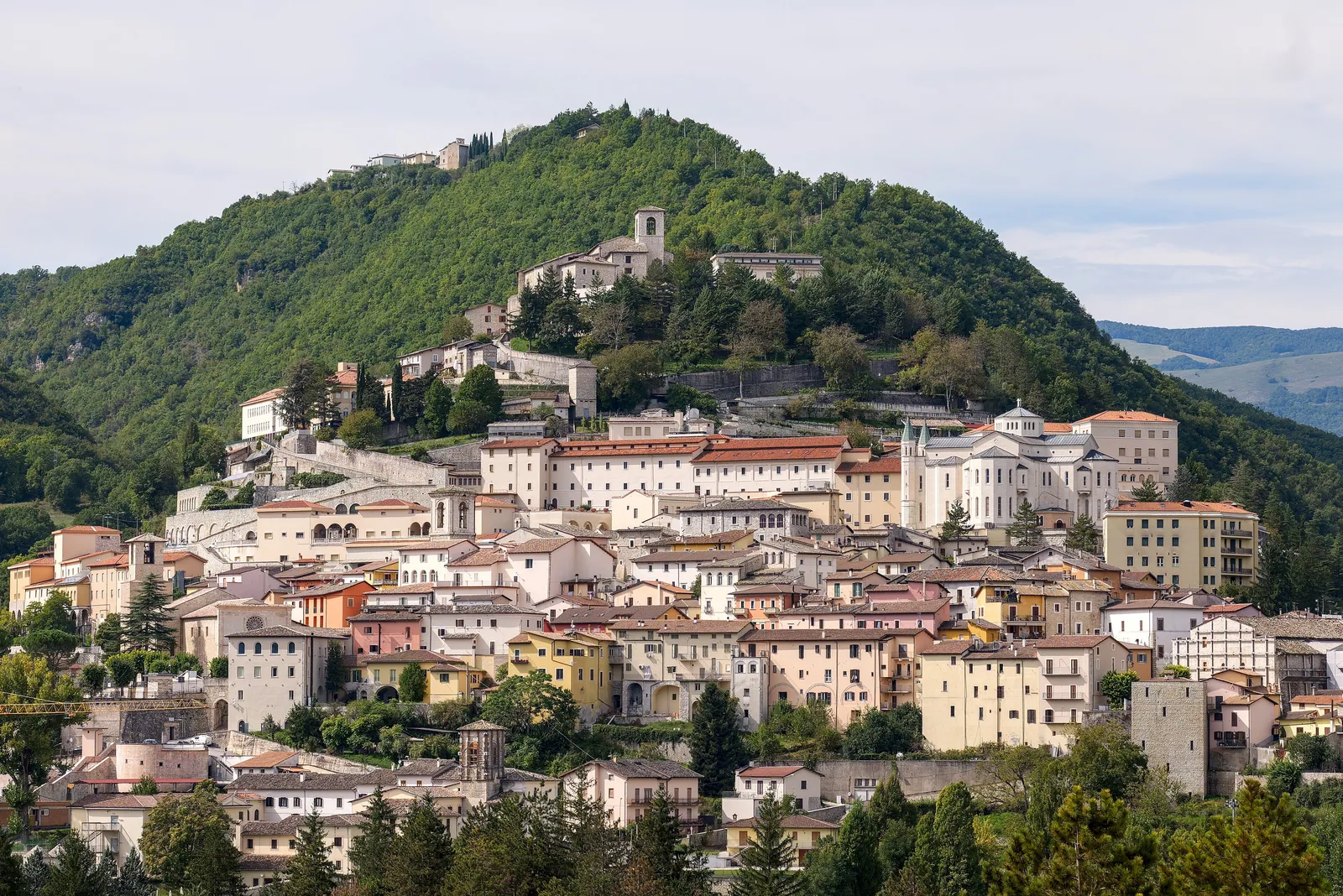
Cascia, in the Valnerina, is the town of Saint Rita, and almost everything there is to see and do in Cascia revolves around her story. The Greek-cross basilica holds the saint's sarcophagus, the monastery is where she lived for about forty years, and about 6 km from the center, at Roccaporena, are the garden of the miracle and the house where Rita lived with her husband and children. The historic center also offers medieval churches, a civic museum housed in a 17th-century palazzo, and viewpoints over the Valnerina and the Chiavano and Avendita plateaus.
The places
10 results
 Birthplace of Santa Rita (Cascia)Museum or art gallery · Cascia
 Chiavano Vecchio (Cascia)Guide
 Church of San Montano (Cascia)Church · Cascia
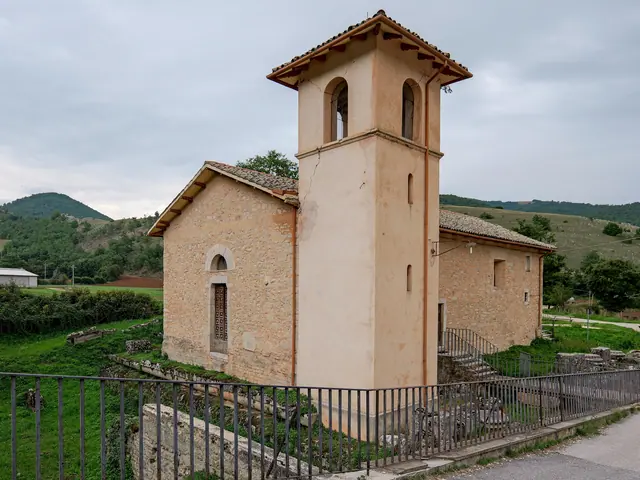 Church of San Silvestro (Cascia)Church · Cascia
- Theater or auditoriumIl Mulinaccio amphitheater on the Sentiero di Santa Rita (Cascia)Theater or auditorium · Cascia
- Museum or art galleryPalazzo Santi (Cascia)Museum or art gallery · Cascia
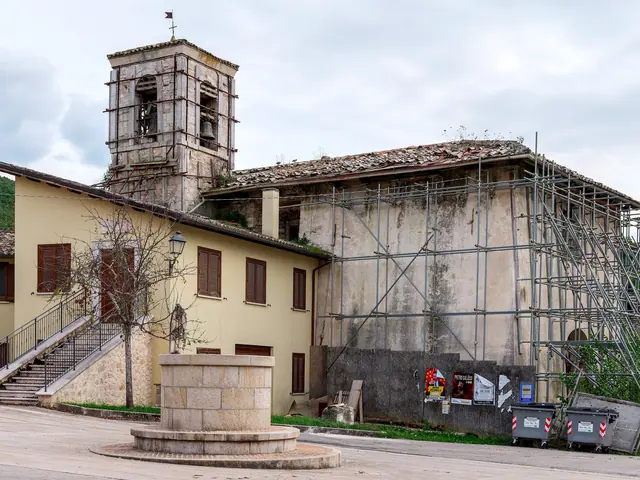 San Procolo in Cascia (Avendita)Church · Cascia
- Ruins or archaeological siteSanctuary of Madonna della Neve (Cascia)Ruins or archaeological site · Cascia
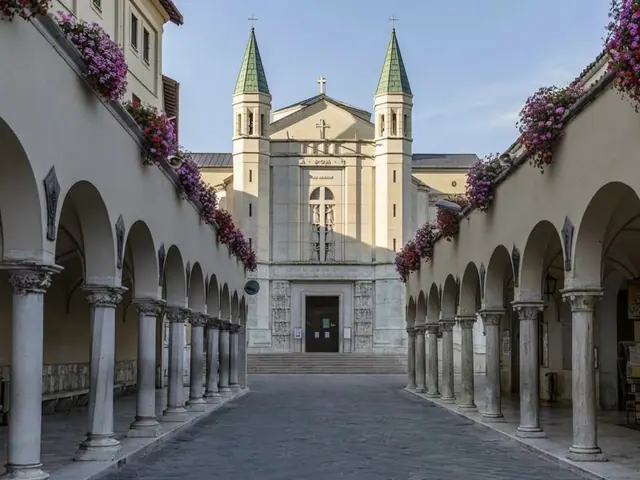 Sanctuary of Santa Rita in CasciaGuide
- PeakMonte PizzoPeak · Cascia
No results with these filters.
On the map
Points from the site database. Map © OpenStreetMap contributors · Protomaps.
Things to do in Cascia: the map
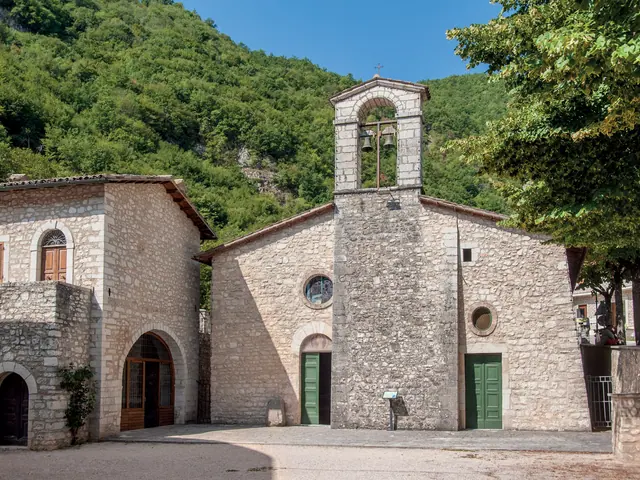
The sights fall into two groups. The historic center of Cascia is home to the Basilica and Monastery of Santa Rita, the churches of San Francesco, Sant'Agostino and Sant'Antonio Abate, the collegiate church of Santa Maria and Palazzo Santi, seat of the civic museum. Roccaporena, a hamlet of the municipality, has the places linked to the saint's childhood and family life: her birthplace, the garden of the miracle, her marital home, the Lazzaretto, the Scoglio della Preghiera (Rock of Prayer) and the church of San Montano.
A vehicle is needed to travel between the two groups. Roccaporena is about 6 km from Cascia. The map above shows the location of each site.
Things to do in Cascia: the main sights
Basilica di Santa Rita. The church that holds the saint's body was consecrated in 1947 and raised to a basilica in 1955. It was designed by the engineer Spirito Maria Chiappetta. The building has a Greek-cross plan with four apses, and one of them opens onto the chapel of Santa Rita. The chapel is closed off by a large wrought-iron grille. On a marble base rests the crystal and silver urn, from 1930, containing the saint's body. On either side of the portal, two pillars are divided into ten panels carved with the main episodes of Rita's life, accompanied by inscriptions in the vernacular. The lower basilica was created in the foundations, a simple space intended for contemplation, where the tomb of Mother Maria Teresa Fasce is found. For opening times and access there is a dedicated page: visiting the Sanctuary of Santa Rita in Cascia: hours and how to get there.
Monastero di Santa Rita. Next to the basilica, Augustinian cloistered nuns still live. The visit includes the courtyard with the well and the vine, the wall with the holes of mason bees, the old choir with 16th-century frescoes and the oratory where Rita received the stigma. Leaving the cell, visitors see the rose garden planted in the 19th century in memory of the miracle of the rose and the figs. The visit takes about an hour, enough time to see the rooms at a relaxed pace.
Churches of the historic center. The church of San Francesco was rebuilt between 1339 and 1424 and preserves Romanesque, Gothic and Baroque elements. The rose window and the pointed-arch portal stand out. Sant'Agostino holds frescoes of the Umbrian and Perugian school and reflects the spread of the Augustinian tradition in the town. The collegiate church of Santa Maria, today the church of Santa Maria della Visitazione, is first mentioned in a document from 856; the oldest parts of the present building belong to a 12th-century Romanesque parish church, later remodeled several times. It holds a wooden crucifix from 1400. Before including these churches in the itinerary, it is worth reading the section on tips: after the 2016 earthquake many of them remained closed for a long time.
Civic museum of Palazzo Santi. The Museo civico di Cascia in Palazzo Santi opened in 1997 in the 17th-century Palazzo Santi, now owned by the municipality. On the ground floor is a small collection of archaeological material dating from the 8th century BC. Among these, the finds from Villa San Silvestro stand out, site of an important temple and village. The section on the Tomb of Maltignano preserves the rich grave goods of a noble family from the 2nd century BC. The museum also displays sculptures, including the Madonna di Poggioprimocaso, known as the Madonna Rosa. This statue is a monumental example of local production of polychrome wooden Madonnas. The picture gallery houses canvases by Lazzaro Baldi and Domenico Corvi. A small room is dedicated to Cardinal Fausto Poli, secretary to Pope Urban VIII and a native of the town. The museum is part of an urban museum network that also includes the church of Sant'Antonio Abate, the church of San Francesco, the monastic complex of Santa Margherita and Palazzo Carli.
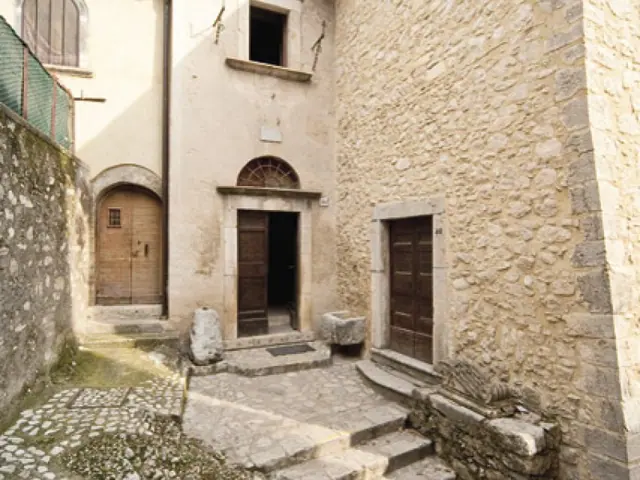
Roccaporena. The village lies at the foot of Monte Rucino, in the municipality of Cascia. More details are on the page Roccaporena, the village of Saint Rita near Cascia. The birthplace has two floors and a portal and window with old frames. On the upper floor are the hearth, the room where Rita is said to have been born, and the pellicciotto kept in a silver case. This is the leather mantle women wore in labor to ease childbirth. The house has an uncertain history: the records of the beatification process give no reliable information about the birthplace. Cardinal Fausto Poli had the marital home turned into a chapel, a sign that the birthplace no longer existed, perhaps destroyed by the 1599 earthquake. The marital home contains an altar dedicated to Saint Rita and a painting by Luca Giordano.
In the garden of the miracle, a bronze statue by Rodolfo Maleci shows Rita receiving the rose and the figs. According to the story, in the winter of 1457 the saint, by then close to death, asked her cousin to pick a rose and two figs from the garden. The devotional route continues to the Scoglio Sacro (Sacred Rock). According to tradition, Rita went there to meditate and pray. The Grotta d'Oro can also be visited at Roccaporena.
Things to do in Cascia: tips for the visit
Condition of the churches. The 2016 earthquake damaged many buildings in Cascia. On July 5, 2025 the church of San Francesco reopened, together with Palazzo Frenfanelli. The current status of each church may have changed. It is best to check in advance whether Sant'Agostino and Sant'Antonio Abate are open.
Getting around. Cascia lies in the south-eastern corner of Umbria, rather far from Perugia. In town, the car is left in a parking lot, some of them paid, and the historic center is reached on foot. The basilica is reached by climbing a flight of steps.
When to go. May is the month of celebrations in honor of the saint. The Celebrazioni Ritiane take place from the evening of 21 May to 22 May. This is also the busiest period for pilgrims. Outside these dates the visit is quieter.
Planning the day. One day is enough for the main sights. The basilica, the monastery, the church of San Francesco, Piazza Garibaldi and the civic museum are the most suitable stops for a day in Cascia. Roccaporena requires another half day.
For a longer stay, see the pages on where to stay in Cascia and Cascia restaurants. To take home a souvenir of the area, see Cascia local products and food shops.
Nearby. Preci and the Abbey of Sant'Eutizio near Preci can be visited. Norcia, birthplace of Saint Benedict, is close by.