


Cascia restaurants: where to eat in Cascia
Among Cascia restaurants, the cooking is rooted in the Valnerina: black truffle, pure saffron grown in the municipality's countryside, ancient legumes such as roveja and cicerchia (grass pea), cured meats from the norcinerie (pork butchers) and cheeses made with a cold method typical of the area. The dish most closely tied to the town is strascinati di Cascia. This is a fresh egg pasta with a curled shape, dressed with sausage, pancetta or guanciale, eggs and pecorino.
Where to eat in Cascia depends mostly on where the day is spent. The historic center has restaurants, pizzerias and bars, and one of the best-known places is along the steps that climb to the Sanctuary of Santa Rita. In Roccaporena, the hamlet about 6 km from the main town where Saint Rita was born in 1381, the restaurants have outdoor tables. By car, the countryside localities such as Villa Marino and Valle Tezze can also be reached, where the cooking focuses on truffle, mushrooms, wild boar, cured meats and grilled meats.
The addresses
28 results
- Bar and caféBar Quadrifoglio, CasciaBar and café · Cascia · under 100 m from the center
- Bar and caféCivitas Cassiae, CasciaBar and café · Cascia · under 100 m from the center
- RestaurantTrattoria l'Appennino, CasciaRestaurant · Cascia · 100 m from the center
- RestaurantIl Caminetto, CasciaRestaurant · Cascia · 100 m from the center
- Bar and caféCiaccio Bar, CasciaBar and café · Cascia · 200 m from the center
- RestaurantLa Tavernetta, CasciaRestaurant · Cascia · 200 m from the center
- Bar and caféCaffè 2000, CasciaBar and café · Cascia · 200 m from the center
- Bar and caféGran Caffè Royale, CasciaBar and café · Cascia · 200 m from the center
- RestaurantIl Tartufo, CasciaRestaurant · Cascia · 200 m from the center
- RestaurantRistorante La Corte, CasciaRestaurant · Cascia · 300 m from the center
- Bar and caféBar Hotel delle Rose, CasciaBar and café · Cascia · 300 m from the center
- RestaurantRistorante Il Roseto, CasciaRestaurant · Cascia · 300 m from the center
- RestaurantRistorante Alveare, CasciaRestaurant · Cascia · 300 m from the center
- Bar and caféBar Gelateria, CasciaBar and café · Cascia · 700 m from the center
- RestaurantRistorante Miramonti, CasciaRestaurant · Cascia · 700 m from the center
- RestaurantHotel Ristorante Pizzeria GANS, CasciaRestaurant · Cascia · 800 m from the center
- RestaurantRistorante da Renato, CasciaRestaurant · Cascia · 1.3 km from the center
- RestaurantLa Locanda del Chiostro 1564, CasciaRestaurant · Cascia · 2.3 km from the center
- RestaurantVilla Patrizia, CasciaRestaurant · Cascia · 2.5 km from the center
- RestaurantRistorante Pizzeria La Lanterna, CasciaRestaurant · Cascia · 3.2 km from the center
- RestaurantOsteria Al Casale, CasciaRestaurant · Cascia · 3.8 km from the center
- Fast food and street foodPanini Porchetta, CasciaFast food and street food · Cascia · 4.1 km from the center
- RestaurantLa Porrina, CasciaRestaurant · Cascia · 4.1 km from the center
- Bar and caféBar - Pizza, CasciaBar and café · Cascia · 4.2 km from the center
- Bar and caféLa Pergola, CasciaBar and café · Cascia · 4.2 km from the center
- RestaurantRistorante Margherita, CasciaRestaurant · Cascia · 4.2 km from the center
- RestaurantRoccaporena rist, CasciaRestaurant · Cascia · 4.3 km from the center
- RestaurantRistorante Pizzeria Baldassari, CasciaRestaurant · Cascia · 4.8 km from the center
No results with these filters.
On the map
Points from the site database. Map © OpenStreetMap contributors · Protomaps.
Where to eat in Cascia: where to go
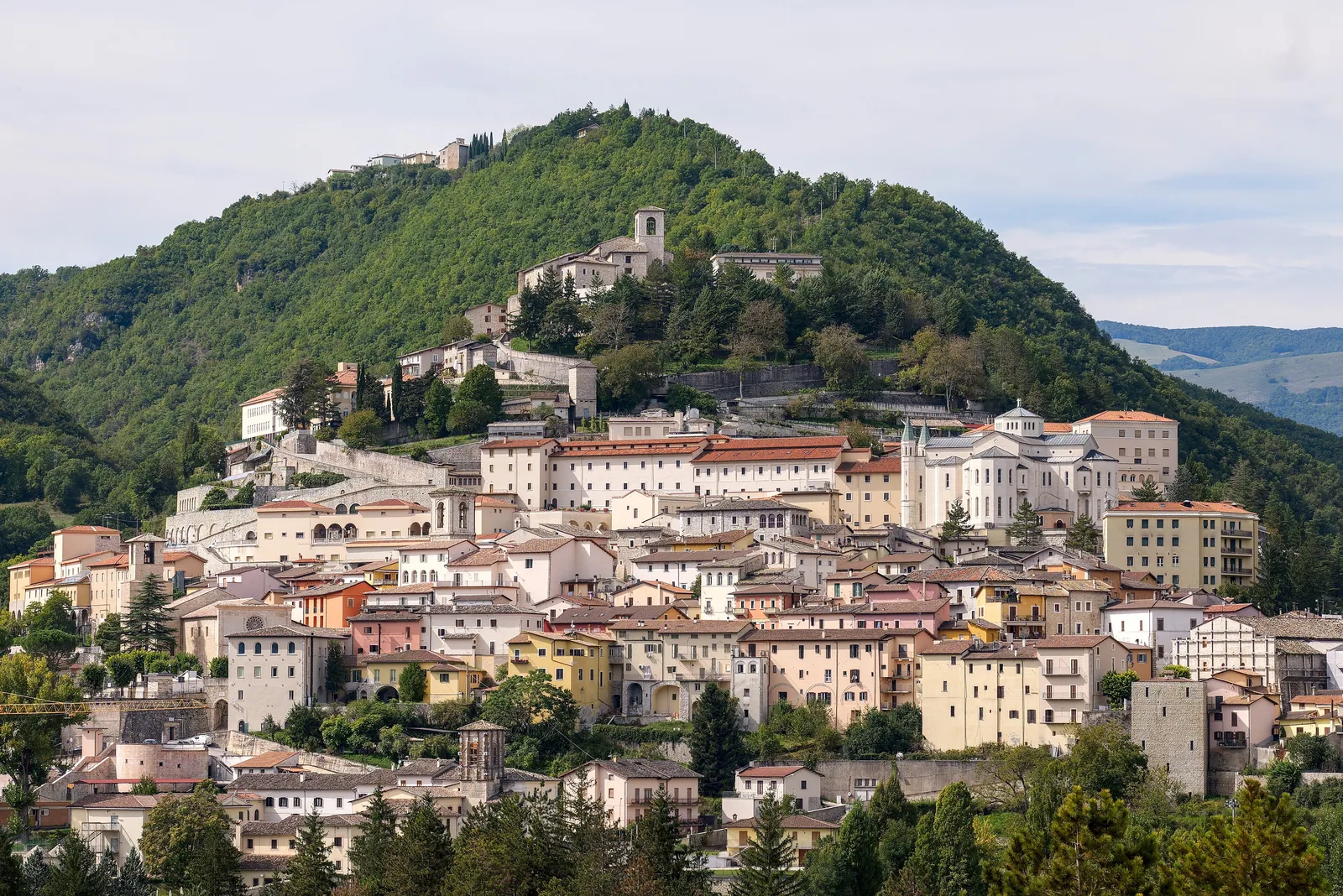
Cascia restaurants are found in three areas: the historic center, the hamlet of Roccaporena and the countryside localities of the municipality. In the center, the choice ranges from restaurants with traditional cooking to pizzerias and bars for a snack. In Roccaporena, meals are close to the places of Saint Rita. In the countryside there are osterie and restaurants tied to local products. Those with special dietary needs have some alternatives: some places list options for vegetarians.
Il Caminetto is in the historic center of Cascia, along the steps leading to the Sanctuary, and is convenient for lunch during a visit to Santa Rita. Its cooking, traditional and contemporary, includes strascinati di Cascia, several dishes with Norcia truffle and scorzone truffle and plenty of grilled meats. In the evening it also works as a pizzeria.
Il Tartufo is the right restaurant for tasting the most typical local products in a single meal: black truffle, cured meats, roveja, lentils and pure Cascia saffron, in cooking inspired by the Valnerina and Umbria.
La Tavernetta is the restaurant of a small hotel. It serves traditional Umbrian food, with truffle as its specialty.
For pizza or a casual dinner there are Miramonti pizzeria e ristorante and Hotel Ristorante Pizzeria GANS, which combines a restaurant, pizzeria and pub and also serves fish dishes. Then there is Trattoria l'Appennino.
One historic name in Cascia's dining scene is no longer in town. Locanda Giustini, founded in Cascia in 1949, moved after the 2016 earthquake that struck the Valnerina to Santa Maria degli Angeli, in the municipality of Assisi. Anyone looking for its cooking needs to plan for the trip.
Restaurants in Roccaporena
Roccaporena is a hamlet of Cascia at 707 m above sea level, at the end of a small gorge, about 6 km from the main town. It is also a good lunch stop for those visiting Saint Rita's house and the Scoglio. La Porrina serves traditional food, with options for vegetarians, and has outdoor seating. Along the road to Roccaporena is Villa Patrizia, with local and Umbrian cooking.
Restaurants in the Cascia countryside
Ristorante da Renato is in the locality of Villa Marino. It serves the most typical Umbrian dishes: Norcia black truffle, mushrooms gathered in the surrounding woods, wild boar specialties and grilled meats.
Osteria Al Casale is in the locality of Valle Tezze, in the Cascia countryside. It serves traditional food in a rustic setting and is a good stop for those with a car looking for a meal away from the center.
Other Cascia restaurants and quick stops
Cascia and its hamlets also have other restaurants: Ristorante Margherita, Quadrifoglio, Roccaporena rist, Ristorante Il Roseto, Ristorante Pizzeria La Lanterna, Ristorante Pizzeria Baldassari, Ristorante Alveare and La Locanda del Chiostro 1564. Contact details and hours are on each restaurant's page.
For a coffee, a gelato or a sandwich between visits there are several bars and casual spots: Civitas Cassiae, Caffè 2000, Gran Caffè Royale, Bar Gelateria, Bar - Pizza, Panini Porchetta, Bar Hotel delle Rose and Ciaccio bar. La Pergola is a bar and café, handy for a quick stop.
During the days of the Feast of Saint Rita the town fills with pilgrims, so it is best to book ahead. For vegan or gluten-free diets, it is better to confirm with the restaurant when booking.
Where to eat in Cascia: the map
The map on this page shows Cascia restaurants divided into the three areas described above, so it is easy to see which places are near the sights to visit.
The first group is the historic center, around the Sanctuary of Santa Rita. Most places here can be reached on foot during a visit, and Il Caminetto is along the steps that climb toward the Sanctuary.
The second group is Roccaporena, linked to Cascia by a mountain road of about 6 km, opened only around 1950. Before then the village was very isolated. Here is La Porrina and, along the road, Villa Patrizia: both are convenient for those spending half a day at the places of Saint Rita.
The third group gathers the countryside places, such as Villa Marino and Valle Tezze. Getting there usually requires a car, and it is worth checking the route before setting off, especially for Osteria Al Casale, which is in open countryside.
Where to eat in Cascia: what to try
At the table in Cascia, it pays to focus on Valnerina products: saffron, truffle, ancient legumes, cured meats and cheeses. These are the same products found in the shops and farms of the municipality.
Pure Cascia saffron. Between the late Middle Ages and the 16th century Cascia was one of the main centers for producing and trading saffron. At first the spice was used to dye clothing and to make ointments and perfumes. Cultivation went into decline toward the end of the 17th century and has resumed in recent years thanks to local farmers. Today a group of small producers in the Associazione dello Zafferano di Cascia protects the brand, which guarantees the product's origin. Each year the minimum price is set on the feast of Saint Catherine of Alexandria, November 25, following a medieval tradition. The saffron is sold at the members' farms, in some local-product shops and in some restaurants in the area. The classic dish is saffron risotto, but the spice also appears in desserts and flavored cheeses.
In the fall, saffron has its own festival, the Mostra mercato dello zafferano di Cascia (Cascia saffron fair), held in the historic center. The 2025 edition, the twenty-fourth, ran from October 31 to November 2. The program usually includes tastings of saffron dishes, cooking shows, visits to the fields and stands of local products.
Roveja. It is a small wild pea, related to the common pea, with seeds ranging from dark green to brown and gray. It was once grown along the whole Apennine ridge between Umbria and the Marche, especially in the Sibillini Mountains, and was a staple food of shepherds and farmers. From the second half of the 20th century its cultivation was almost abandoned. Today a few farmers keep it going in the Valnerina, mainly in Cascia. The roveja di Civita di Cascia has been a Slow Food Presidium since 2006. In the Valnerina it is sown in March between 600 and 1,200 m above sea level and harvested between late July and early August. In the kitchen it goes into hot soups with other Umbrian legumes. Stone-ground, it becomes the flour for farecchiata, a polenta dressed with chopped garlic, olive oil and anchovies.
Other legumes and grains. Cascia's farms also produce lentils, cicerchia, farro and barley. In restaurants, lentils often accompany meat main courses.
Truffle. Black truffle features on many menus, from fresh pasta first courses to meats. Alongside Norcia black truffle, some restaurants also offer scorzone, the summer truffle.
Strascinati di Cascia. These are small scraps of egg pasta "dragged" (strascinati) with the fingers across the pastry board, which gives them their curled shape. They are typical of the area between Cascia and Monteleone di Spoleto and are dressed with sausage, pancetta, eggs and pecorino. Tradition dates the recipe to 1494, to the siege of the castle of Vetranola, in Monteleone di Spoleto, by the captains Paolo and Camillo Vitelli.
Cured meats, cheeses and meats. Appetizers are based on cured meats from the norcinerie and local cheeses, including caciotta di Cascia. Main courses often feature wild boar, lamb, grilled meats and trout from the Nera river. Mushrooms from the surrounding woods round out the season.
Anyone who wants to take home saffron, roveja or cured meats will find the list of shops on the page Cascia local products and shops.