


Sibillini flora and fauna
The flora and fauna of the Sibillini are among the most valuable features of the national park in the Sibillini Mountains, between Le Marche and Umbria. About 1,800 plant species grow on these mountains, including the Apennine edelweiss, the alpine anemone, the martagon lily, bearberry and many orchids. Among the animals are the wolf, the golden eagle and the peregrine falcon. In the waters of Lago di Pilato also lives a tiny crustacean found nowhere else in the world.
The park covers about 70,000 hectares. It has more than twenty peaks above 2,000 m, with Monte Vettore at 2,476 m. The vegetation changes with elevation, from downy oak woods to high-altitude grasslands. That is why the flowering of the Monti Sibillini does not happen all at once: it begins in spring on meadows and along trails, peaks at Castelluccio between June and July, and gives way in fall to the colors of the woods.
In this section
6 results
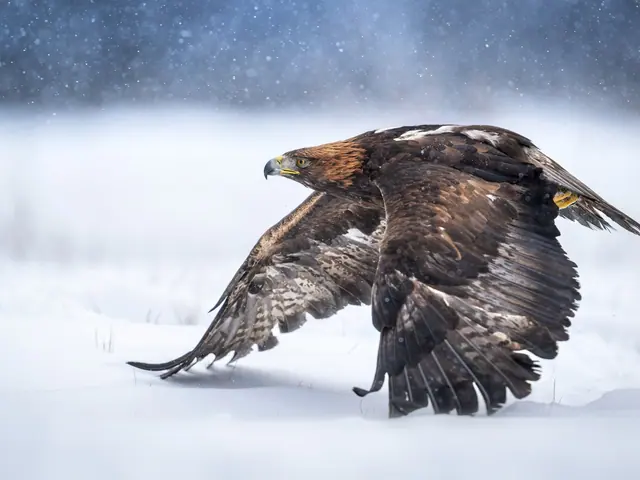 Sibillini National Park wildlifeGuide
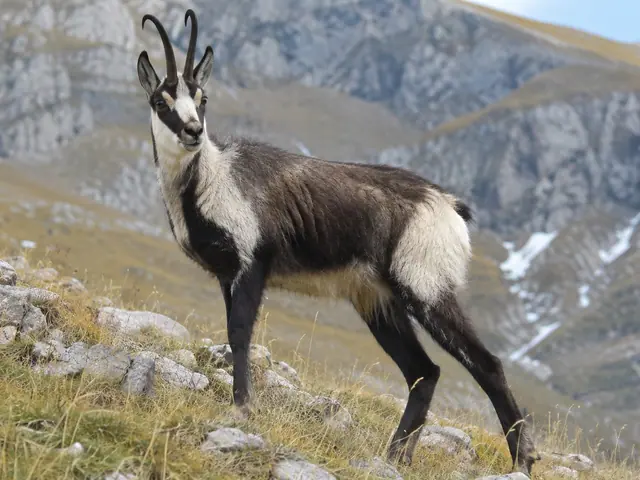 The Apennine chamois in the Sibillini MountainsGuide
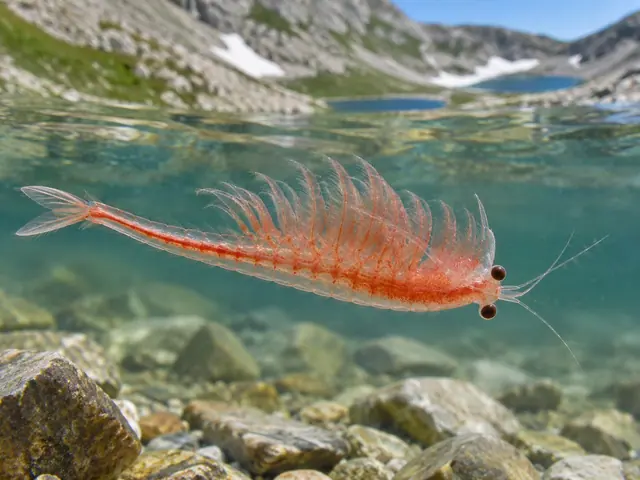 The chirocefalo del Marchesoni, the tiny crustacean of Lago di PilatoGuide
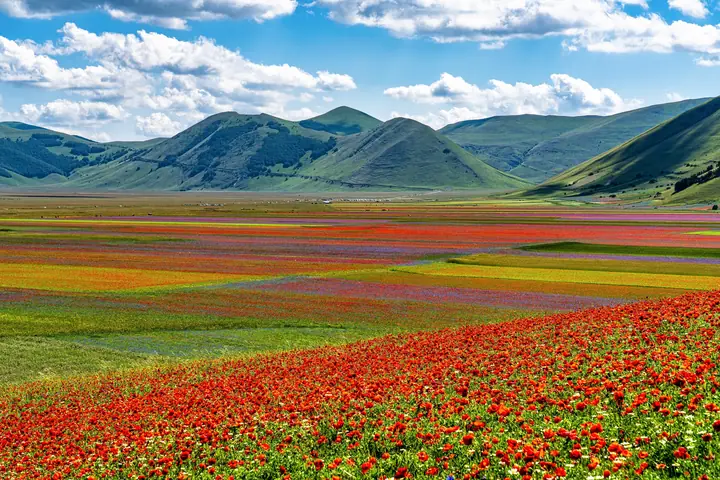 Castelluccio floweringGuide
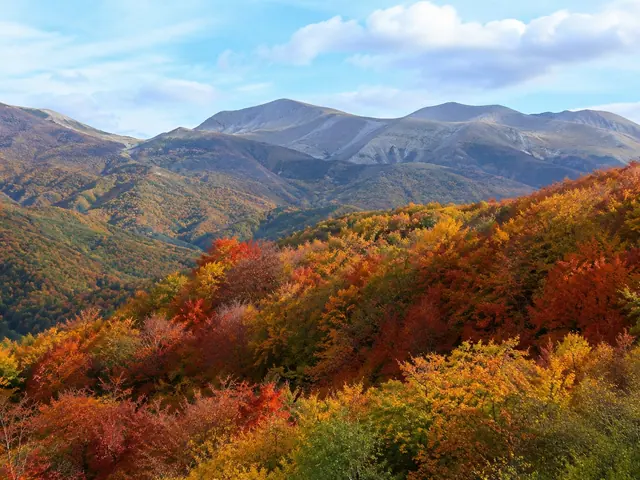 Fall foliage in the Sibillini, Le MarcheGuide
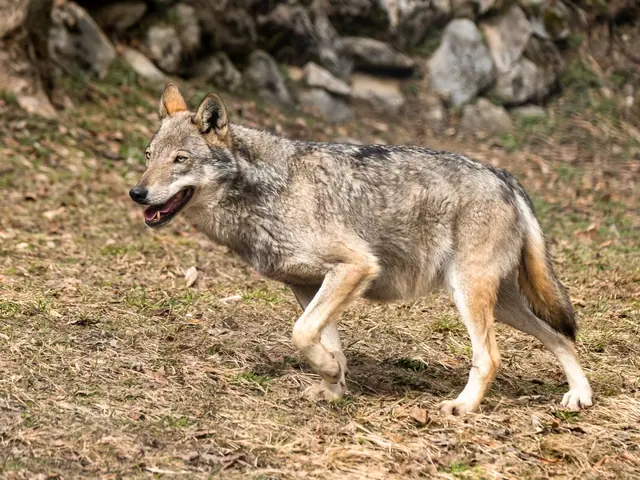 The Apennine wolf in the Sibillini MountainsGuide
No results with these filters.
Sibillini flora and fauna: what to know
Vegetation by elevation. The base of the Sibillini lies at an average elevation of about 500 m. Up to about 1,000 m, woods of downy oak, hop hornbeam and manna ash prevail. Higher up comes the beech forest, first mixed and then pure, and from about 1,400 m beech becomes dominant. The tree line now sits at around 1,700-1,750 m, about 100 m below its original level, because forests were cut in the past to create pastures. Above the woods spread dwarf juniper scrub and high-altitude grasslands. The vast secondary grasslands are dominated by brome grass.
Rare plants of pastures and scree. The pastures above the tree line host rare species such as the Apennine edelweiss, the Apennine gentian, Eugenia's violet, the Apennine genepi, Artemisia petrosa and the Apennine anemone. On scree slopes grow alpine toadflax and the costolina appenninica, an Apennine scree plant. The dwarf willow, said to be the smallest tree in the world, lives at the highest elevations. On the Pian Grande grows Carex disticha, which here has one of its only two Italian sites. Orchids are another specialty of the park: there are about 37 types, including the monkey orchid and the bee orchid. In spring the slopes also attract hundreds of butterfly species.
Mammals. The wolf lives in most of the inner territory of the Park. It is very elusive, however: seeing one is difficult and entirely a matter of chance. Also present are the wildcat, the roe deer, the wild boar and the porcupine, which spread here only a few decades ago and occupies the warmest areas. Red deer and Apennine chamois have returned thanks to reintroduction projects. For the chamois, a wildlife enclosure was created at Bolognola, and releases into the wild began in 2008. For more on the best-loved species, see the page on Sibillini National Park wildlife.
Birds and reptiles. Since the park was established, the golden eagle has resumed nesting even in areas it had abandoned for years. Other raptors include the peregrine falcon, the goshawk and the sparrowhawk. The eagle owl and the rock partridge are also present. Alpine choughs and red-billed choughs are common on the cliffs, while the snowfinch and the wallcreeper live in different habitats. Among reptiles, Orsini's viper stands out: in the Sibillini it reaches the northern limit of its range in Italy. It lives in dry grasslands with dwarf juniper, up to the highest summits. Among amphibians lives the rare Apennine yellow-bellied toad, less than 6 cm long.
The fairy shrimp of Lago di Pilato. Lago di Pilato is the only natural lake in the Marche region. It is home to the chirocefalo del Marchesoni, a red crustacean 9-12 millimeters long that swims upside down. It is an endemic species: it exists nowhere else. Its presence is tied to the glacial cirques of Monte Vettore, and the page on the lakes of the Sibillini Mountains describes the habitat where it lives.
Sibillini flora and fauna: the best seasons to see them
Spring: wildflowers and orchids. The first blooms arrive well before the summer flowering. In spring the wild plants flower, while the lentil fields are not yet there, because sowing usually takes place in April. At the Pantani di Accumoli the wild flowering falls between the last week of April and May. In early May wild orchids bloom on the Ragnolo meadows, on the northern side. In the Castelluccio area, mountain tulips have also been reported flowering in late spring. Among the trails known for spring flowers is trail E13.
The Pian Grande di Castelluccio is a vast plateau of tectonic origin, at high elevation. Between May and July it is colored by lentils and dozens of wildflower species, such as poppies and cornflowers. The most intense period runs roughly from mid-June to mid-July. According to the Park, peak bloom generally falls in the last week of June, but it depends on the weather and can come several days earlier or later. No forecast is therefore certain, and not all of the plain flowers at the same time. Details and calendars are on the page about the Castelluccio flowering.
High elevations. On the summit meadows, between May and July, Apennine gentian, crocuses and several wild orchids bloom.
Fall and winter. In fall the woods change color. On a trail toward Montefortino, the green of holm oaks and beeches gives way to the scarlet of smoke trees and the orange of maples. For timing and routes, see the page on fall foliage in the Sibillini. In winter, on snow-covered ground, wolf prints and tracks are very common, even though the animal itself remains hard to see.
Sibillini flora and fauna: practical tips
Follow the Park rules. The Park asks visitors to always stay on the trails, avoid noise and keep groups small. It asks people not to pick flowers, fruit or stones and not to leave any litter, not even biodegradable or organic waste such as food scraps. Camping is not allowed outside equipped areas. This also applies to the flowering: the cultivated fields of Castelluccio must not be trampled.
What to do if you spot an animal. If you spot an animal, stay still and quiet: the encounter will last longer. No route guarantees a wolf sighting, so it is better to look for tracks, especially in winter. Orsini's viper may also be met along the trails, so it helps to watch where you step.
Dogs. Dogs may not enter Zone A, the strict nature reserve, except on a leash on the official hiking trails where they are allowed. In the rest of the territory and along the official routes they must be on a leash. They are not allowed, even on a leash, on routes E6 (from Rifugio del Fargno to the Ara del Re farmhouse), E8 (Monte Bove), E15 (Forca di Presta, Vettore, Colle di Montegallo) and E17 (from Capanna Ghezzi to Foce di Montemonaco). Signs at the trailheads state the rules for each route, and they are worth checking before setting out.
Lago di Pilato. The fairy shrimp lays its eggs along the shores. For this reason the lake may be approached, and the crustacean observed, only from the side below Cima del Redentore.
Weekends and traffic at Castelluccio. To see the flowering with fewer crowds, choose a weekday. In the past, on the central Sundays of the bloom, access to Castelluccio by car and camper van was banned: in 2024, for example, on June 16, 23 and 30 and July 7. Anyone planning a visit should check the traffic plan every year. The best light is early in the morning and at sunset. To round out the visit, the page on the plateaus of the Sibillini Mountains describes the other high plains, and the general overview is in the nature of the Sibillini Mountains.