


Sibillini National Park wildlife: a guide to the animals of the Park
Among the animals of the Sibillini Mountains, the most unusual creature of Sibillini National Park wildlife is the chirocefalo del Marchesoni, a small red crustacean that lives, in the whole world, only in Lago di Pilato, at 1,941 m on Monte Vettore, in the municipality of Montemonaco. The lake is also the only natural lake in Le Marche and one of the very few alpine-type glacial lakes in the Apennines. Because of the shape of its two basins, which join when the water is high, it is called “the lake with glasses.”
The rest of the national park in the Sibillini Mountains is just as rich in fauna. It is home to 50 species of mammals, 150 of birds and more than 20 reptiles and amphibians. The best known are the Apennine chamois, the wolf and the golden eagle. The chamois can be seen easily at Bolognola, in a fenced wildlife area.
Animals of the Sibillini: what to know
The chirocefalo del Marchesoni. Chirocephalus marchesonii is an anostracan crustacean, meaning it has no carapace. It measures about 9-12 millimeters, is coral red and swims belly up. It is a stenothermal species, adapted to low temperatures, and it is endemic: in the whole world it lives only in the waters of Lago di Pilato. It was discovered in 1954 by Vittorio Marchesoni, then director of the Institute of Botany at the University of Camerino, during one of his hikes in the Sibillini. Only in 1957 did the entomologists Ruffo and Vesentini officially describe it as a new species, naming it after the scientist. A small black aquatic beetle, a diving beetle, also lives in the lake.
The fairy shrimp lays its eggs along the shore, among the stones. The eggs hatch only when there is water and environmental conditions are favorable, usually in spring or summer. This reproductive strategy allows it to survive in an extreme and unstable environment.
A lake that sometimes dries up. The water level varies greatly from year to year, depending on snow and rain. In 1990 the area was completely dry because of a severe drought. In 2017 the lake dried up again, but the fairy shrimp managed to mate and lay eggs, which would hatch the following year. Monitoring by the Park and the University of Perugia, under way since 2018, shows that the lake is becoming temporary in character, especially after 2016. The causes include rising temperatures and scarce snowfall. Abundance estimates for the fairy shrimp gathered in recent years were not very different from those of past sampling. Scientists, however, see the repeated dry spells as a possible threat in the medium and long term.
When the lake is dry, the greatest risk is that the eggs on the dry bed get trampled. On one such occasion the Park coordinated a work day with technicians, guides, Carabinieri forestry police, CAI volunteers and researchers. With the help of two mules to carry the material, they installed a light, easily removable fence around the perimeter of the basin. It prevents people from walking down onto the bed beyond the high-water line.
The Apennine chamois. This chamois (Rupicapra pyrenaica ornata) had become extinct in the Sibillini in historical times and returned thanks to a reintroduction project. The Bolognola wildlife area was created in 2006 with a LIFE project co-funded by the European Union. The first animals came from the wildlife area of Lama dei Peligni, sedated and carried by helicopter. The operation took just over an hour. The first releases into the wild date to 2008. A colony has settled in the area of Monte Bove.
The wildlife area covers about 3 hectares on a south-facing slope of Monte Sasso Tetto (1,624 m), in the middle and upper Fiastrone valley, above the village of Bolognola. The chamois live in semi-freedom, in a wooded and rocky setting. They can therefore keep feeding and breeding habits close to natural ones. The Bolognola nature trail, a loop that skirts the area, lets visitors see them up close. Another route starts from Villa di Mezzo, a hamlet of Bolognola, skirts the wildlife area and reaches the Fonte dell'Aquila spring. From there the northern peaks of the Park come into view, along with Monte Rotondo and the Gola dell'Acquasanta.
In Fiastra there is also the Centro Visita del Camoscio (Chamois Visitor Center), which offers self-guided or guided visits. The Centro del Cervo, a deer center and wildlife rescue facility, is in Castelsantangelo sul Nera.
The wolf. The Apennine wolf is present in the Sibillini, which for many years marked the northern limit of its range in Italy. In the late 1970s, after long persecution, very few were left in the Apennines, some of them right here in the Sibillini. In the following years protection of the species greatly increased wolf numbers. In the woods around Bolognola, possible sightings include roe deer, red deer and wolves. The wolf, however, is a shy animal and not an encounter to be planned.
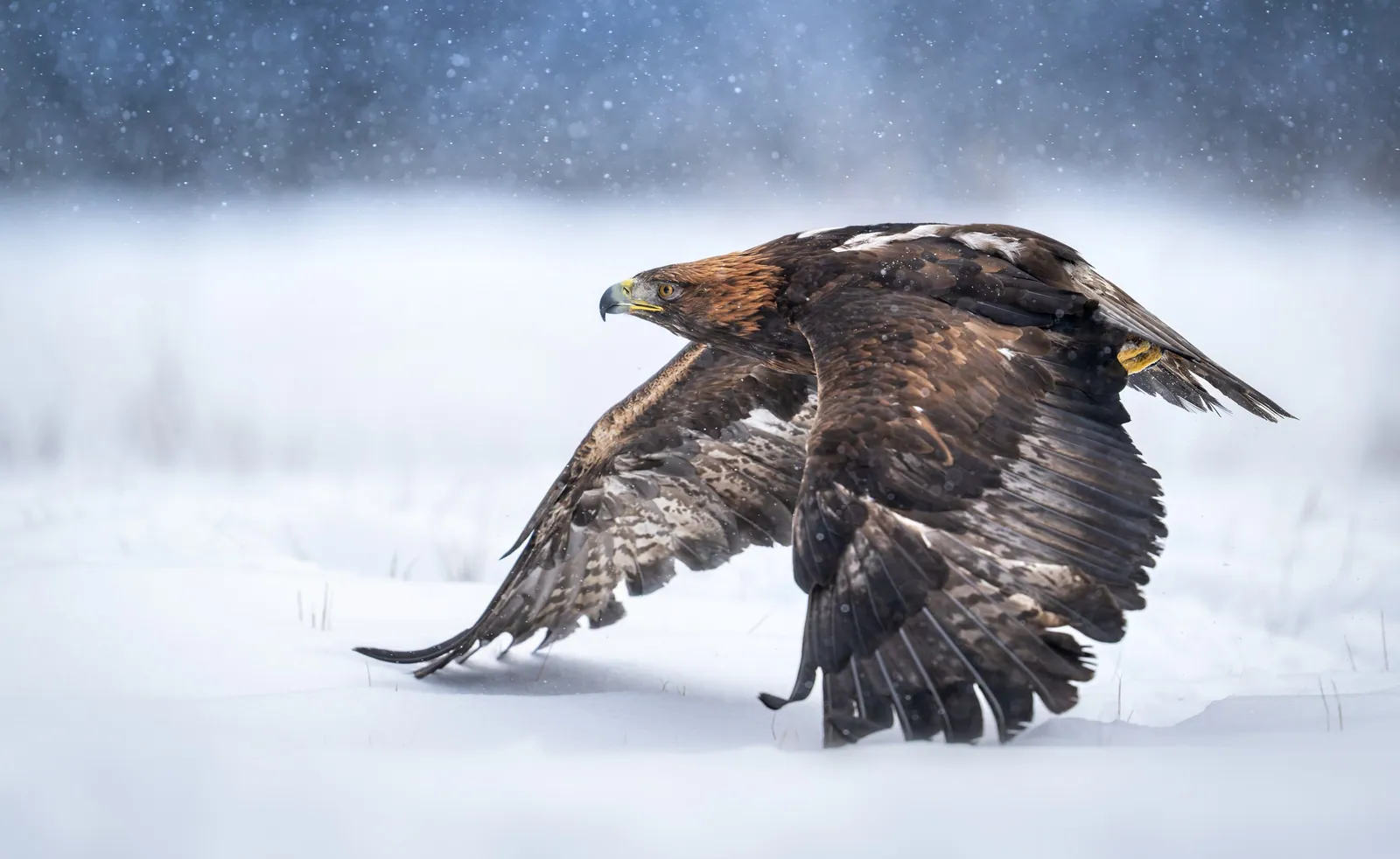
The golden eagle and other birds. Since the Park was established, the golden eagle has resumed nesting even in areas abandoned for years. Other raptors include the goshawk, the sparrowhawk and the peregrine falcon. The eagle owl and the reintroduced rock partridge are also found. At the highest elevations alpine choughs and red-billed choughs are common. The wallcreeper and the snowfinch may also be seen.
Other animals. Mammals also include the wildcat, porcupine, roe deer, wild boar and red deer, which returned through reintroduction projects. Reported reptiles include Orsini's viper and the asp viper. For a broader picture, including the vegetation, see the page on Sibillini flora and fauna.
Animals of the Sibillini: when to see them
For the fairy shrimp, the presence of water matters more than the calendar. Lago di Pilato takes shape as the snow melts: the process usually begins between May and June, as temperatures rise. In spring the basin fills again, but the water depends on the winter snowfall. In summer the level can drop until the lake is completely dry. In 2017, for example, the lake was already dry at the beginning of August, and the first basin had emptied a week earlier.
The eggs hatch in spring or summer, when environmental conditions allow. Anyone hoping to find the lake “full,” with its characteristic glasses shape, should check the water level before leaving, because it changes from year to year.
Before a visit, especially a guided one, it is advisable to check access arrangements with the Park or the visitor centers.
Animals of the Sibillini: practical tips
Rules at Lago di Pilato. The Park protects the fairy shrimp with precise rules that apply to everyone:
- swimming is forbidden, even just dipping hands or feet;
- visitors must stay at least 5 meters from the shores;
- dogs and other animals must not enter the lake or drink from it;
- do not descend the scree slopes or leave the marked trails, and do not cut shortcuts, which cause small landslides;
- camping, bivouacking and fires are banned near the lake, as are bicycles and horses off authorized routes;
- all litter must be carried back down.
When the lake is dry, the ban on walking on the dry bed still applies, because the eggs lie under the stones. The same goes where the fence has been installed: do not go beyond the high-water line.
Reaching the lake. The trail starts from Foce, a small hamlet of Montemonaco, and is considered demanding: it is at high altitude and exposed in places. After the earthquake of August 24, 2016, the Municipality of Montemonaco closed the area and the trail. Access partly reopened in 2017 and then further with the reopening of the “Le Svolte” section in 2018. Before setting out, check the current state of the routes with the Park or the Municipality. In summer a hat, sunscreen and plenty of water are needed. As for any high-altitude hike, check the weather.
Watching the animals. To see chamois without much effort, the Bolognola wildlife area is the easiest option, with the nature trail loop or the route to the Fonte dell'Aquila. For the wolf and the other forest animals, the discretion required by all wildlife is essential. Those who want to learn more can turn to the Park's visitor centers and guides.