


Umbria Food and Restaurants
Umbria food is built on simple peasant cooking, with raw extra virgin olive oil as its base. The regional tourism board lists its main ingredients: PDO olive oil and Umbrian wines, truffle (black in Norcia, white in the Alta Valle del Tevere), the cured meats of the norcino tradition, Pecorino cheese from the Sibillini Mountains, and legumes such as Castelluccio lentils, roveja from Cascia and fagiolina from Lake Trasimeno. Spelt, honey and saffron complete the picture. This site covers the Sibillini Mountains and their surroundings: this page gives an overview of the region's cooking and then leads to the detailed pages on the Umbrian side of the range.
On the map
Points from the site database. Map © OpenStreetMap contributors · Protomaps.
Olive oil and wine
Umbria is the first Italian region to have obtained PDO recognition for its olive oil throughout the region. The PDO Umbria label carries one of five sub-areas: Assisi-Spoleto Hills, Martani Hills, Amelia Hills, Orvieto Hills and Trasimeno Hills. Each has its own mix of olive varieties, and for all of them the maximum acidity is 0.65%, against 0.8% for ordinary extra virgin oil. Trevi is known as the town of olive oil, and between October and November many farms open their doors for the olive harvest.
Among the wines, Sagrantino di Montefalco is a dark red with bold tannins, originally made in the sweet passito style and bottled dry from around the middle of the last century. Rosso di Montefalco is based mainly on Sangiovese. Trebbiano Spoletino, a fresh white, is produced almost only between Spoleto, Foligno and Montefalco, and the hills around Lake Trasimeno produce wines from Gamay to Trebbiano. The official guide, PDO Umbria olive oil, describes the sub-areas in detail.
Regional dishes, town by town
Each area of Umbria has its own dishes. In Perugia the classics are torta al testo, a warm flatbread filled with cured meats and cheeses, and fresh tagliatelle with seasonal toppings such as truffle, asparagus or sausage. Spoleto has strangozzi alla spoletina and crescionda, a dessert with chocolate and almonds. Orvieto has lumachelle, recognized as a Slow Food product. Around Lake Trasimeno the cooking turns to fish, with tegamaccio, a lake fish stew, tench, eel and carp. In Gubbio the specialties are brustengo, a fried flatbread, and crescia. Montefalco pairs its wine with strangozzi with goose sauce and 'ntorta, a sweet pastry with apples.
Truffle, norcineria and the flavors of the Valnerina
The Valnerina is the mountain larder of Umbria. Norcia gave its name to norcineria, the craft of turning pork into cured meats, which between the 12th and the 17th century spread from Umbria to Rome, Florence and Bologna. Its best-known product, Prosciutto di Norcia, has carried the PGI designation since 1997 and is produced only in areas above 500 meters. The town's shops are described on the page on Norcia food and norcinerie.
The Norcia truffle, the prized black truffle, is harvested in the Sibillini from December 1 to March 15, while the summer truffle is gathered from May to December. In the kitchen it flavors pasta, eggs, trout and lamb. Castelluccio lentils are sown when the snow on the plains has melted and harvested between late July and August; lentil soup is one of the most traditional recipes. In Cascia, Cascia saffron is picked by hand at dawn in October, and its cultivation was revived in 1999 after centuries of absence. Other Valnerina dishes include pasta alla norcina, tozzetti with saffron and attorta, or rocciata, a cake made for the winter holidays.
Umbria restaurants: where to eat
Umbria restaurants range from trattorias in the historic centers to agriturismi that cook their own produce. The regional tourism board has its own section on restaurants for the whole region. For the Umbrian Sibillini, this site has two detailed pages. Every Norcia restaurant draws on Prosciutto di Norcia, black truffle, sheep's milk ricotta and Castelluccio lentils; after the 2016 earthquake many restaurants moved outside the walls, and the return to the center began in 2025. Among Cascia restaurants, the dish most closely tied to the town is strascinati di Cascia, a curled egg pasta with sausage or guanciale, eggs and pecorino.
Food on both sides of the Sibillini
The Sibillini range is shared with Le Marche, and its cooking crosses the border too: shepherding traditions meet those of norcineria, with cured meats, pecorino, legumes, mushrooms, truffle and homemade pasta with lamb or mutton sauce. The pages on Sibillini Mountains food and on traditional food of Le Marche and the Sibillini cover both sides. For the rest of the region, the things to do in Umbria page gives an overview.
Villages in the region
4 results
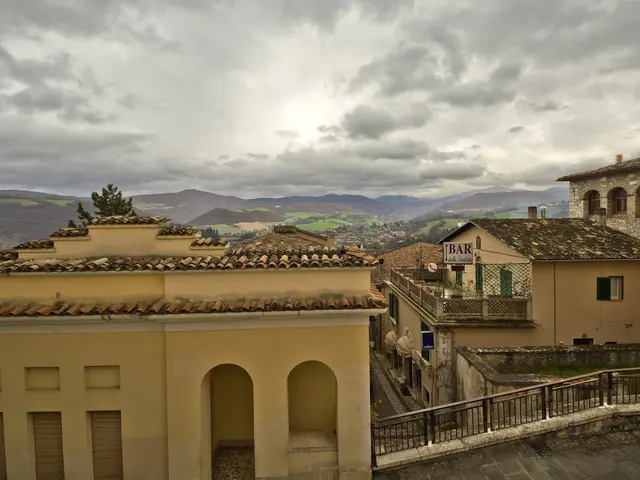 Cascia, ItalyUmbria · Perugia
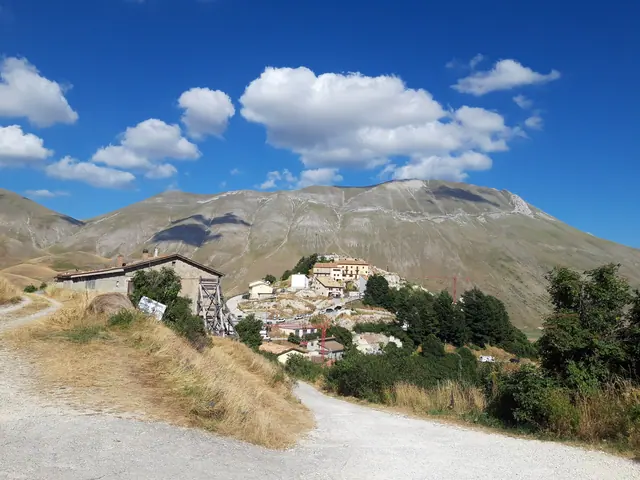 Castelluccio di NorciaUmbria · Perugia
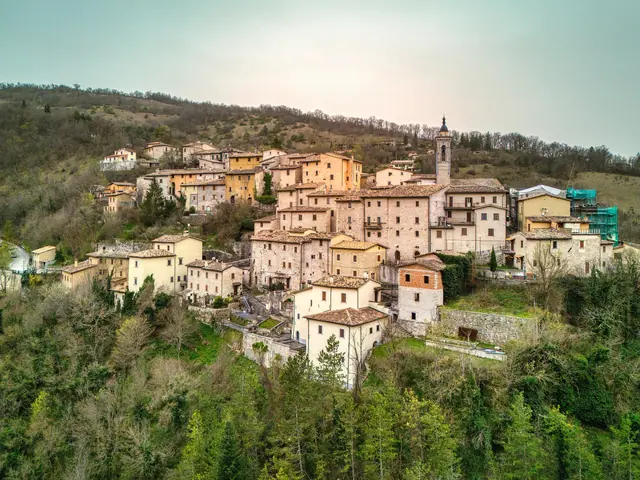 PreciUmbria · Perugia
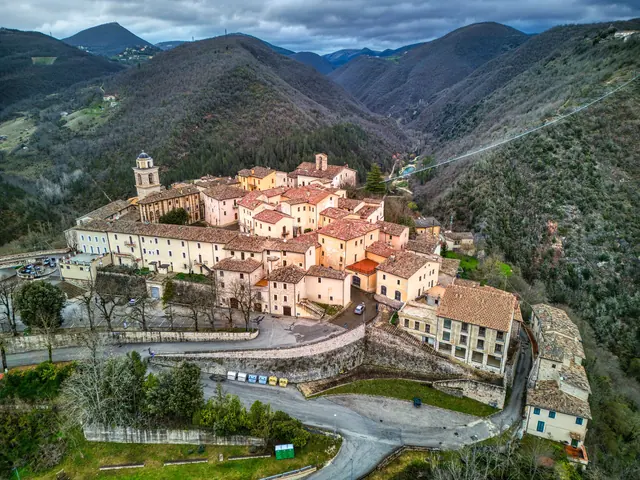 SellanoUmbria · Perugia
No results with these filters.