


Le Marche Food: Typical Dishes of the Sibillini and the Marche
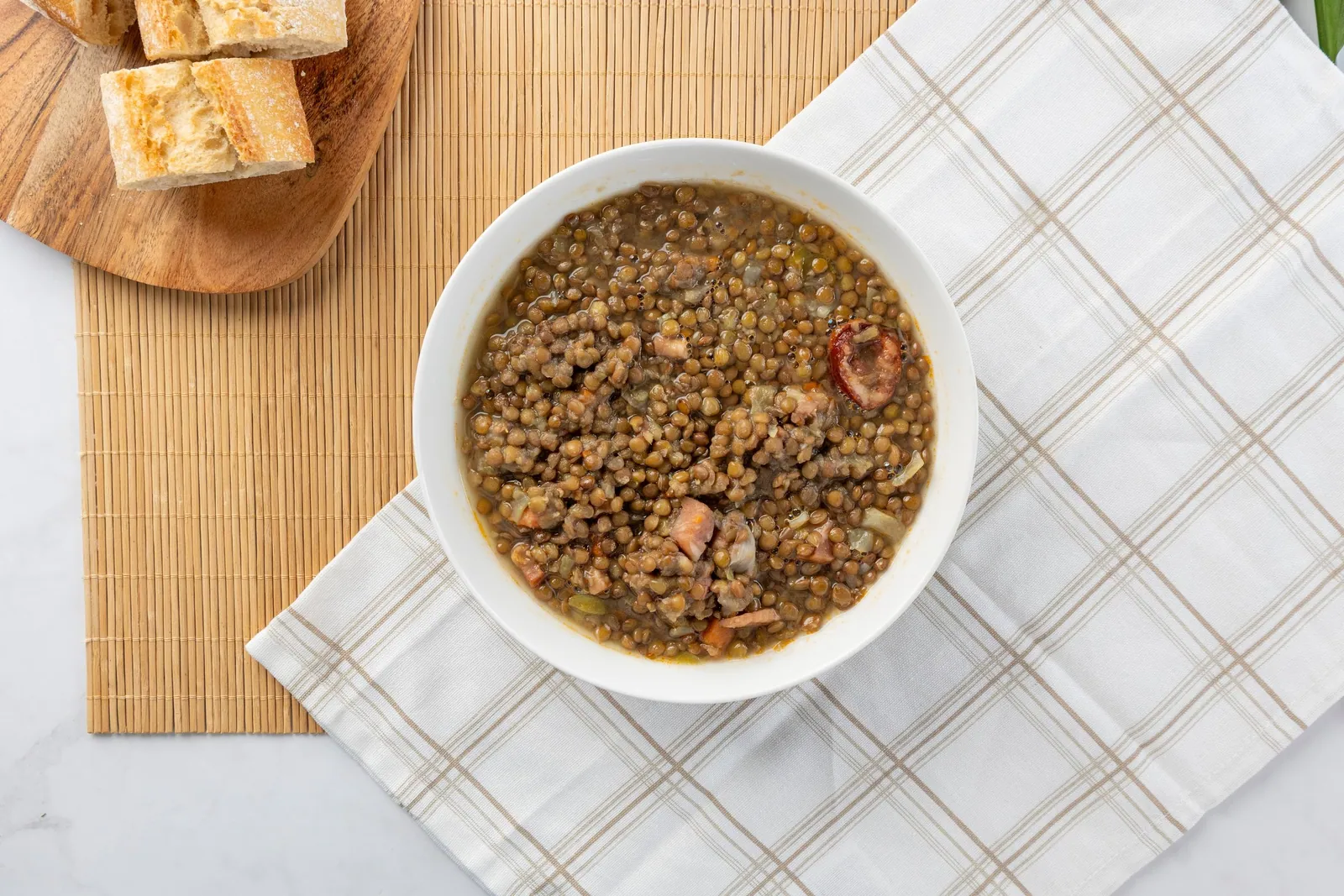
Le Marche food changes a lot between the coast and the inland areas. Along the Adriatic, brodetto (fish stew) and stockfish are cooked. Heading up toward the Apennines, the table fills with hand-rolled pasta, lamb and mutton, pork cured meats and legumes. In the Sibillini Mountains, between the Marche and Umbria, the cooking comes from sheep farming, mountain agriculture and norcineria, the art of pork curing. It uses local, often wild, ingredients and follows the rhythm of the seasons and peasant habits.
The best-known Marche specialties are olive all'ascolana (stuffed fried olives), vincisgrassi, ciauscolo and maccheroncini di Campofilone. The Sibillini area adds the Castelluccio lentils of Norcia, the white truffle of Amandola and pasta dressed with lamb or mutton sauce. Then there are mountain dishes such as polentò, a kind of polenta lasagna that many local restaurants make to order.
Marche Italy food: what to know about typical dishes
Olive all'ascolana are the best-known typical Marche dish outside the region. They originate in Ascoli Piceno and are made with the local tenera ascolana variety. The olive is pitted with a spiral cut and filled with mixed beef, pork and chicken, seasoned with Parmigiano Reggiano, nutmeg and lemon zest. Then it is breaded and fried. The recipe is traced back to the 19th century: noble families of Ascoli are said to have invented it to use up leftover roast meat. Today the Oliva Ascolana del Piceno is protected by DOP status.
Among the typical dishes of Ascoli Piceno, fritto misto all'ascolana is considered the city's signature dish. It brings together stuffed olives, fried custard, zucchini, artichokes and lamb chops. The breaded and fried cubes of pastry cream are called cremini. In the Ascoli tradition, lunch may begin with coratella d'agnello (lamb offal), cooked with eggs or with tomato and chili pepper. Alternatively there are soups tied to the mountain economy: spelt, lentils, beans, or quadrucci pasta and chickpeas.
Among the typical first courses of the Marche, the most representative is vincisgrassi. It is a layered baked pasta from the Macerata area. Compared with Emilian lasagna, the ragù is different: it is a mince of mixed meats, usually beef, pork and chicken, often with offal such as brains or sweetbreads. The meats cook with a soffritto of onion, celery and carrot, white wine and tomato paste. A similar dish, called princisgras, already appears in the recipe book of the Macerata cook Antonio Nebbia. A popular tradition instead links the name to the Austrian general Windisch-Graetz. Since 2022 vincisgrassi alla maceratese have been registered in the European Union as a traditional specialty guaranteed (TSG).
Maccheroncini di Campofilone IGP come from the province of Fermo. They are a long, very thin egg pasta, between 0.8 and 1.2 mm wide, made only with fresh eggs and semolina or flour, without water. They can be produced only in the municipality of Campofilone, and the IGP designation dates from 2013. Traditionally they are dressed with a ragù of mixed meats.
Throughout the region there is crescia, with many local variants. The best known is the crescia sfogliata of Urbino: low and round, with a dough rich in lard, eggs, milk and pepper, it is folded in half around cured meats and cheeses. On the coast the cooking looks to the sea, with brodetto and stoccafisso all'anconitana (Ancona-style stockfish), cooked in potacchio with potatoes, tomato and anchovies. Inland, coniglio in porchetta (rabbit roasted porchetta-style) is common.
In the Sibillini Mountains the reference cured meat is ciauscolo IGP, protected since 2009. It is a finely ground salami: pork belly, shoulder and trimmings of ham and loin are ground twice and seasoned with salt, black pepper, garlic and wine. Ciauscolo is so soft that it is spread on bread.
The Castelluccio di Norcia IGP lentil, locally called «lenta», is grown on the plain around Castelluccio. The village lies at 1,452 m above sea level, in the province of Perugia, inside the Sibillini National Park. The lentil is small, has a thin skin and colors ranging from green to light brown to pinkish. It is the base of the legume soups of peasant cooking.
Truffle is the other great protagonist. The prized white truffle grows in the Amandola area and is eaten mainly on homemade tagliatelle, but also on eggs and frittatas. The black truffle is found in several seasons: it is grated over stream trout or used in rustic sauces.
In the trattorias and agriturismi of the area, the same dishes often return:
- homemade pasta with lamb or mutton sauce;
- grilled lamb and mutton;
- wild boar stewed, braised or in salmì;
- cappellacci of hand-rolled pasta, filled with fresh ricotta and dressed with porcini mushrooms;
- starters with lonzino, ciauscolo, smoked guanciale and pecorino.
Fregnacce are sheets of pasta made from flour, eggs and water, cut into squares or triangles, then dressed in various ways.
Le Marche food: dishes season by season
The cooking of the Sibillini and the Marche can be discovered all year round. Some products, however, are tied to specific periods, and it is worth keeping this in mind when choosing travel dates.
On the Castelluccio plateau the lentil is sown in spring, after the snow has melted. It flowers between June and July and is harvested between July and August. The flowering draws thousands of visitors: besides lentils, the Pian Grande is colored by poppies, cornflowers and wild mustard.
In Amandola the calendar follows the truffle. Late October and November are the season of the prized white truffle with Diamanti a Tavola, a festival that in 2025 reached its 28th fall edition and that, between late February and March, also has an edition dedicated to the prized black truffle. The program includes tastings, a market of local products and stands with tagliatelle, eggs and meats with truffle. Summer is the turn of the scorzone (summer truffle). In July the village has also hosted «La Notte del Tartufo», with a market, exhibition and tastings. Dates change from year to year, so check the updated calendar before leaving.
Fall and winter bring chestnut soup with porcini mushrooms, a dish of local tradition. Easter has its dishes too: corata d'agnello (lamb offal), frittata with wild mint and lamb scottadito, made mainly on Easter Monday (Pasquetta). In Ascoli, at Easter, there is always cheese bread (pizza al formaggio) with aged cured meats. Fritto misto all'ascolana remains the dish for holidays and big occasions.
Marche Italy food: practical tips
To recognize handmade olive all'ascolana, just look at the shape: after pitting, the olive keeps the spiral cut called «ricciolo». The DOP Oliva Ascolana del Piceno applies both to stuffed and breaded olives and to those in brine.
Vincisgrassi and fritto misto all'ascolana are hearty dishes. Fritto misto in particular works as a full lunch rather than a small starter. Those who want to taste several specialties in one meal can choose between two menus: ciauscolo, pecorino and crescia as a starter, then vincisgrassi and coniglio in porchetta. Alternatively, a fritto misto all'ascolana to share.
Ciauscolo is usually eaten fresh, spread on bread. If it ages longer it becomes firmer and can be sliced. It is a very high-calorie salami, born as an energy snack for those working in the fields in winter.
When buying Castelluccio lentils to take home, check for the IGP mark. The authentic lentil can also be recognized by its small seed. Thanks to its thin skin, it does not need soaking before cooking. Maccheroncini di Campofilone are also a good buy: they cook in about two minutes.
During Diamanti a Tavola in Amandola, truffle is sold directly by the truffle hunters. The market offers only fresh truffle: selling it in sauces or with additives is not allowed.
Many agriturismi in the area cook with products from nearby farms. They are collected on the page about agriturismi with a kitchen, while Sibillini restaurants have a dedicated page. For shopping, cured meats, legumes and cheeses can be found in the area's food shops and norcinerie. The sweet side of the tradition is on the page about typical desserts.