


Traditional Desserts of the Sibillini and the Marche
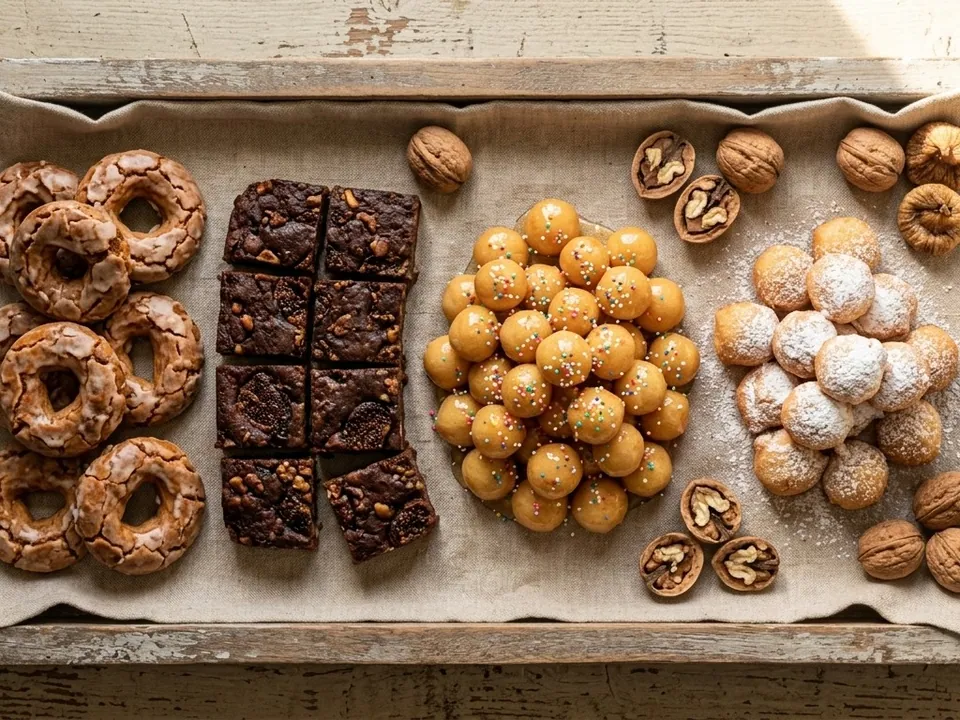
Traditional desserts in the Marche follow the calendar of holidays, and in the Sibillini villages the sweet-making tradition shows above all in leavened cakes, ricotta-filled ravioli and cookies for dunking in vino cotto ("cooked wine"). In the Marche, sweets and festivities go together: frustingo and Christmas breads, fried Carnival treats, calcioni and Easter ring cakes. From one valley to the next, though, ingredients change and often so does the name. That is why the same dessert can appear in a pastry shop or at a family table under different names.
In the Monti Sibillini, between the Marche and Umbria, the most characteristic dessert is the cacione, also called piegone or piegato: a large half-moon of pastry, glossy and crisp, filled with ricotta. At the end of a meal it comes with two local specialties, Mistrà and vin cotto.
Traditional desserts of the Marche and Sibillini: what to know
Marche desserts are largely seasonal. Many are made only at certain times of the year, and the recipe changes from family to family and from area to area. It helps to think in terms of occasions: Christmas, Carnival, Easter and, for the simplest sweets, the everyday afternoon snack.
Christmas. The Christmas dessert par excellence is frustingo, also called bostrengo. It is made with dried fruit, stale bread soaked in a broth of dried figs and cooked grape must, chocolate, oil, spices and anise-flavored Mistrà. The name changes by province: around Ascoli it is called fruštìnghë, around Pesaro bustreng, hence bostrengo. Recipes can include up to twenty-two different ingredients. The sheer number of ingredients earned it the nickname "pulisci credenza" ("pantry cleaner"). Alongside frustingo there are pizza di Natale, a sort of panettone made with bread dough, raisins, figs and walnuts, and cavallucci, typical of Apiro, Cingoli and Filottrano, cooked with sapa (grape must cooked down for a long time). At Christmas there is also lu serpe, an almond-paste sweet. Among traditional sweets there is also the blond torrone of Camerino, made of honey, almonds and sugar.
Carnival. After Christmas comes the frying season. Cicerchiata is made of small balls of fried dough held together with honey, sometimes with almonds or orange zest. The name recalls cicerchie (grass peas), ancient legumes of peasant cooking. Scroccafusi, instead, are first boiled and then fried, and served with honey or alchermes. Their name comes from the crunching sound they make. Around Ascoli they are called stummeri and around Ancona cicetti. A popular belief holds that no outsider should enter the kitchen while they are being made. Carnival is completed by castagnole, sfrappe (or chiacchiere), cresciole, arancini and limoncini. The last two are fried sweets scented with orange or lemon zest, typical of Ancona.
Easter. The best-known Easter dessert is the calcione, also called caciù or picone. It is half-moon shaped, with a cross cut on top, and a filling based on pecorino or ricotta, sugar and lemon zest. It plays between sweet and savory. There is also the sweet Easter bread, or crescia, tall and soft, flavored with vanilla and lemon zest and often enriched with candied fruit.
Fall. This is the season of lonzino di fico, a salami-shaped mix of dried figs, walnuts, almonds and anise seeds. In the mountain villages chestnuts go into castagnaccio. Around November 2, the Day of the Dead, people make fave dei morti, small sweets of almonds, sugar and egg white.
All year round. The Marche ciambellone is found throughout the region, is made with simple ingredients and is the Sunday cake. Among cookies, anicetti use anise, a plant widely used in the Marche for sweets and liqueurs.
In the Sibillini. Cacioni are typical of Amandola and Montemonaco and are also called pecorelle or piconi. They are large sweet ravioli filled with sheep's milk ricotta, eggs, sugar and cocoa. The pastry is glossy and crisp thanks to a brushing of egg yolk. The filling can also include pecorino, and the cocoa version has existed for more than fifty years. In Montefortino, desserts include a tart with ricotta and chocolate chips and ricotta pastry pockets with cocoa and cinnamon. Local tradition also includes anise and vernaccia ring cookies (ciambelline), for dunking in vino cotto, and a Christmas bread made with sourdough starter, raisins, figs, walnuts, spices and a little cocoa.
Vin cotto is made by boiling grape must. It is drunk at the table but also used in cakes and cookies. Mistrà is the anise liqueur, a traditional digestif of the Marche countryside. Together with vin cotto, it is one of the two traditional after-dinner drinks of the area. Vernaccia di Serrapetrona is a sweet dessert wine, suggested as a good pairing with anise ciambellone and frustingo.
For a broader picture of what is eaten in the rest of the meal, see the page on traditional Le Marche food.
Traditional desserts of the Marche and Sibillini: sweets season by season
Only some traditional Marche desserts are available all year. The simple ones, such as ciambellone, tarts and cookies, are always around. Holiday desserts follow their own season, and that is what decides when to plan a visit.
For frustingo, pizza di Natale, cavallucci and torrone, the right time is the weeks of the Christmas holidays. Carnival, the period of plenty before Lent, is the season of cicerchiata, scroccafusi, castagnole, sfrappe, arancini and limoncini. Easter is the time for calcioni, piconi, ring cakes and sweet Easter bread. In the fall, among chestnuts, dried figs and fave dei morti, castagnaccio and lonzino di fico are the seasonal sweets.
The Sibillini cacioni are also linked mainly to Easter, but the sweet versions with ricotta and cocoa are made during the rest of the year as well in the park's villages. Vin cotto and Mistrà go with any season.
Anyone wanting to taste a specific dessert should check the period: Carnival sweets are hard to find at the end of summer, and frustingo is a winter product.
Traditional desserts of the Marche and Sibillini: practical tips
Ask for the local name. The same dessert changes name from province to province: frustingo and bostrengo are the same dessert, and cacioni, piegoni, piconi and calcioni are very similar preparations. Asking for the local name gets you the right dessert.
Sweet or savory? Cacioni, piconi and calcioni can have a sweet filling (ricotta, sugar, cocoa) or a savory one (pecorino, cheeses, marjoram). It is worth asking which version is on offer.
Where to look. In the Sibillini villages, traditional desserts are found in local bakeries and workshops: Amandola and Montemonaco are among the places most closely tied to cacioni. The list of shops and producers is on the page on food shops and norcinerie in the Sibillini, while for breakfast and afternoon snacks see the page on bars and cafes in the Sibillini. For a sit-down meal, the page on agriturismo restaurants in the Sibillini gathers the countryside kitchens, where homemade desserts often end the meal.
Desserts to take home. Some traditional sweets are made to last: lonzino di fico, for example, is made of pressed dried fruit. Local specialties to buy also include honey and cookies. For other products to pack in your suitcase there is the page on Sibillini local food products.
Pairings. Frustingo and anise ciambellone pair well with a sweet wine such as Vernaccia di Serrapetrona. Anise cookies are dunked in vin cotto. Mistrà, a dry anise liqueur, is the classic digestif after coffee. Drivers should remember that these are alcoholic drinks.