


Church of Santa Maria Assunta (Caldarola)
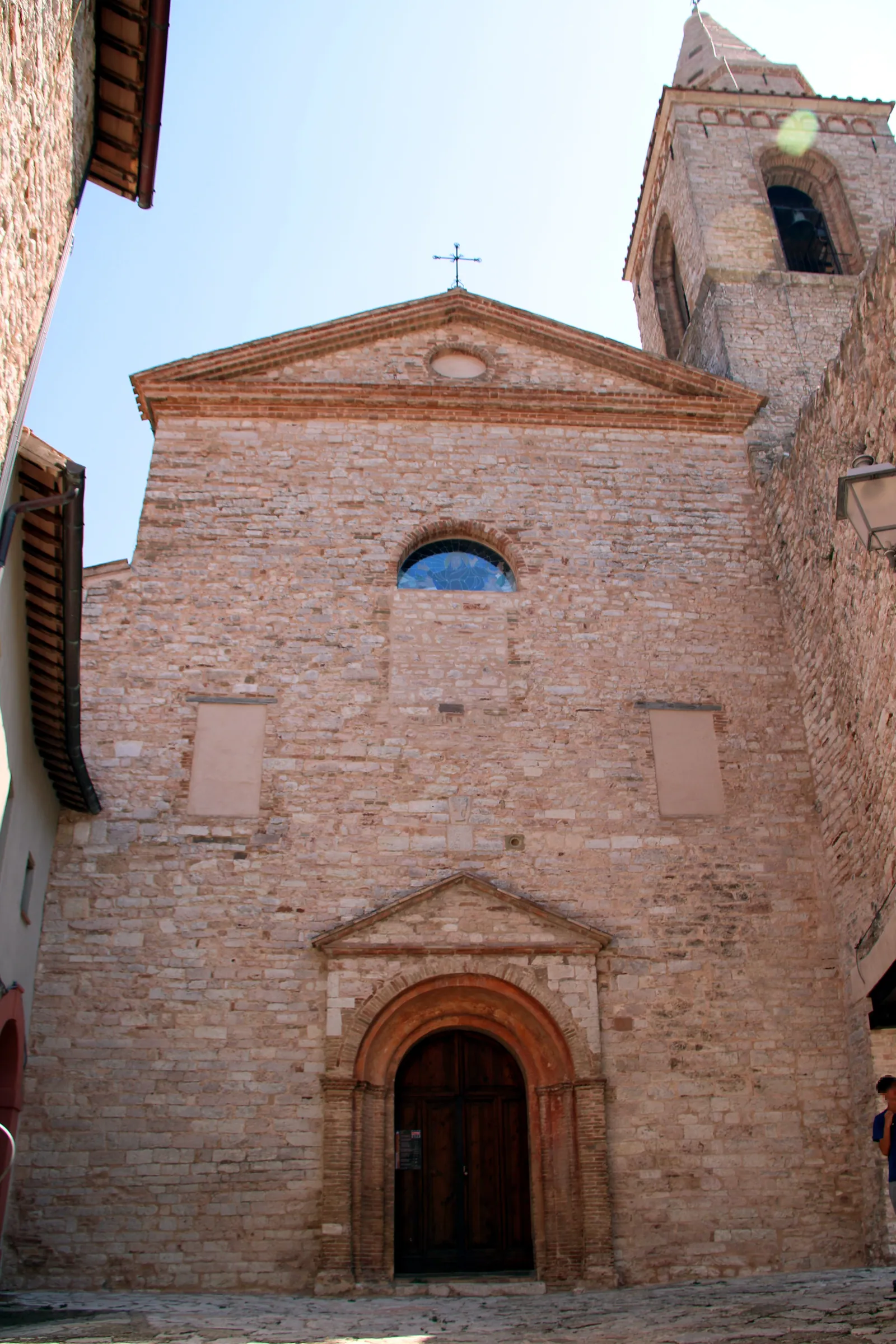
The Church of Santa Maria Assunta (Chiesa di Santa Maria Assunta) in Caldarola is in Pievefavera, a hamlet of Caldarola in the province of Macerata. It stands on the castle spur and depends on the parish of Santi Martino e Gregorio, in the diocese of Camerino-San Severino Marche. Local tradition links it to the old pieve (parish church) of Santa Maria near Faveria. A round-arched portal with early medieval decoration marks the entrance.
Church of Santa Maria Assunta (Caldarola)
- Type
- Church
- Municipality
- Caldarola (MC)
Source: site database, © OpenStreetMap contributors (ODbL).
On the map
Points from the site database. Map © OpenStreetMap contributors · Protomaps.
History of the Church of Santa Maria Assunta
According to local tradition, the pieve was first located at Pioarse. After a fire, which is said to explain the place name, it supposedly moved to the present spur. In 1263 the pieve is documented as fortified. The rectory stands beside the church and is part of the defensive walls. Later the defensive system was completed by including the apse and adding the polygonal tower at the southeast corner. The portal is attributed to the 15th century, although its decoration has early medieval forms.
In 1597, during the visit of Bishop Delfini, the church had six poorly made wooden altars. The bishop ordered them to be rebuilt in brick or stone. The high altar was rebuilt in 1693 on the initiative of Antonio Sparapani. In 1854 the church was raised by about 50 cm and given a decorated vault in reed and plaster. Its present appearance dates from the second half of the 19th century. Structural consolidation work was carried out between 1997 and 1999. Damaged by the 2016 earthquake, the church reopened for worship on November 10, 2019.
What to see in the Church of Santa Maria Assunta
The interior is a single-nave hall with four side chapels and a small semicircular apse covered by a stone half-dome. Of the oldest structure, mainly the apse survives, behind the high altar. The ceiling and walls are decorated in tempera, and the organ dates from the 19th century.
The high altar, with the Sparapani coat of arms, includes the canvas of the Assumption. On the right side altar is the canvas of the Madonna del Rosario. On the left one, a sculpted Madonna della Pietà is displayed in a gilded wooden frame. An Adoration of the Magi is in the small balcony above the entrance to the tower. Among the most admired works is the 16th-century wooden Saint Sebastian.
How to visit the Church of Santa Maria Assunta
From the church you can pass into the southeast tower of the castle. From the presbytery, to the right of the high altar, a downward ramp leads to the old sacristy, which has a polygonal plan. In this room, stone finds are displayed on the walls, held by iron brackets. A military-style stone staircase climbs to the upper floor.
Opening days and times are best requested from the parish of Santi Martino e Gregorio.
Where the Church of Santa Maria Assunta is
The church is inside the castle of Pievefavera, in the municipality of Caldarola. The triangular churchyard follows the lie of the land and is bounded by the rectory. The bell tower stands to the south, where the facade meets the town walls.
Around the Church of Santa Maria Assunta
Pievefavera is the largest castle in the Caldarola area, which also includes the hamlets of Valcimarra, Vestignano, Bistocco and Croce. Some of these castles overlook Lago di Caccamo. The Antiquarium of Pievefavera now has a new home near the archaeological area. For a route through other sacred buildings in the area, see the page about the churches of the Sibillini Mountains.
Frequently asked questions
Are the church of Pievefavera and the Church of Santa Maria Assunta in Caldarola the same?
Where are the archaeological finds of Pievefavera?
Nearby
What to see nearby
- Pievefavera Antiquarium (Caldarola)Museum or art galleryunder 100 m
- Pievefavera (Caldarola)Museum or art gallery100 m
- Lago di CaccamoLake500 m
Where to stay
- Casa Vacanze Valleverde, CaldarolaVacation rental400 m
- 2.1 km
- 2.2 km
Where to eat
- Circolo A.C.L.I., CaldarolaBar and café100 m
- Trattoria, CaldarolaRestaurant400 m
- Chiosco Bar, CaldarolaBar and café400 m
Straight-line distances.