


Things to Do in Acquasanta Terme
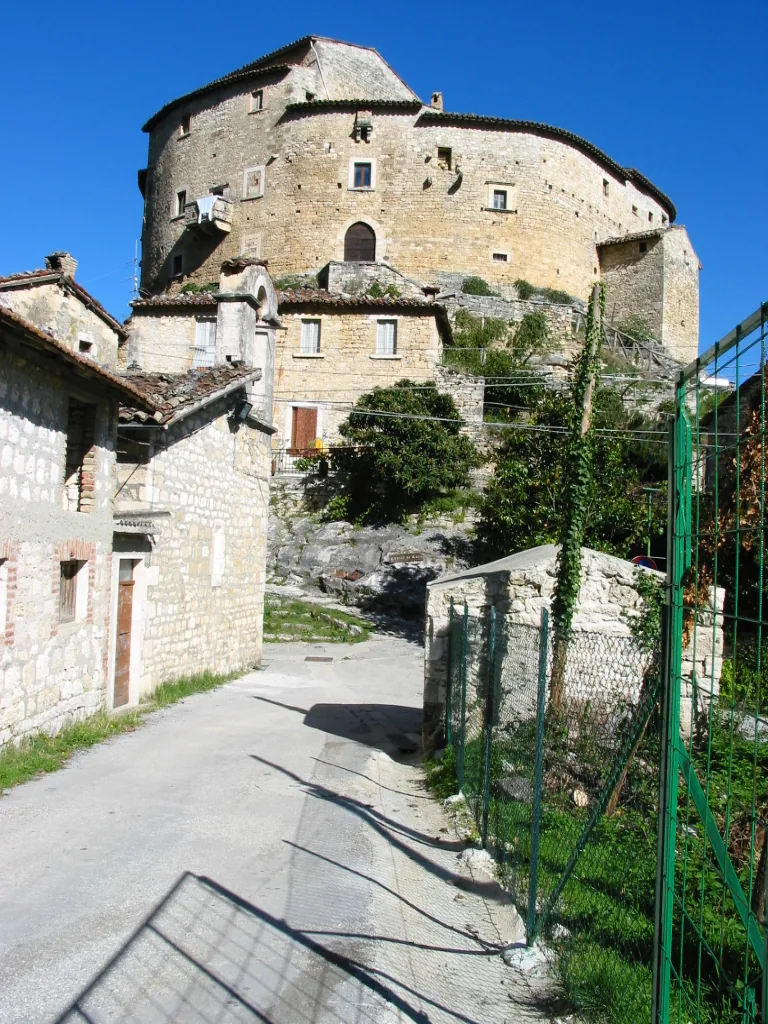
Acquasanta Terme, in the province of Ascoli Piceno, lies southwest of Ascoli Piceno, less than 20 km by road, within the Gran Sasso and Monti della Laga National Park. The things to do in Acquasanta Terme depend on how much time is available. There are the sulfur springs and the sweating cave, a medieval castle on a spur of travertine and a Benedictine monastery. Then there are waterfalls in the woods of the Monti della Laga, houses built against the rock in the area known as Appennino Perduto (the Lost Apennines) and a 16th-century bridge on the Salaria.
The town lies along the Via Salaria, the Roman consular salt road between Ascoli and Rome, and its Latin name was Ad Aquas. The fame of its waters goes back to the Romans. According to Livy, in 50 BC the consul Lucius Munatius Plancus was cured thanks to the baths of Acquasanta. Today the most historic part of the spa complex, the pool and the sweating cave, is still undergoing restoration. For this reason a visit focuses mainly on villages, castles, waterfalls and trails.
The places
13 results
- Castle or fortressCastel di Luco (Acquasanta Terme)Castle or fortress · Acquasanta Terme
- Falciano Castle (Acquasanta Terme)Guide
- ChurchChurch of Santissima Annunziata (Acquasanta Terme)Church · Acquasanta Terme
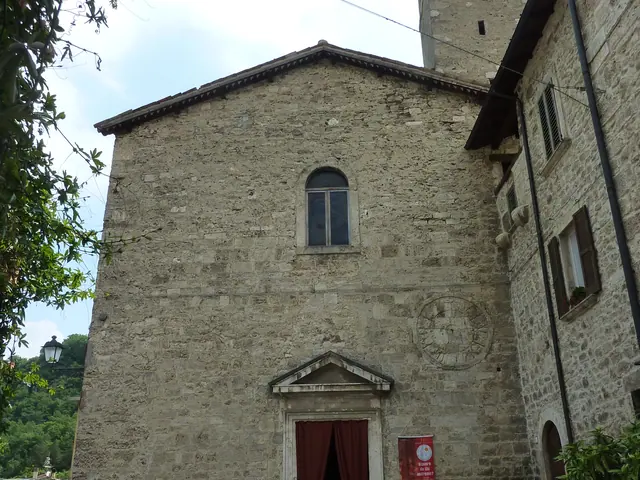 Church of San Giovanni Battista (Acquasanta Terme)Church · Acquasanta Terme
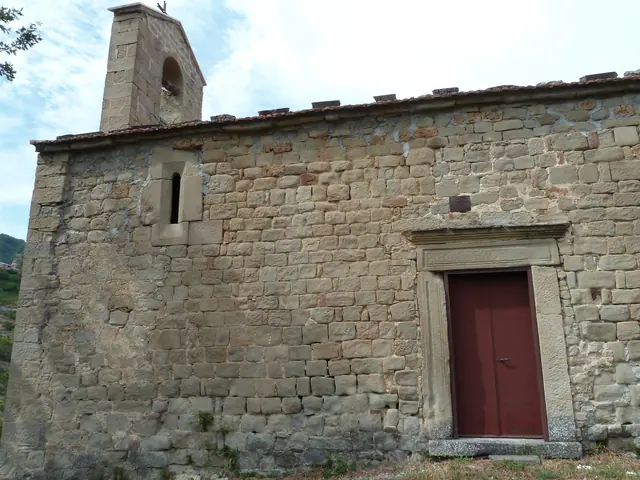 Church of San Silvestro (Acquasanta Terme)Church · Acquasanta Terme
- Monastery or abbeyMonastery of Valledacqua (Acquasanta Terme)Monastery or abbey · Acquasanta Terme
- Castle or fortressMontecalvo Fortress in Acquasanta TermeCastle or fortress · Acquasanta Terme
- WaterfallCascata dell'AgoreWaterfall · Acquasanta Terme
- WaterfallCascata della PrataWaterfall · Acquasanta Terme
- WaterfallCascata della VolparaWaterfall · Acquasanta Terme
- WaterfallCascate di ForcellaWaterfall · Acquasanta Terme
- LakeLago di TalvacchiaLake · Acquasanta Terme
- Thermal bathsTerme di Acquasanta hot springsThermal baths · Acquasanta Terme
No results with these filters.
On the map
Points from the site database. Map © OpenStreetMap contributors · Protomaps.
Things to do in Acquasanta Terme: the map
The sights are scattered across a very large municipality, about 138 km², with dozens of hamlets. It helps to think in terms of three areas.
Around the main town and the Tronto valley are the sulfur springs and the spa complex. Here too are the Paggese area with Castel di Luco and the Valledacqua monastery. A few kilometers from the main town is the hamlet of Ponte d'Arli, with its 16th-century bridge.
On the Monti della Laga side, from hamlets such as Pito, Pozza and Umito, you can reach the Volpara and Prata waterfalls and Macera della Morte. Farther south, around Tallacano and Forcella, are the Sasso Spaccato canyon and the Forcella waterfalls. In the Poggio Rocchetta area, known as Appennino Perduto, are the Grotta del Petrienno and the Pagliare.
Things to do in Acquasanta Terme: the sights not to miss
Sulfur springs and sweating cave. The waters flow at a constant temperature of 38.6 °C, 30 meters above the bed of the Tronto and 30 below road level, at the end of a series of caves. The first cave, fed by the thermal water, served as a pool. About 60 meters farther on is the sweating cave, used since antiquity for therapy thanks to its heat and sulfur vapors.
The pool and cave are housed in an Art Nouveau (Liberty) building that has been closed since the 1990s and is unsafe for use. Redevelopment work is under way, with the restoration of the Liberty building and a new spa complex. The reopening is announced for 2027. To find out what is available today, see the page on the Terme di Acquasanta hot springs. The waters, sulfurous, saline and sulfate, have the characteristic smell of rotten eggs. In the modern spa, the mud collected from the floor of the Orsini cave is used in the mud-therapy department, alongside the inhalation and physiotherapy departments.
Lu Vurghe. These are small natural open-air hot springs, with pools edged in stone and wood and a small jet of sulfur water falling into one of the pools.
Castel di Luco. Castel di Luco stands on top of a spur of travertine, on the old Via Salaria near the Tronto, not far from the village of Paggese. From the top there is a view of the Tronto valley and Paggese. Its origins are medieval, and the lordship of the Ciucci family, between the 15th and 17th centuries, made it an important center of local history. From here, on August 10, 1445, Pietro di Vanne Ciucci set out with a band of mountain men to free Ascoli. The castle was damaged by the 2016 earthquake. It was then restored and is now a historic residence.
Monastero di San Benedetto in Valledacqua. The Monastery of Valledacqua was built at the end of the 10th century by Benedictine monks from Farfa, in travertine. The facade is very plain and has a small bell gable that may date from the 13th century. Inside, frescoes of Farfa origin remain on the walls. The building was restored in 2002 and today hosts spiritual activities, with times of prayer and retreat.
Ponte d'Arli. The “Ponte Vecchio” (old bridge) of Ponte d'Arli dates from the 16th century and is the work of the Comacine masters. It is built entirely of masonry and has a humpback profile. It was the only link to the Via Salaria. Next to it is a 17th-century water mill.
Cascate di Forcella. The stream comes down the mountain in several drops to the Mulino Pompili. Here it plunges in a high fall over the rock face into a natural pool surrounded by trees. Leave the car at the small church of San Giovanni ad Sturman, an old Farfa possession, and continue on foot for a few minutes. The path passes a picnic area and the mill. All the details are on the page about the Cascate di Forcella.
Cascate della Prata and della Volpara. These are two waterfalls in the old-growth chestnut and beech woods of the Monti della Laga. They come from two separate streams, the Rio Prata and the Volpara. The starting point is one of the hamlets of Pito, Pozza or Umito.
Gole del Garrafo and Sasso Spaccato. The Gole del Garrafo are a canyon carved by water erosion. The Sasso Spaccato is a wide, deep canyon near Tallacano, in an area called Tassinara. Tallacano is a village built on a spur of dark rock.
Grotta del Petrienno and Pagliare. In the Poggio Rocchetta area, known as Appennino Perduto, are the remains of a community that lived from herding, farming and woodland care. The structures are built against the sandstone rock. The roof of the cave shows patterns created by wind and water erosion. Not far away is Le Pagliare, a rural settlement probably of medieval origin, with buildings used as straw and hay stores. The area is almost entirely abandoned and collapses are frequent.
Memory of the Resistance. In the winter of 1944, in the Monti della Laga, Italian and Slavic partisans organized a Resistance against the German occupiers, which culminated in the massacre of Pozza and Umito. In Pozza is the International Partisan Cemetery (Cimitero Partigiano Internazionale).
Things to do in Acquasanta Terme: tips for the visit
It is worth checking the condition of sites in advance. The 2016 earthquake hit the area hard, and the sweating cave and pool are closed for work. For each site, check its accessibility beforehand.
For the waterfalls and trails of the Monti della Laga, suitable shoes and a weather check before setting out are needed. The Forcella waterfalls are reached with a short walk, while Prata and Volpara require starting from the hamlets of Pito, Pozza or Umito. In the Poggio Rocchetta area the buildings are fragile: it is best not to approach the ruins.
For food ideas, the products of the woods are a good place to start. Chestnuts, mushrooms and truffles are highly prized, and the page on Acquasanta Terme local products gives a broader picture.