


Things to do in San Ginesio: what to see
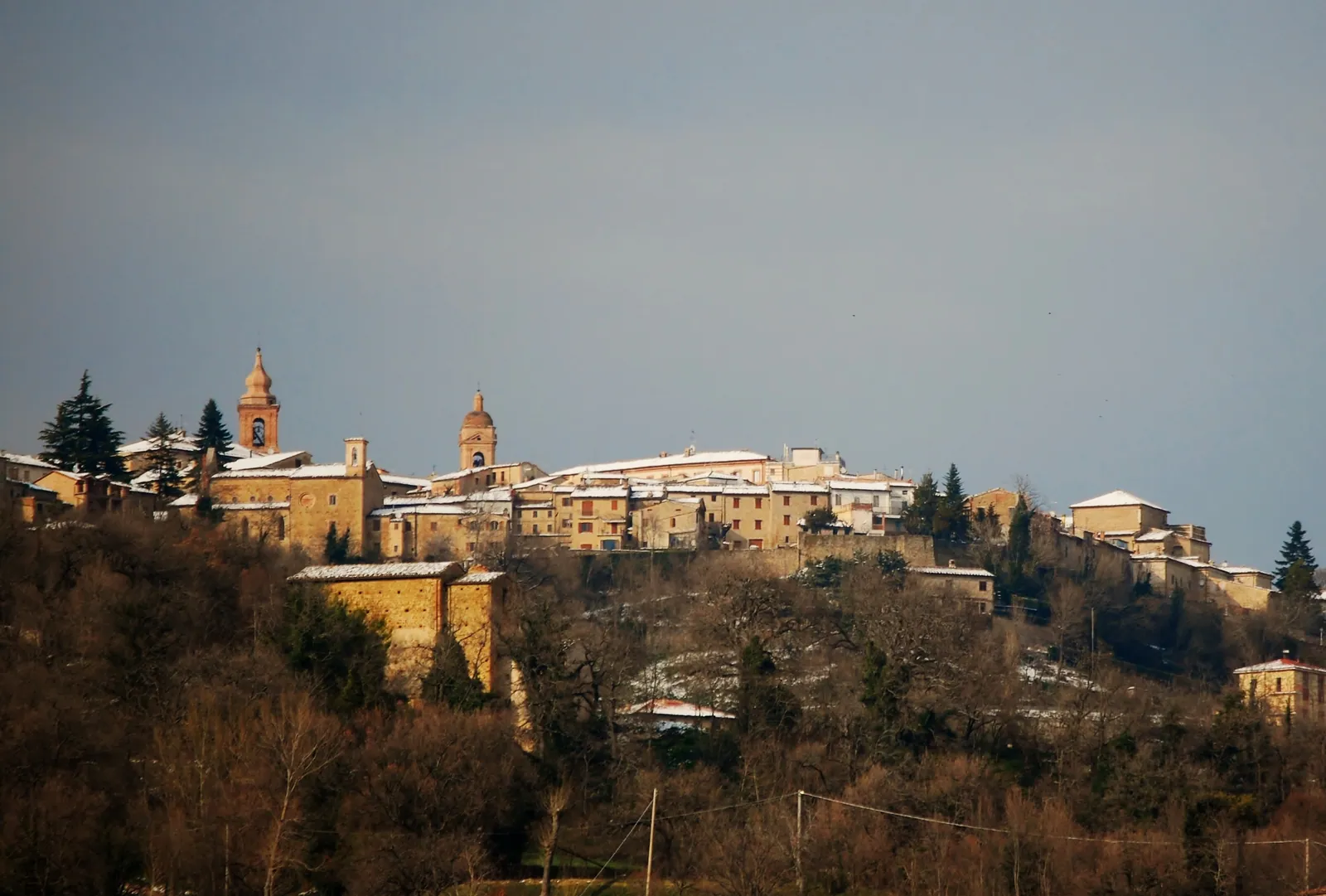
Anyone wondering about things to do in San Ginesio will find a medieval village in the province of Macerata, at about 690 meters above sea level, inside the Sibillini National Park (Monti Sibillini). Its nickname is "Balcone dei Sibillini" (Balcony of the Sibillini). From the village the view reaches the Sibillini Mountains, the Gran Sasso, Monte Conero and the Adriatic Sea.
The historic center is protected by 14th-century walls, which preserve sentry walks, arrow slits and towers. Inside, piazza Alberico Gentili brings together the Collegiata, the theater and palazzo Onofri. The village is also called the "town of 100 churches". It is listed among the Borghi più belli d'Italia (Most Beautiful Villages in Italy) and has held the Orange Flag of the Touring Club Italiano since 2002. The 2016 earthquake hit the town hard and left visible marks on the oldest buildings.
The places
8 results
- ChurchAbbey of Santa Maria delle Macchie (San Ginesio)Church · San Ginesio
- ChurchChurch of Poggio d'Acera (San Ginesio)Church · San Ginesio
 Church of San Francesco (San Ginesio)Church · San Ginesio
 Church of San Gregorio (San Ginesio)Church · San Ginesio
- Museum or art gallery"Scipione Gentili" Museum and Art Gallery (San Ginesio)Museum or art gallery · San Ginesio
- Castle or fortressColonnalta Fortress in San GinesioCastle or fortress · San Ginesio
 Santa Maria in Vepretis (San Ginesio)Church · San Ginesio
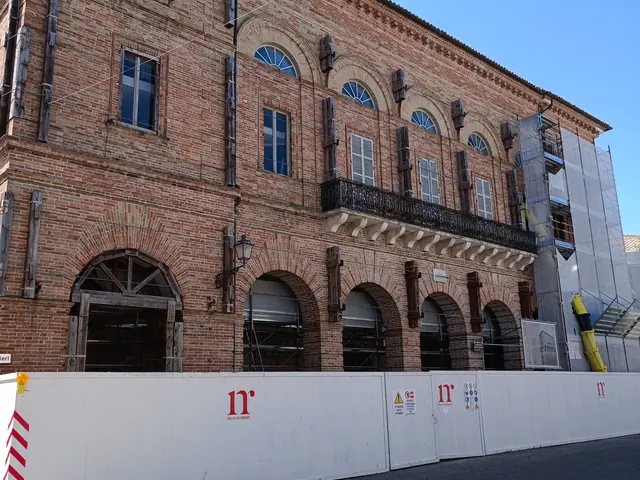 Giacomo Leopardi Municipal TheaterTheater or auditorium · San Ginesio
No results with these filters.
On the map
Points from the site database. Map © OpenStreetMap contributors · Protomaps.
Things to do in San Ginesio: the map
The main sights are inside the walls and can be reached on foot. Of the eight original gates, four remain. The tour can start from Porta Picena. Just before the gate is the Parco della Rimembranza, with the war memorial.
Right after the entrance is the Ospedale dei Pellegrini di San Paolo. The monumental heart is piazza Alberico Gentili, with the Collegiata di Santa Maria Assunta, the theater, the civic tower and the monument to Alberico Gentili. At the opposite end of the village is Porta Ascarana, next to which are the town hall and the church of San Francesco. Along the main street you reach the gardens of Colle Ascarano, the village's viewpoint.
Outside the center there are also places with their own page, such as the Sentiero Natura N15 (Nature Trail N15), described below.
Things to do in San Ginesio: the main sights
Walls and gates. The town walls are the first thing you see on arrival. Walking among the bastions, towers and castle gates is the most immediate way to understand what the village was like. Porta Picena is the entrance from which the most natural tour begins.
Ospedale dei Pellegrini di San Paolo. This is the first building you come to when entering through Porta Picena. The stone loggia has two tiers of segmental arches, well preserved. It was not a hospital in the modern sense: it housed pilgrims traveling to Rome or Loreto.
Piazza Alberico Gentili and the Collegiata. The Collegiata di Santa Maria Assunta is San Ginesio's signature building. The facade is half Romanesque and half Gothic. The church was seriously damaged by the 2016 earthquake. Today it is closed for restoration and seismic strengthening; on some days guided tours of the work site are organized for small groups. The square also has the monument to Alberico Gentili, a 16th-century jurist remembered as the father of international law.
Teatro comunale Giacomo Leopardi. The Teatro comunale Giacomo Leopardi in San Ginesio is the village's only theater. It has between 220 and 250 seats and stands on the site of the old palazzo Defensorale. It opened on August 18, 1877 with an opera written for the occasion by Vincenzo Bruti, a native of San Ginesio, "Addina ovvero le nozze di Pasquella". The theatrical tradition, however, is much older: in 1547 a covered wooden amphitheater was built on the square, described as the first permanent theater in the Marche. After a period of decline and a long restoration that began in 1992, it reopened on December 18, 2005; the 2016-2017 earthquake then made it unusable, and in 2023 a new restoration project began. The link with the arts is in the village's very name, which comes from Saint Ginesius (San Ginesio), a Roman musician and mime martyred under Diocletian and patron saint of actors.
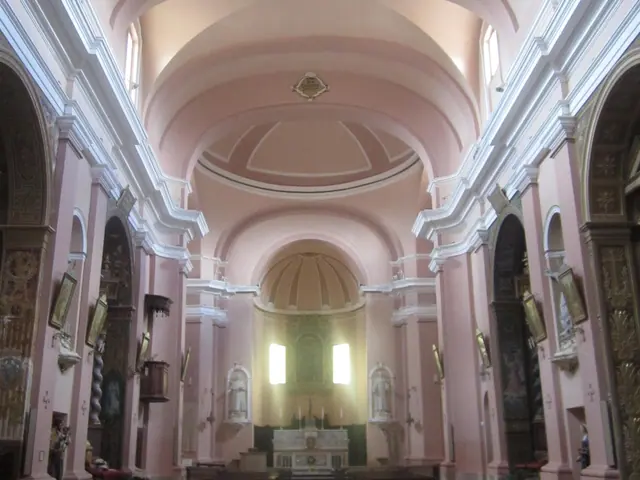
Chiesa di San Francesco. The Church of San Francesco (San Ginesio) stands next to Porta Ascarana and the town hall, so it is easy to include in a walk.
Sant'Agostino. This is the former church with its adjoining convent. The building was rebuilt in 1756, as the entrance portal records. The cloister is partly frescoed. The panel painting with Saint Andrew and the battle between the people of San Ginesio and those of Fermo, painted around 1463 by Nicola di Ulisse da Siena, belongs to the civic art gallery, whose building has been unsafe since the earthquake: since 2020 it has been displayed right here, in the Sant'Agostino auditorium, on its original altar. For the art collections there is also the dedicated page on the "Scipione Gentili" Museum and Art Gallery (San Ginesio).
Colle Ascarano. From the gardens the view stretches from the Adriatic Sea to the Gran Sasso and the Monti della Laga. It is the place to understand why the village is called a "balcony".
Surroundings. Near the village you can visit an archaeological area with the remains of a Roman settlement. For those who want to extend the visit into nature, the Sentiero Natura N15 (Nature Trail N15) has its own page.
Things to do in San Ginesio: tips for your visit
The historic center is explored on foot, strolling among walls, squares and churches. Comfortable shoes are a good idea, because the village stands on a hill.
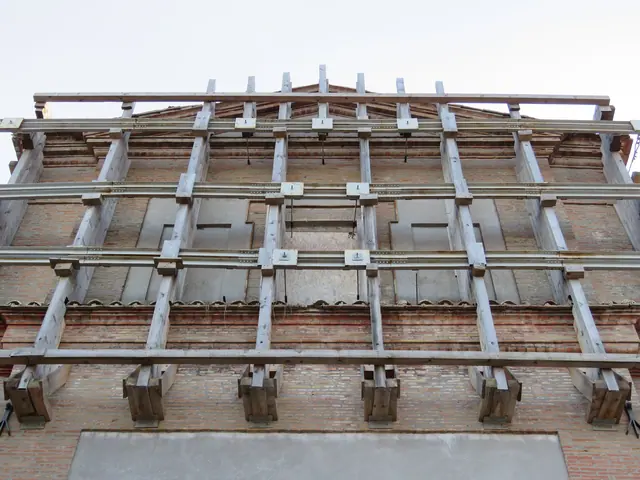
The 2016 earthquake damaged several historic buildings. Some are marked by steel cables and tie rods, and others have been undergoing work. Before setting out, check the opening of churches, the theater and the museum, especially if a specific sight is the reason for the trip.
To plan the day, the page San Ginesio restaurants lists the options for a meal. Those staying several days will find accommodation on the page where to stay in San Ginesio.