


Things to Do in Sarnano
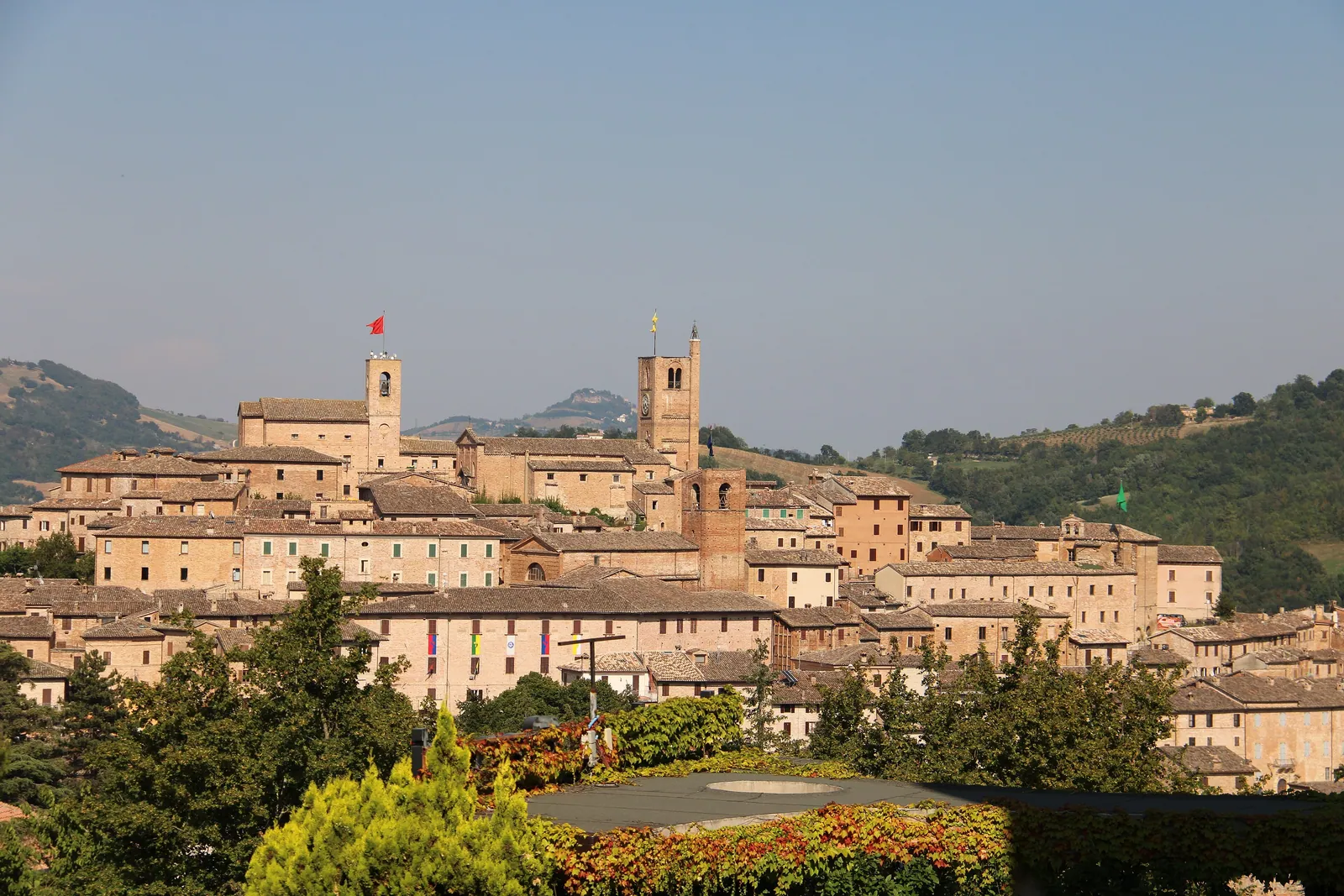
Among the things to do in Sarnano, the starting point is the medieval historic center. It lies in the province of Macerata, in a valley at the foot of the Sibillini Mountains, and climbs toward Piazza Alta in a spiral layout. The town was founded in the 13th century as a fortified castle and still keeps the plan of a walled town, with alleys, stairways and glimpses of the mountains. It is one of the Borghi più belli d'Italia (Most Beautiful Villages in Italy) and holds the Orange Flag (Bandiera Arancione). The 2016 earthquake damaged the historic center and some buildings, including the church of Santa Maria Assunta, and made the Teatro della Vittoria unsafe to enter.
Piazza Alta, the highest point of the village, is overlooked by the Palazzo del Popolo, the Palazzo dei Priori, the Palazzo del Podestà and the church of Santa Maria Assunta. A little lower down are the church of San Francesco and the Pinacoteca (art gallery) with the Musei Civici (civic museums). Outside the center are the thermal baths, the waterfalls and the ski lifts of Sassotetto and Santa Maria Maddalena. This is why Sarnano can be visited in any season.
The places
13 results
- Monastery or abbeyAbbey of Piobbico (Sarnano)Monastery or abbey · Sarnano
 Church of San Francesco (Sarnano)Church · Sarnano
 Church of San Rocco (Sarnano)Church · Sarnano
 Collegiate Church of Santa Maria Assunta in SarnanoChurch · Sarnano
- Museum or art galleryMunicipal Art Gallery and Civic Museums in SarnanoMuseum or art gallery · Sarnano
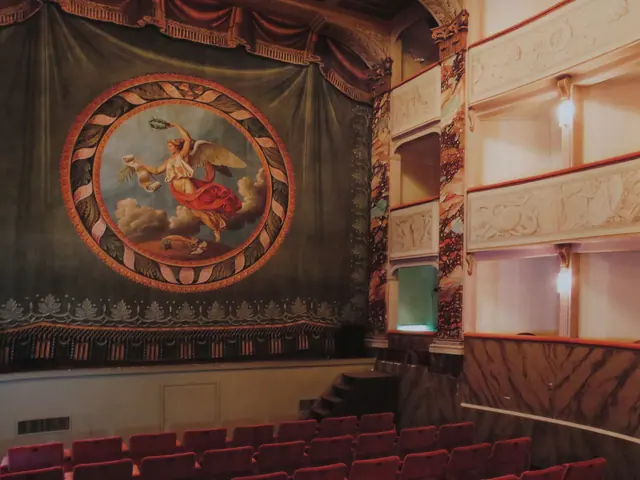 Vittoria Theater in SarnanoTheater or auditorium · Sarnano
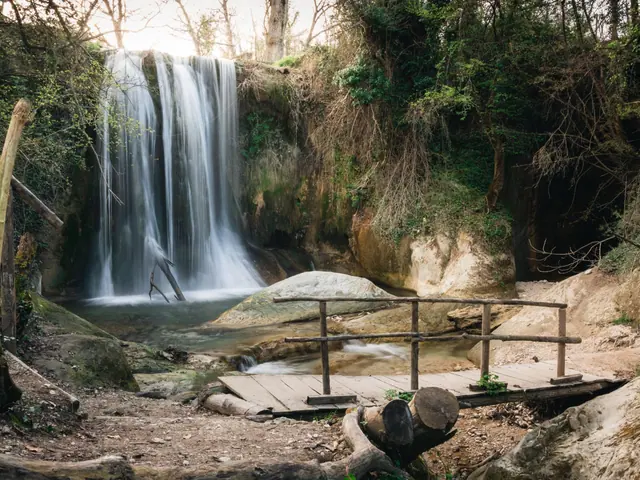 Cascata de lu VagnatòWaterfall · Sarnano
- WaterfallCascata dell'Antico Mulino del PianoWaterfall · Sarnano
- WaterfallCascate del PellegrinoWaterfall · Sarnano
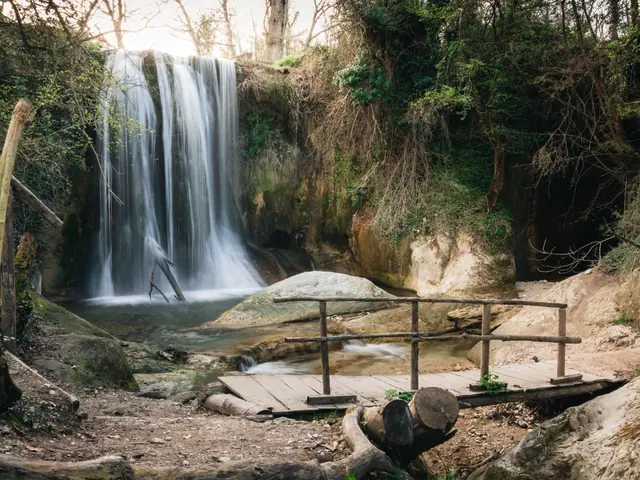 Cascate di SarnanoGuide
- WaterfallCascatelle di SarnanoWaterfall · Sarnano
- WaterfallPozze dell'AcquasantaWaterfall · Sarnano
- Terme di SarnanoGuide
No results with these filters.
On the map
Points from the site database. Map © OpenStreetMap contributors · Protomaps.
Things to do in Sarnano: the map
The village is built on a hill, on the right bank of the Tennacola stream. The walls and the successive rings of houses form concentric circles around the top, and the visit follows this shape: you start from the lower part and climb toward Piazza Alta. The hill is surrounded by peaks such as Castel Manardo, Valvasseto, Sassotetto, Pizzo di Meta, Punta del Ragnolo and Pizzo di Chioggia.
The historic entrance is Porta Brunforte. One described route through the village starts here, where there is convenient parking. Climbing up, you reach Piazza Perfetti, with a panoramic terrace, the town hall (Municipio) and the municipal library. The town hall occupies the former convent of the Franciscan friars, next to the church of San Francesco. Higher up, by small stairways and close to the palazzi, you reach Piazza Alta, where the main monuments are concentrated.
Just below Piazza Alta opens the Picassera, a small square in the historic center. The thermal baths, the waterfalls and the Sassotetto lifts are outside the historic core and are reached by a separate detour.
Things to do in Sarnano: the top sights
Piazza Alta. For centuries the square was the center of the village's social, political and religious life. The buildings around it date from the second half of the 13th century, when Sarnano became a self-governing commune. Today the Palazzo del Popolo houses the Teatro della Vittoria, while the other palazzi recall the civic power of the time. From here the view reaches as far as the Sibillini Mountains.
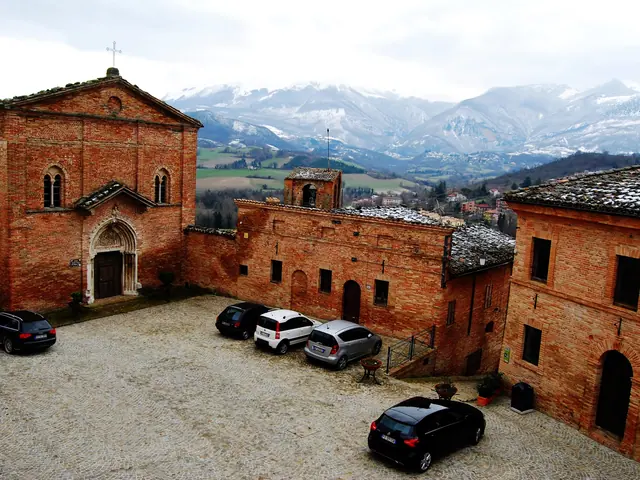
Collegiata di Santa Maria Assunta. The Collegiate Church of Santa Maria Assunta in Sarnano, also called Santa Maria di Piazza, was begun in the 13th century and completed in 1396, when the bell tower was erected. The facade has a finely carved white stone portal, with a pointed lunette depicting the Assumption of the Virgin. Above the portal is a panel with the Madonna della Misericordia by Pietro Alemanno, a pupil of Carlo Crivelli. The same painter frescoed the crypt in 1494. Along the nave there are frescoes by Lorenzo d'Alessandro and Paolo Bontulli da Percanestro. The church also holds a wooden processional banner with the Annunciation and Crucifixion by Giovanni Angelo d'Antonio. The building was damaged in the 2016 earthquake, so it is best to check beforehand whether it can be entered.
Teatro della Vittoria. The Vittoria Theater is on the second floor of the Palazzo del Popolo and seats just over 100 people. It has a horseshoe-shaped auditorium with three tiers of boxes, decorated by the Bolognese painter Gaetano Ferri. The curtain depicts the winged Victory, from which the theater takes its name. It grew out of a theater partnership of thirty-six box owners, formed in 1829. It was designed by the engineer Luigi Fedeli, from Sarnano, who began construction in 1831. It was inaugurated in 1834. Today it is named after the tenor Mario Del Monaco. Since the tremors of 26 and October 30, 2016 the auditorium has been unsafe to enter and is temporarily closed to the public for post-earthquake restoration work.
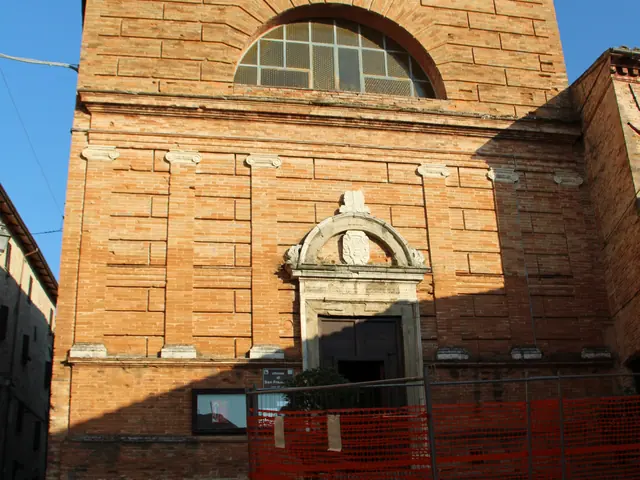
Chiesa di San Francesco. The Church of San Francesco in Sarnano stands next to the town hall. It was consecrated in 1327 in memory of Saint Francis's stay in Sarnano, where he had arrived in 1214. It has a rectangular single-nave plan with a semicircular apse, exposed brick structures and an interior marked by paired Ionic columns. Its present appearance is neoclassical, the result of a renovation attributed to the architect Ignazio Cantalamessa. The works it holds include a Via Crucis (Stations of the Cross) of 14 small canvases, attributed to Cristoforo Unterperger. The adjoining former convent now houses the town hall, and the library keeps old illuminated manuscripts.
Pinacoteca Comunale and Musei Civici. The Municipal Art Gallery and Civic Museums gathers paintings and sculptures made between the 15th and 18th centuries. The best known are the Madonna Adoring the Child with Music-Making Angels by Vittore Crivelli, the Last Supper by Simone De Magistris and a Crucifixion by Stefano Folchetti, dated 1513. Also on display are a dismembered polyptych by Niccolò di Liberatore, known as l'Alunno, and the Praying Madonna and Saint Joseph from 1470, a wooden group attributed to the Maestro Domenico del Presepe. Some of the works come from the churches of the area, especially Santa Maria di Piazza Alta.
One wing of the building houses the Musei Civici: Sacred Art, Ancient and Modern Weapons, Hammers, and Birdlife of the Sibillini. The Museum of Sacred Art, on the ground floor, cannot be visited because of restoration work, and for the same reason the elevator is not accessible. The building has architectural barriers.
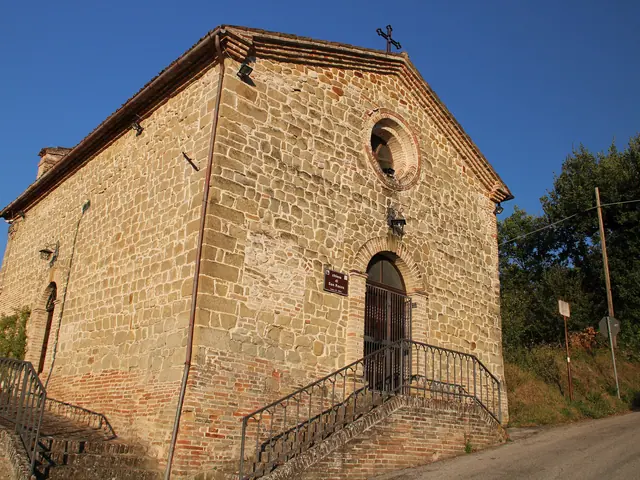
Other churches. Along Via della Costa is the Baroque church of Santa Chiara. Two other cultural stops have dedicated pages: the Abbey of Piobbico and the Church of San Rocco in Sarnano.
Thermal baths and waterfalls. Sarnano is known for the Terme di Sarnano, where very pure low-mineral waters are drawn. Water routes include the Cascatelle di Sarnano, a series of small waterfalls, the Cascata dell'Antico Mulino del Piano and the Cascata de lu Vagnatò. The routes to reach them are described on their own pages, together with those on the Cascate del Pellegrino, the Cascate di Sarnano and the Pozze dell'Acquasanta.
Sassotetto. The ski lifts of Sassotetto and Santa Maria Maddalena draw winter sports enthusiasts. The whole area is crossed by trails for walking, horseback riding and mountain biking.
Things to do in Sarnano: tips for your visit
The historic center is explored on foot. The clearest way to understand its layout is to start from the bottom and climb slowly, looking at the walls, alleys and brick facades, up to Piazza Alta. Between stops there are stairways and changes in gradient, so comfortable shoes are needed.
It is best to check in advance what is open. The Teatro della Vittoria is closed for post-earthquake work. In the Musei Civici, the ground floor with the Sacred Art section is under restoration. The church of Santa Maria Assunta was damaged by the 2016 earthquake. The Pinacoteca's opening hours are also best checked before visiting.
Those who want to spend time in nature can combine the visit to the village with the waterfalls or the thermal baths, choosing routes according to the weather. The town offers an extra occasion in August, with the Palio del Serafino, named after the Seraph on the town's coat of arms. According to tradition, the figure was painted by Saint Francis. At the table, the crostata al torrone is worth a taste, a local nougat tart made by hand with almonds, hazelnuts and spices and baked in a wood-fired oven. For more, see the page on Sarnano local products.