


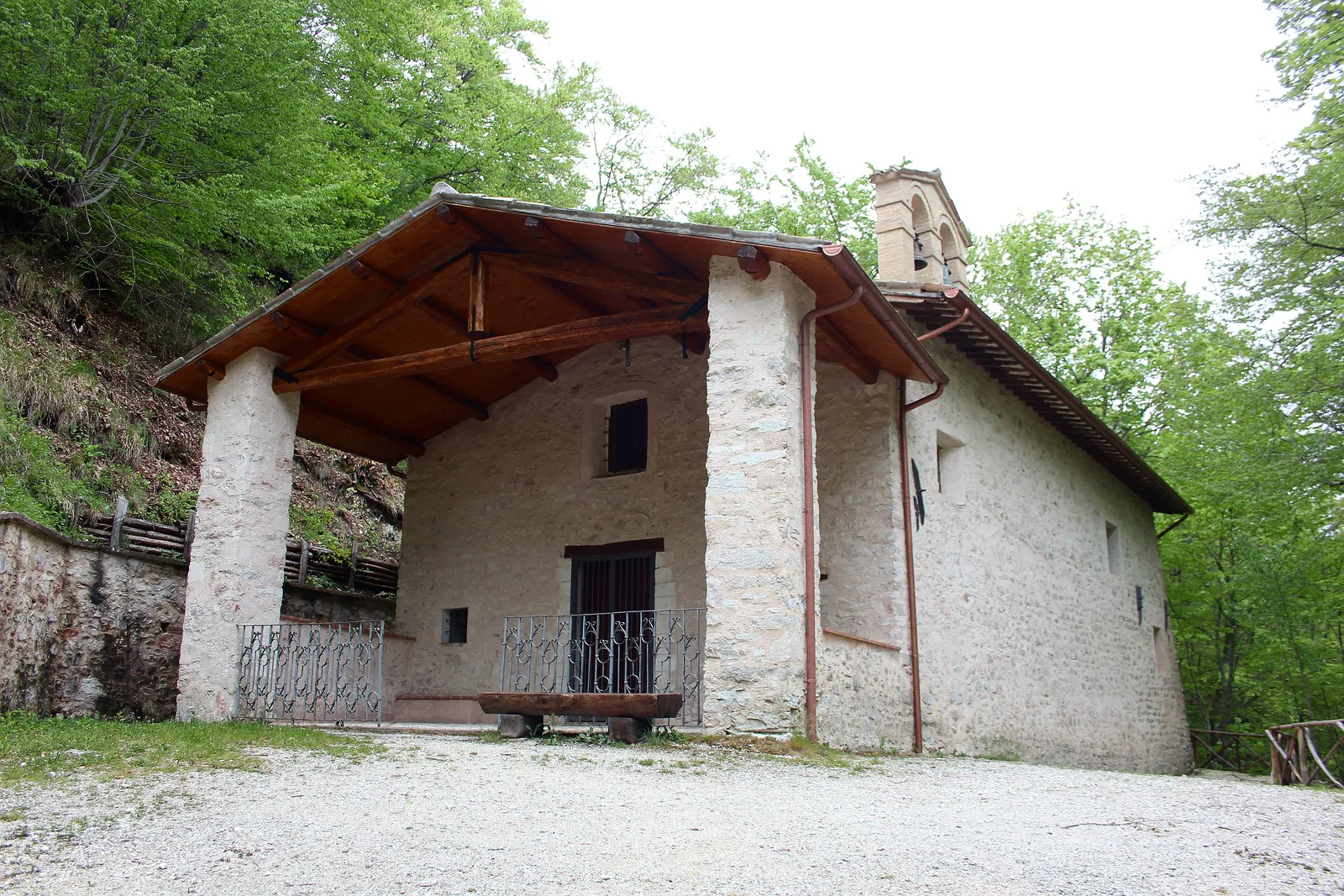
Abbeys and Monasteries of the Sibillini
The abbeys and monasteries of the Sibillini tell more than a thousand years of religious life: from the hermit monks in the caves of Val Castoriana to the Benedictines of Sarnano, to the monastery in Cascia where Saint Rita lived. This page lists eight places, including abbeys, monasteries, convents and hermitages. The three described further on are Sant'Eutizio, Piobbico and the monastery in Cascia.
According to tradition, in the 5th century some Desert Fathers from Syria settled in natural caves in Val Castoriana, following first the monk Spes and then Eutizio. Farther north, the Abbazia di Piobbico was founded in 1030 between the Tenna and Tennacola streams. Some buildings were damaged by the 2016 earthquake, so it is best to check the status of each place before setting out.
The places
8 results
- Monastery or abbeyAbbey of Piobbico (Sarnano)Monastery or abbey · Sarnano
- Abbey of Sant'Eutizio (Preci)Guide
- Monastery or abbeyConvent of the Apostolini in VissoMonastery or abbey · Visso
- Monastery or abbeyHermitage of Madonna di Valpovera in CamerinoMonastery or abbey · Camerino
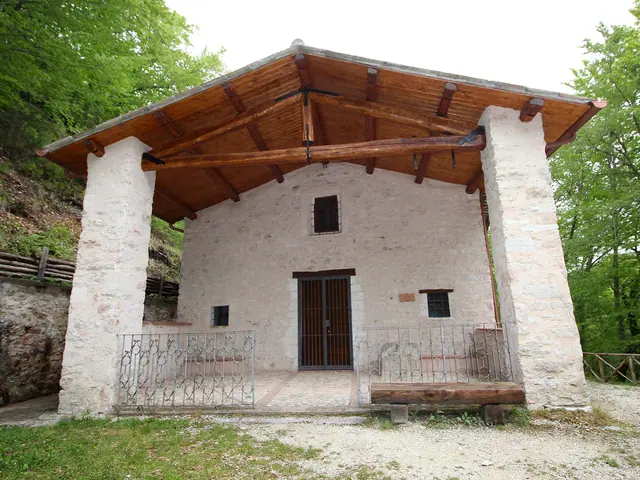 Hermitage of San Paterniano in SellanoMonastery or abbey · Sellano
- Monastery or abbeyMonastery of San Lorenzo (Amandola)Monastery or abbey · Amandola
- Monastery or abbeyMonastery of Valledacqua (Acquasanta Terme)Monastery or abbey · Acquasanta Terme
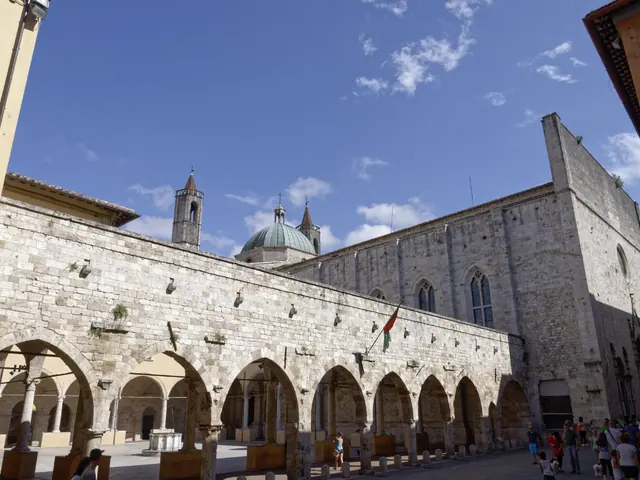 Great Cloister of San Francesco (Ascoli Piceno)Monastery or abbey · Ascoli Piceno
No results with these filters.
On the map
Points from the site database. Map © OpenStreetMap contributors · Protomaps.
Abbeys and monasteries of the Sibillini: the map
The religious sites collected here are located in eight municipalities in the Sibillini area:
- Abbey of Sant'Eutizio (Preci), in Val Castoriana.
- Abbey of Piobbico (Sarnano), at the foot of Sassotetto.
- Monastero di Santa Rita (Cascia): the monastery in the upper part of Cascia, next to the basilica of Saint Rita, born Margherita Ferri Lotti.
- Convent of the Apostolini (Visso).
- Hermitage of Madonna di Valpovera (Camerino).
- Hermitage of San Paterniano (Sellano).
- Monastery of San Lorenzo (Amandola).
- Monastery of Valledacqua (Acquasanta Terme).
For hermitages and places of worship at altitude, see also the page on the sanctuaries and hermitages of the Sibillini.
Abbeys and monasteries of the Sibillini: the highlights
Abbazia di Sant'Eutizio (Preci). The abbey stands isolated in the greenery of Val Castoriana, near Preci. It rests on a high travertine ledge. Between the 10th and 12th centuries it was the most important Benedictine, political and economic center of the area. The facade and rose window are in the Spoleto Romanesque style. On the lunette of the portal is an inscription from 1190. The caves where Eutizio and Fiorenzo withdrew open into the rocky spur that towers over the abbey, on top of which stood the 17th-century bell tower, which collapsed in the 2016 earthquake. In the center of the choir is the funerary monument of Saints Eutizio and Spes, from 1514.
Before the 2016 earthquake the abbey's rooms housed a museum. On display were wooden sculptures, paintings, silverware, embroidery and the instruments of the surgeons of the Scuola Preciana, a school born right at Sant'Eutizio. The monks promoted this school of surgery, which was centered in Preci and flourished from the 13th to the 18th century. The church reopened for worship in 1956 and from 1989 the complex became a house of hospitality and prayer; after severe damage in the 2016 earthquake, the abbey is being rebuilt. All the details are on the page dedicated to the Abbazia di Sant'Eutizio (Preci).
Abbazia di Piobbico (Sarnano). The abbey lies in the mountains above Sarnano, about 5 kilometers from the town center. It stands at the foot of Sassotetto, in a hollow where two streams meet. The church was consecrated on July 18, 1059 by Ugo, bishop of Camerino. Of the monastic complex, the Romanesque church with its crypt and the frescoes on the walls remain. The frescoes are the work of painters from the Umbria-Marche milieu of the second half of the 15th century and the first decades of the 16th.
The move of the monks to the church inside the walls of Sarnano led to the abbey's decline. Under Sixtus V (1585-90) it was suppressed and joined to the Chapter of Montalto. The earthquakes of 26 and October 30, 2016 damaged it, and for a time it was declared unsafe. On July 27, 2024 it reopened to the public, and an exhibition was set up in Sarnano for the occasion. The full profile is the one on the Abbazia di Piobbico (Sarnano).
Monastero di Santa Rita (Cascia). The monastery of Santa Rita was built in the 13th century, originally dedicated to Santa Maria Maddalena, and enlarged in the 18th. It was home to the saint for about forty years and still houses Augustinian nuns. The choir holds 16th-century frescoes and 17th- and 18th-century canvases on the life of Rita. The oratory is the place where the saint received the stigmata. Among the relics are her wedding ring and rosary. The most important is the Cassa Solenne (the solemn casket), which held the saint's body from 1457-62 to 1745. The nearby basilica of Santa Rita was consecrated in 1947.
The other five places on the list have their own page, reachable from the Culture section.
Abbeys and monasteries of the Sibillini: visiting tips
Before traveling, check that the place is open and can be visited. The 2016 earthquake struck several religious buildings in the area, and the situation can change. The overall picture is on the page The 2016 earthquake and reconstruction in the Sibillini Mountains.
The monastery in Cascia is still a place of religious life, with a community living there: discretion and respect for its quiet are expected. Abbeys such as Sant'Eutizio and Piobbico stand outside inhabited centers, so it is useful to check the weather and wear comfortable shoes.
From Sant'Eutizio it is possible to continue toward Norcia, in the footsteps of Saint Benedict. For a broader view, continue with the page on the history, art and legends of the Sibillini.