


Sanctuaries and Hermitages of the Sibillini
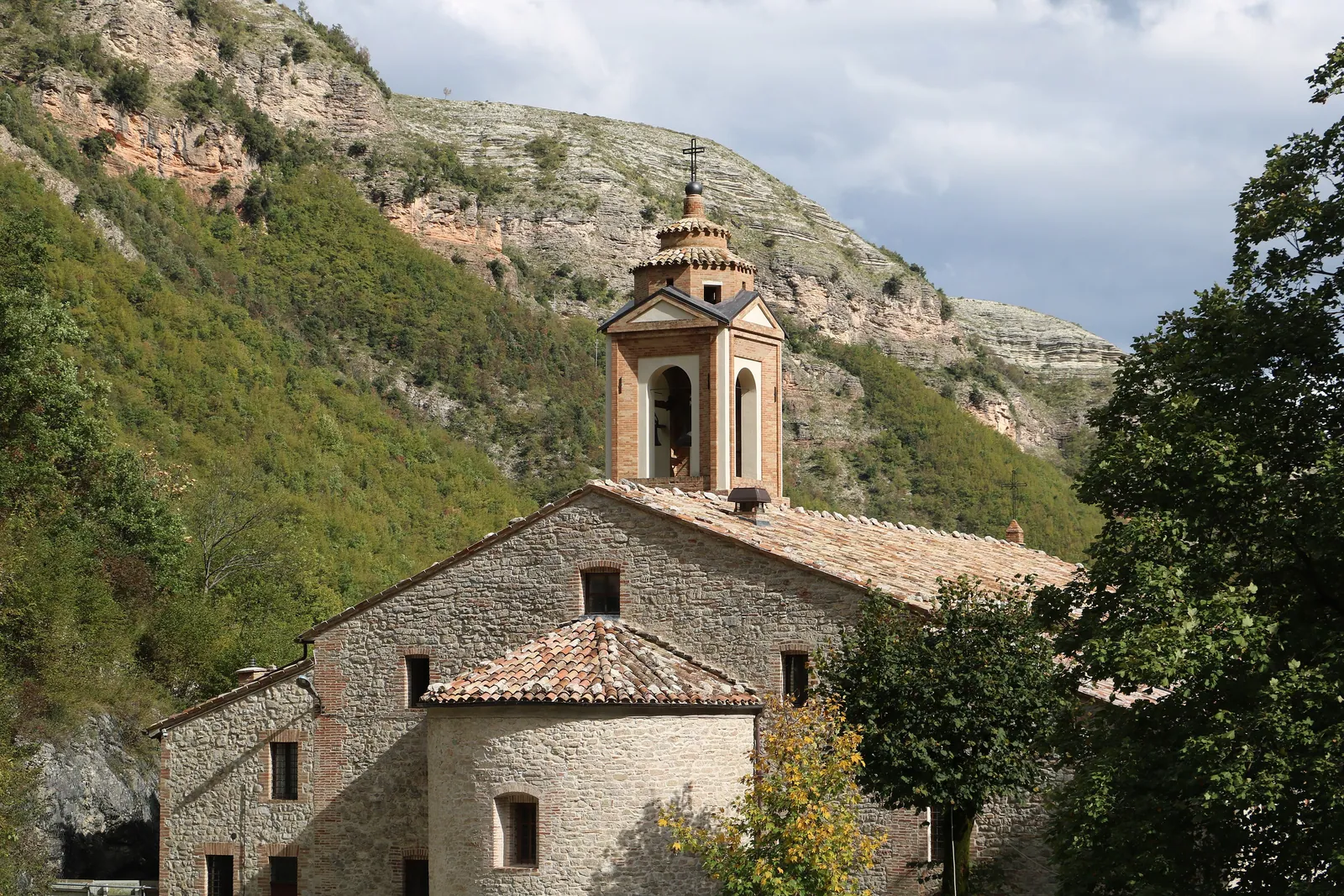
The sanctuaries and hermitages of the Sibillini stand in places of passage and silence: a plateau at about 1,000 m above sea level, a valley at the foot of Monte Priora, a flat shelf above the Gole dell'Infernaccio gorge. Many of them originate in stories of apparitions and miracles. Each has a history built over the centuries by monks, local communities and, in the case of the hermitage of San Leonardo, by a single friar.
The most complete route takes in five places: the Santuario della Madonna dell'Ambro and the hermitage of San Leonardo al Volubrio in Montefortino, the Santuario di Macereto in Visso, the Santuario del Beato Antonio in Amandola and the Santuario di Santa Rita in Cascia. The 2016 earthquake damaged some of these places, so it is best to check access before setting out.
The places
5 results
- Sanctuary or hermitageHermitage of San Leonardo al Volubrio in MontefortinoSanctuary or hermitage · Montefortino
- Sanctuary or hermitageSanctuary of Beato Antonio (Amandola)Sanctuary or hermitage · Amandola
 Sanctuary of Madonna dell'Ambro (Montefortino)Sanctuary or hermitage · Montefortino
 Sanctuary of Macereto (Visso)Sanctuary or hermitage · Visso
 Sanctuary of Santa Rita in CasciaGuide
No results with these filters.
On the map
Points from the site database. Map © OpenStreetMap contributors · Protomaps.
Sanctuaries and hermitages of the Sibillini: the map
The sites are spread over several municipalities and valleys, so it makes sense to plan the visit by area.
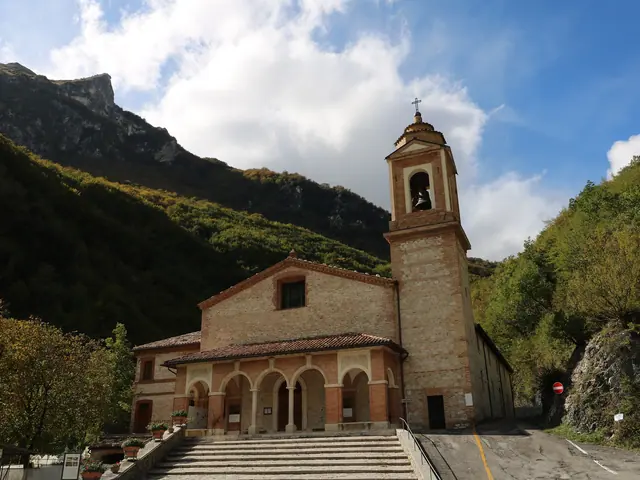
Montefortino, in the province of Fermo, has two sites close to each other. The Ambro sanctuary stands at 658 m, between Monte Priora and Monte Castel Manardo, next to the stream it is named after. The hermitage of San Leonardo al Volubrio stands at 1,128 m, in the hamlet of Rubbiano, on a flat shelf between Monte Sibilla and Monte Priora, above the Gole dell'Infernaccio.
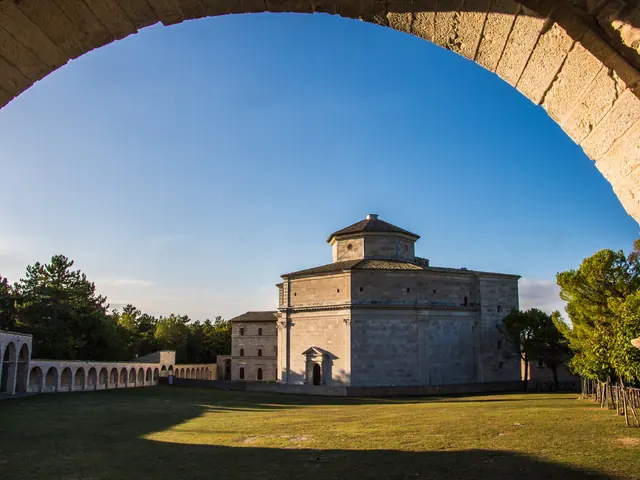
The Santuario di Macereto is in the municipality of Visso, in the province of Macerata. It stands at about 1,000 m, on the plateau that bears its name. The Santuario del Beato Antonio is in Amandola, while the Santuario di Santa Rita is in Cascia.
Sanctuaries and hermitages of the Sibillini: the places not to miss
Santuario della Madonna dell'Ambro (Montefortino). The sanctuary dates back to the 11th century; according to tradition it was founded after the Virgin appeared to a deaf-mute shepherd girl named Santina, who regained her speech. Because of this story, and the river flowing beside it, it is called "the little Lourdes of the Sibillini". It is considered the second most important Marian sanctuary in the Marche region after Loreto. The first historical record is a donation of 1073. The site was run first by the Benedictines, then by the Camaldolese monks of San Leonardo and finally by the Capuchins. Inside, the Chapel of the Apparition was painted in the early 17th century by Martino Bonfini and contains twelve paintings devoted to the Sibyls. After the 2016 earthquake the church was declared unsafe; it reopened on December 25, 2018, once work on the ceiling and vault was completed. More details are on the page about the Sanctuary of Madonna dell'Ambro.
Eremo di San Leonardo al Volubrio (Montefortino). All that remains of the old monastery is a small single-nave church, with a portico of three pointed arches and the bell tower on the east side. Around it lie beech woods and pastures, with yews and maples, and the Tenna river flows just below. The site lies along an ancient mountain road, and in medieval times there was a fortified settlement here, the Castrum de Volubrio. The little church was rebuilt by Father Pietro Lavini, a Capuchin friar from the Ambro sanctuary nicknamed "God's bricklayer". He worked on it for about forty years and died on August 9, 2015. The earthquake caused serious damage and cut off vehicle access to the hermitage; in June 2018 work to make it safe was announced. The page on the Hermitage of San Leonardo al Volubrio covers its history and how to visit in more depth.
Santuario di Macereto (Visso). It is considered the finest example of 16th-century Renaissance architecture in the Marche. Tradition says that on August 12, 1359 a caravan carrying a wooden statue of the Madonna and Child, bound for the Kingdom of Naples, stopped on the plateau because the animals knelt down and refused to go any further. This led to a first chapel, later incorporated into the sanctuary. The design follows a drawing by Bramante from 1505, adapted by the architect Giovan Battista da Lugano. After his death, work resumed in 1553 under Filippo Salvi da Bissone and was completed in 1556. The building has an octagonal plan and three entrances; at its center is the small temple with the Latin inscription recounting the miracle. The complex also includes the Casa dei Pellegrini (pilgrims' house), the Casa del Corpo di Guardia (guardhouse) and the Palazzo delle Guaite. Full details are on the page about the Sanctuary of Macereto.
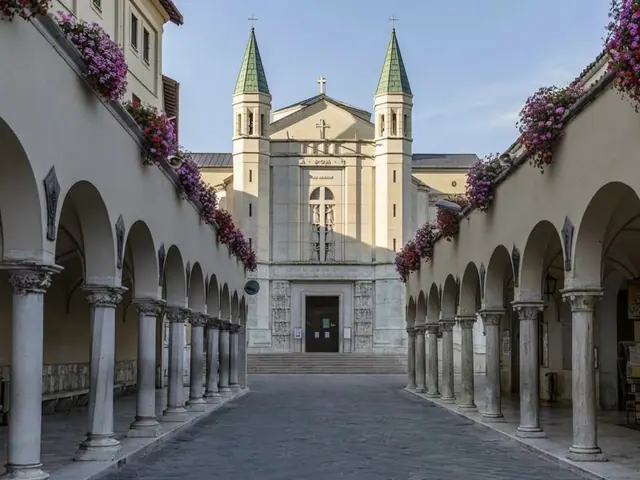
Other sanctuaries. In Amandola you can visit the Sanctuary of Beato Antonio, and in Cascia the Sanctuary of Santa Rita in Cascia: each has its own page.
Sanctuaries and hermitages of the Sibillini: visiting tips
Before setting out, check the access status of each site, especially the hermitage of San Leonardo. After 2016 access to the Infernaccio area was banned for a long time; today a mountain helmet is mandatory in the gorge, and when a weather alert is in force the route is closed, including to hikers. The background of the reconstruction is covered on the page about the 2016 earthquake.
The hermitage of San Leonardo is reached on foot from the Valleria parking lot, at the end of the dirt road that climbs from Rubbiano, narrow in places. The route from the Gole dell'Infernaccio is an out-and-back walk of a few hours. Near the hermitage a stream forms some waterfalls, which many pilgrims reach as an extension of the hike. As with any outing at altitude, check the weather.
The Ambro sanctuary and the hermitage can be visited on the same day, since they are in the same municipality and linked by history: the Camaldolese monks of San Leonardo ran the sanctuary, and Father Pietro Lavini belonged to the Ambro community. The Santuario di Macereto requires a drive toward Visso instead: the plateau is reached by climbing from the Passo delle Fornaci. Any season works, as these places do not depend on the time of year. For more on the historical background and traditions, see the page on Sibillini culture.