


Hermitage of San Paterniano in Sellano
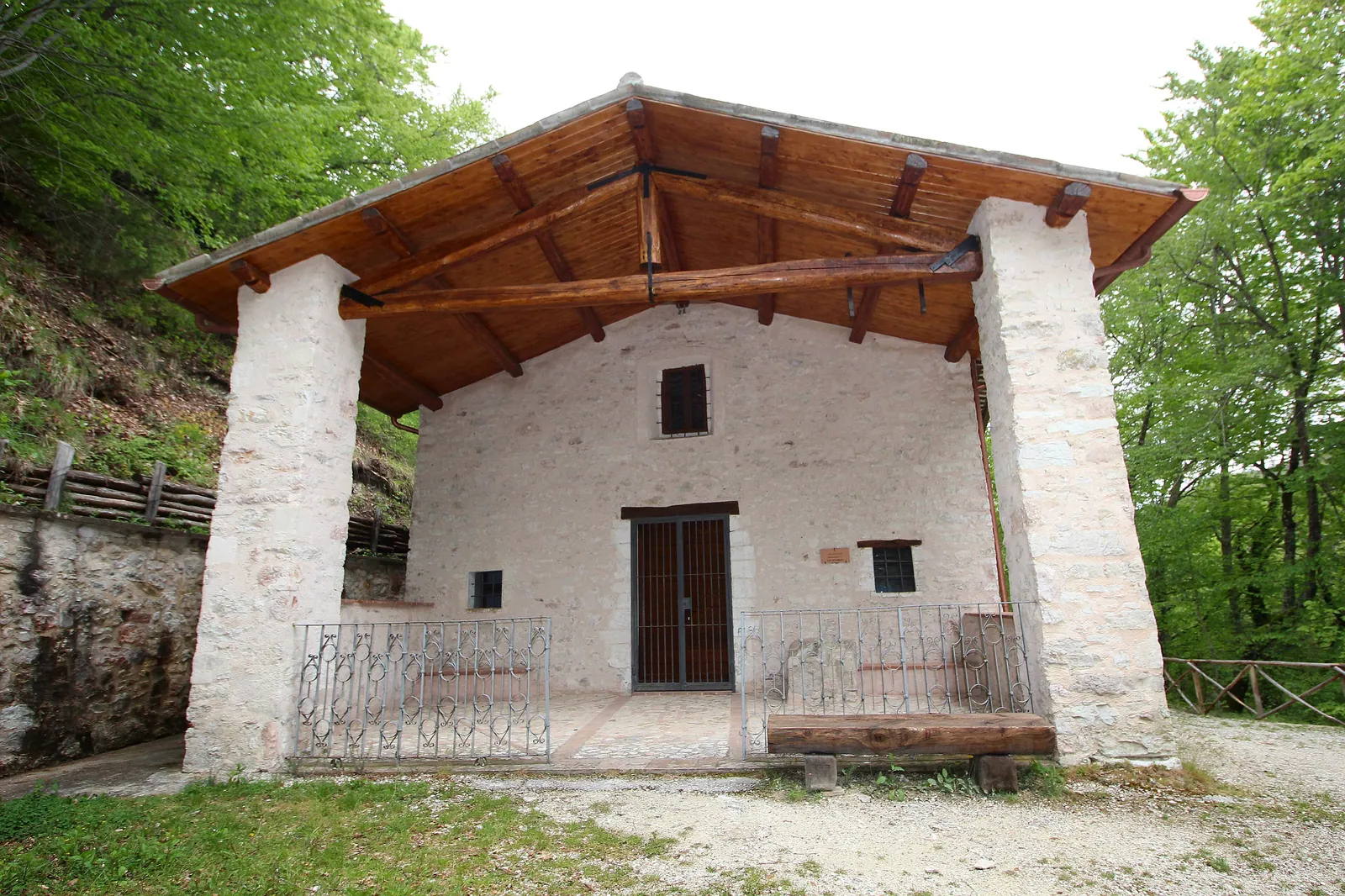
Hermitage of San Paterniano in Sellano
- Type
- Monastery or abbey
- Municipality
- Sellano (PG)
Source: site database, © OpenStreetMap contributors (ODbL).
The Hermitage of San Paterniano (Eremo San Paterniano) is a small sanctuary in the municipality of Sellano, in Umbria, at an elevation of 1,020 m on the slopes of Monte Cammoro. It stands in a clearing surrounded by beech woods, near the springs of the Fauvella stream. It is linked to the cult of San Paterniano, bishop of Fano, who according to tradition lived here as a hermit. The place has long been considered beneficial for bone diseases.
On the map
Points from the site database. Map © OpenStreetMap contributors · Protomaps.
History of the Hermitage of San Paterniano
According to tradition, Paterniano, bishop of Fano, stopped here during one of his journeys to Rome. A legend tells that his skull returned to the spot several times, until the church was built there. The saint is the patron of Cammoro, but his cult is widespread throughout the Sellano area.
The hermitage is documented as early as the 14th century. The present building is more recent, probably from the 16th century or later, and has been restored and altered several times. A small cell at the back was occupied by hermits, both religious and lay, until the first decades of the 20th century. After a long period of neglect, the church was restored in the early 1990s on the initiative of the Cammoro community, which continues to look after it.
What to see at the Hermitage of San Paterniano
The church has a gabled facade, preceded by a simple portico. The door and three small windows open onto the portico, and there is a small bell tower on the roof. To the right of the entrance is the "pietra della devozione" (stone of devotion), with hollows that popular tradition attributes to the marks of the saint's knee, elbow and staff.
Just below the road that climbs to the church is the San Paterniano spring, whose waters tradition credits with healing properties. In the surrounding woods there are field maple, Italian maple, hawthorn, beech and Turkey oak. Near the spring there is also an imposing beech tree.
Visiting the Hermitage of San Paterniano in Sellano
The most heartfelt occasion is the feast on July 10. Three processions then set off for the hermitage from Orsano, Cammoro and Pettino.
In the beech wood along the route, the Comunanza agraria di Cammoro (the local common-land association) has set up an area with tables, benches, barbecues and fresh water fountains. The area also includes the Aula Verde (green classroom), with signs that help identify the tree species. For a hike there is also a loop route from Cammoro around Monte Cammoro. Before setting out, it is best to check the weather and the condition of the road and trails.
Where the Hermitage of San Paterniano is located
The hermitage is in the municipality of Sellano, between the villages of Molini and Pettino. Pettino is a hamlet of Campello sul Clitunno. From Sellano, follow the signs for Pettino, then reach the hermitage through the woods. The hermitage can also be reached by 4x4 vehicle.
Around the Hermitage of San Paterniano
The Sellano area also has the hermitage of the Beato Giolo. The area also includes the Lago di Vigi and the waterfalls of the Le Rote stream. Other places of religious life in the area are collected on the page about abbeys and monasteries of the Sibillini.
Frequently asked questions
When is San Paterniano celebrated in Sellano?
What are the marks on the stone in front of the San Paterniano hermitage?
Is there a picnic area near the Hermitage of San Paterniano?
At what elevation is the Hermitage of San Paterniano?
Nearby
What to see nearby
- 5.2 km
- Convent of Santa Croce in SellanoRuins or archaeological site5.8 km
- Church of Sant'Antonio (Sellano)Ruins or archaeological site8.1 km
Where to stay
- Il Castello del Sole, SellanoFarm stay2.2 km
- 4.9 km
- Il Mulino sul Menotre, SellanoGuesthouse4.9 km
Where to eat
- Casaletto, SellanoRestaurant2.0 km
- Home restaurant Le Rose di Sesta, SellanoHome restaurant5.5 km
- Trattoria Bar La Fojateria, SellanoRestaurant6.1 km
Straight-line distances.