


Castelfranco (Norcia)
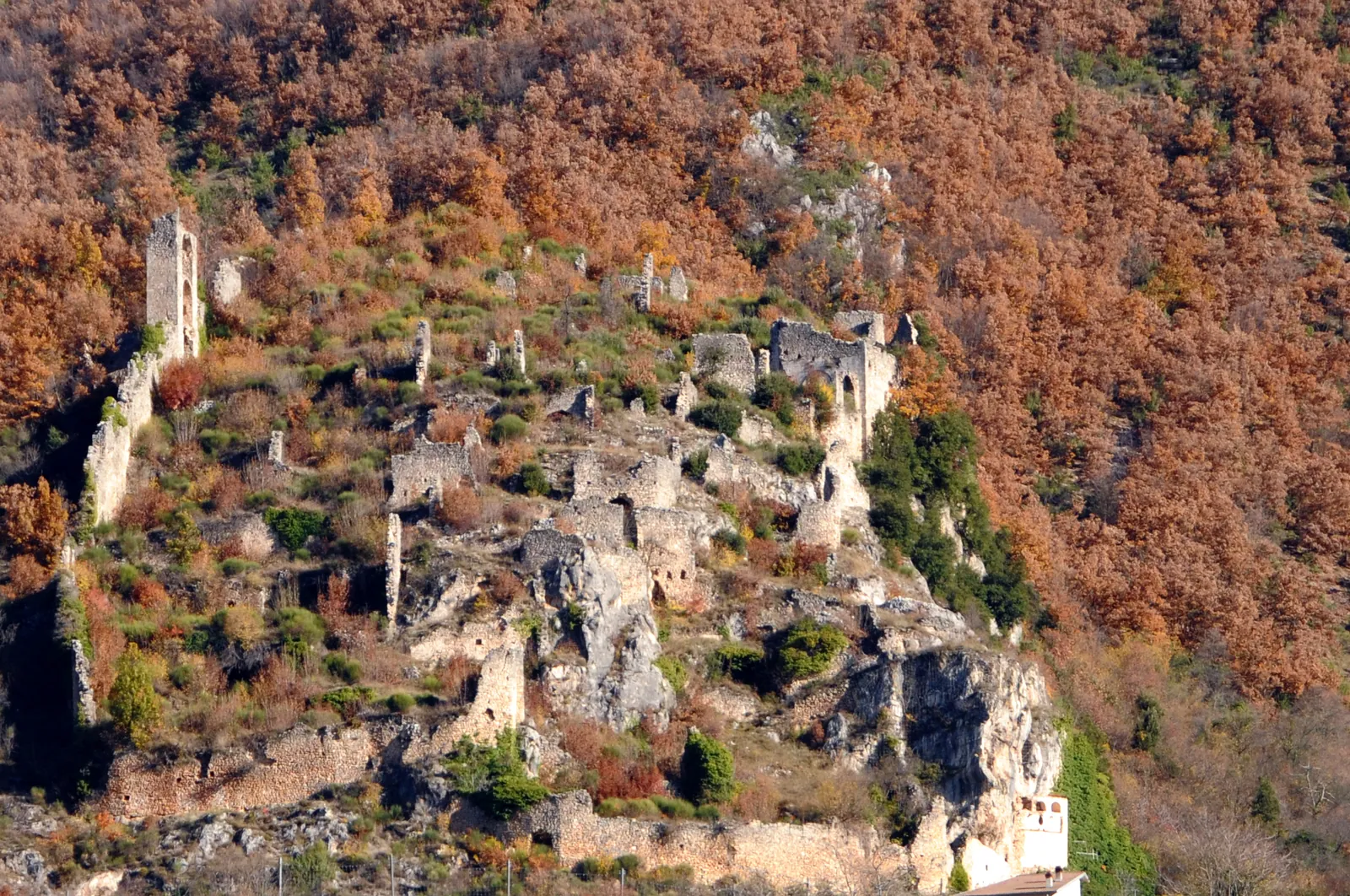
Castelfranco (Norcia)
- Type
- Castle or fortress
- Municipality
- Norcia (PG)
Source: site database, © OpenStreetMap contributors (ODbL).
Castelfranco is a ruined medieval castle in the hamlet of Ancarano, in the municipality of Norcia, at the locality of Capo del Colle. The town of Norcia had it built in 1370 to watch over the val Campiana. Today the 14th-century gate with its tower, stretches of wall and an almost entirely ruined church, set against the rock face, remain.
The ruins stand along an old route that led from Norcia to Visso. The castle had a short life and is an example of a fortified settlement built to control a line of communication.
On the map
Points from the site database. Map © OpenStreetMap contributors · Protomaps.
History of Castelfranco in Norcia
After the destruction of the medieval castle of Ancarano, the inhabitants moved down to the valley in small clusters. Norcia did not want to leave the val Campiana, an important road junction, unguarded. In 1370 it therefore had Castelfranco built and ordered the inhabitants of Capo del Colle to move to the new center. The name recalls the tax exemptions granted to those who moved there.
The move never really happened, however, because the site was rugged and hard to reach. Then came the attacks: in 1438 the troops of Francesco Sforza occupied the castle, and in 1452 bands of exiles from Norcia stormed it. The castle was then abandoned.
What to see at Castelfranco
The best-preserved feature is the 14th-century gate with a Gothic arch. Above it rises a tower, the only one left, with two arches set one above the other. Protecting the gate is a polygonal reinforcement with loopholes, a unique example in the area. The gate joins the walls that enclose the ruins of the fortress.
Inside stands the church, largely collapsed, clinging to the rock. The decorated portal, topped by a Lamb of God with a cross, remains of frescoes on a pillar and a Madonna and Child in the apse survive.
How to visit Castelfranco
Castelfranco is an abandoned site made up of ruins and a ruined church. Since Ancarano was hit by the 2016 earthquake, it is advisable to check the conditions of the area before setting out and to move carefully among the remains.
The ruins can also be seen from Capo del Colle, along a hiking route between Norcia and Preci that passes through this locality.
Where Castelfranco is located
The castle is in the hamlet of Ancarano, in the municipality of Norcia (Umbria), at the locality of Capo del Colle, in the val Campiana, also called the valle Castoriana. Ancarano is a few kilometers from Norcia. The road that runs through the valley links Norcia to Preci.
Around Castelfranco in Norcia
Not far from the hamlet of Sant'Angelo di Ancarano, along the Norcia–Preci road, stands the Church of Madonna Bianca in Norcia, dating from the 14th century. It holds a white marble high relief from 1488, attributed to Francesco di Simone Ferrucci. The church was badly damaged by the 2016 earthquake and was made safe in January 2017.
In the same valley is Campi Alto, a typical hillside castle that still keeps its entrance arch and a tower. For other fortifications in the area, see the page on castles of the Sibillini Mountains.
Frequently asked questions
Who built Castelfranco and why?
Why is it called Castelfranco?
What remains of the Castelfranco castle today?
How far is Castelfranco from Norcia?
Nearby
What to see nearby
- 1.0 km
- 1.0 km
- 1.1 km
Where to stay
- Agriturismo Castelfranco, NorciaFarm stayunder 100 m
- 1.1 km
- Agriturismo Fonteantica, NorciaFarm stay1.3 km
Where to eat
- Valle del Sole, NorciaRestaurant900 m
- Il Bar di Campi, NorciaBar and café1.4 km
- Agriturismo La Tana Dei LupiRestaurant5.8 km
Straight-line distances.