


Church of Madonna Bianca (Norcia)
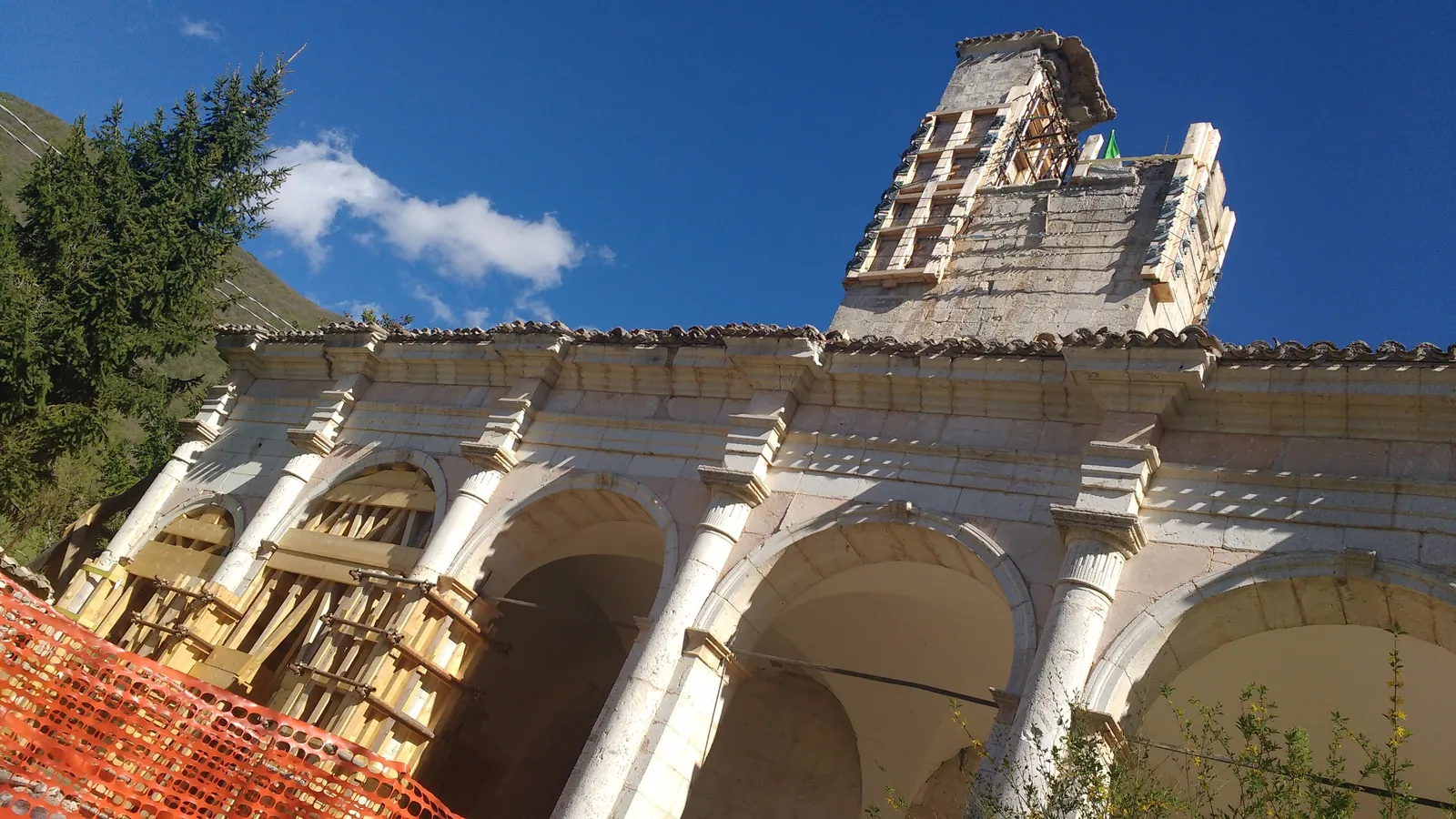
Church of Madonna Bianca (Norcia)
- Type
- Church
- Address
- Via Santa MariaNorcia (PG)
Source: site database, © OpenStreetMap contributors (ODbL).
The Church of Madonna Bianca (Chiesa della Madonna Bianca) in Norcia is a religious building partly cut into the rock, with 14th-century origins, in the hamlet of Ancarano di Norcia, on the road to Preci. It holds a white marble high relief from 1488 attributed to Francesco di Simone Ferrucci, a pupil of Verrocchio. Inside there are also 15th-century frescoes with scenes from the life of Mary and ex-votos. The 2016 earthquake caused new serious damage to the building.
On the map
Points from the site database. Map © OpenStreetMap contributors · Protomaps.
History of the Church of Madonna Bianca
The church, also called Santa Maria Nuova di Ancarano, probably arose after Castelfranco was abandoned. This was a hillside castle built by the Comune di Norcia to control the entrance to the area, and its inhabitants soon left it for the flatter land below. The exact year of construction is not known. The first references to the building appear in documents from 1361, and its present form is the result of enlargements and rebuilding between the 14th and 16th centuries. The work was completed in 1508.
The name comes from the 15th-century high relief, venerated since ancient times. The building was altered several times after damage from the earthquakes of 1979 and 1997. It was then hit especially hard by the 2016 earthquake, above all on October 30.
What to see in the Church of Madonna Bianca
Outside, note the late Gothic portal, the work of Lombard masters, with two column-bearing lions. In front of the facade is a portico with five arches, which resembles that of the cathedral of Spoleto. Along the side runs a portico with six arches, paved with slabs of local stone. To the left of the portal is a shrine frescoed by the Sparapane workshop of Norcia, now hard to make out.
The two aisles inside are divided by four columns. In the right aisle a cycle of paintings from 1476, attributed to Antonio Sparapane, tells episodes from the life of Mary. Below, the votive images were painted by grateful worshippers or by those seeking protection. Among them is a Madonna and Child with a coral necklace against the evil eye, and Sant'Amico, patron saint of woodcutters, with a wolf on a leash.
In the presbytery, the right chapel holds the high relief of the Madonna and Child, set in a wooden tabernacle dated 1511. In the left chapel is a wooden Crucifix attributed to Benedetto da Maiano.
Visiting the Church of Madonna Bianca
After the 2016 damage, the entire building was made safe in January 2017. Before that work, the Madonna Bianca and the wooden Crucifix, with their tabernacles, were moved to a safe place. The current opening and access status should be checked before setting out.
Where the Church of Madonna Bianca is located
The church is in Norcia, in the hamlet of Ancarano, a short distance from Sant'Angelo di Ancarano. It stands on the road that leads from Norcia through the Valle Campiana to Preci.
Around the Church of Madonna Bianca
This is the Valle Campiana, between Norcia and Preci. Here stood the castle of Castelfranco, where the community that built the church originated. Other places of worship in the area are gathered on the page about the churches of the Sibillini Mountains.
Frequently asked questions
Why is the church called Madonna Bianca?
Who made the high relief of the Madonna Bianca?
Was the Church of Madonna Bianca damaged by the earthquake?
Where is the Church of Madonna Bianca in relation to Norcia?
Nearby
What to see nearby
- Castelfranco (Norcia)Castle or fortress1.0 km
- 1.8 km
- 1.8 km
Where to stay
- Agriturismo Castelfranco, NorciaFarm stay900 m
- 1.5 km
- Agriturismo Fonteantica, NorciaFarm stay2.0 km
Where to eat
- Valle del Sole, NorciaRestaurant300 m
- Il Bar di Campi, NorciaBar and café1.8 km
- Il Chiosco, NorciaBar and café4.8 km
Straight-line distances.