


Sant'Andrea in Norcia (Campi)
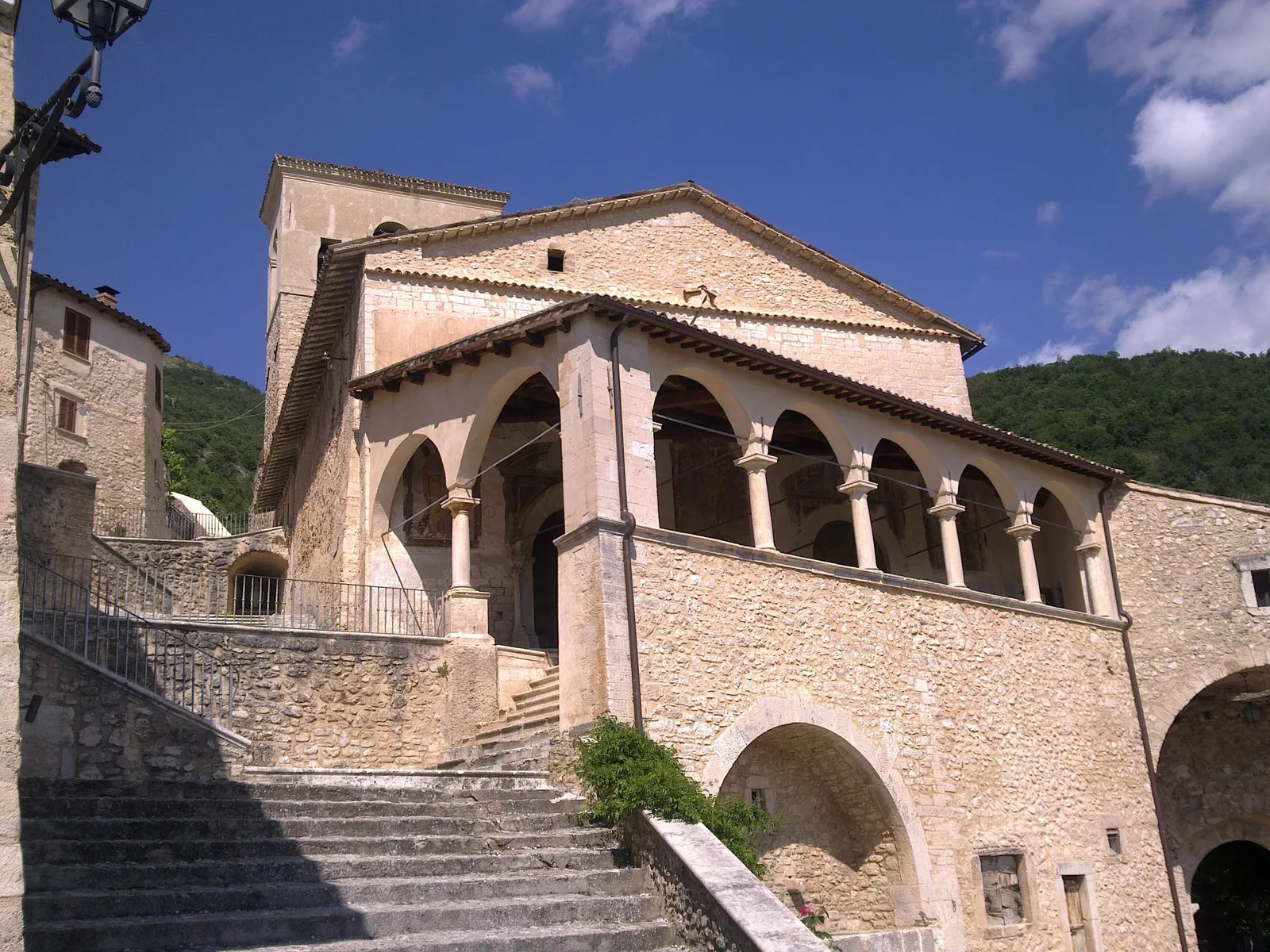
Sant'Andrea in Norcia (Campi)
- Type
- Church
- Municipality
- CampiNorcia (PG)
Source: site database, © OpenStreetMap contributors (ODbL).
Sant'Andrea is the parish church of Campi, a hamlet of Norcia, and dates from the 14th century. Campi is a hillside castle founded in 1288 along the old road linking Norcia with Visso. The building leaned against the village's 14th-century southern gate and formed a single complex with it. From the Renaissance portico there was a view over the Campiana valley, with the Sibillini Mountains in the background. The October 2016 earthquake badly damaged it: the gate collapsed completely, and the facade and portico were destroyed.
On the map
Points from the site database. Map © OpenStreetMap contributors · Protomaps.
History of Sant'Andrea in Campi
The church was built at the expense of the Universitas Campli Castri, the community of the castle, which kept the right of patronage over it. It depended on the abbey of Sant'Eutizio. In 1493, after several disputes, it obtained the title of pieve, transferred from the Sant'Eutizio pieve of Santa Maria, together with the right to be a parish. From then on the Comunanza of Campi appointed the parish priest, whom the bishop confirmed.
The hall originally had a single nave. As the population grew, a second one was added on the right side. In 1712 Bishop Carlo Giacinto Lascaris, during his pastoral visit, described six altars inside. In the 16th century the raised portico with a triangular plan was added, with five arches and two portals. The year 1570 was carved on the wooden doors of one of the portals.
What to see at Sant'Andrea
The bell tower, set behind the building in the apse area, is still standing. It has four openings, one on each side, and three bells. After the earthquake, apart from a few cracks, it appeared only slightly damaged.
Before the earthquake the church had two naves with sail vaults on two massive pillars. The floor was made of rectangular local stones of different sizes and colors. Inside were a 16th-century wooden pulpit from the Seneca school of Piedivalle and an organ from 1787. A painting by Bartolomeo Carducci from 1576 commemorated the victory of Lepanto. These works belong to the past: the organ, choir loft and baptismal font were shattered in the collapse.
How to visit Sant'Andrea
Because of the earthquake, the church is not in its former condition. The collapse opened up the interior as far as the first central pillar, and about half of the roof came down. The part still standing is the one against the bell tower. Before traveling, it is worth checking access to the area.
The movable works of cultural interest are kept at the Deposito di Santo Chiodo in Spoleto, pending the restoration of the church. Three important works, the painted Cross of 1241 or 1242, the polyptych by Giovanni Sparapane and the wooden statue of Sant'Andrea, had already been moved in the 1970s to the Museo Diocesano in Spoleto, where they still are.
Where Sant'Andrea is located
The church stands in Campi, a hamlet of the municipality of Norcia, in Umbria. The village is a fortified hillside settlement that grew up along the old route between Norcia and Visso.
Around Sant'Andrea in Norcia
Nearby in Campi stood the church of San Salvatore, which collapsed in 2016. For other places of worship in the area, a good starting point is the page on churches of the Sibillini Mountains. In Norcia there is also the Basilica of San Benedetto in Norcia.
Frequently asked questions
Where is the church of Sant'Andrea?
What damage did Sant'Andrea suffer in the 2016 earthquake?
Where are the artworks that were in the church of Sant'Andrea?
When was the church of Sant'Andrea in Campi built?
Nearby
What to see nearby
- 300 m
- Castelfranco (Norcia)Castle or fortress1.0 km
- 1.8 km
Where to stay
- Agriturismo Fonteantica, NorciaFarm stay300 m
- 800 m
- Agriturismo Castelfranco, NorciaFarm stay1.1 km
Where to eat
- Il Bar di Campi, NorciaBar and café700 m
- Valle del Sole, NorciaRestaurant1.6 km
- La taverna del ponte, PreciRestaurant5.8 km
Straight-line distances.