


Church of San Francesco (Valfornace)
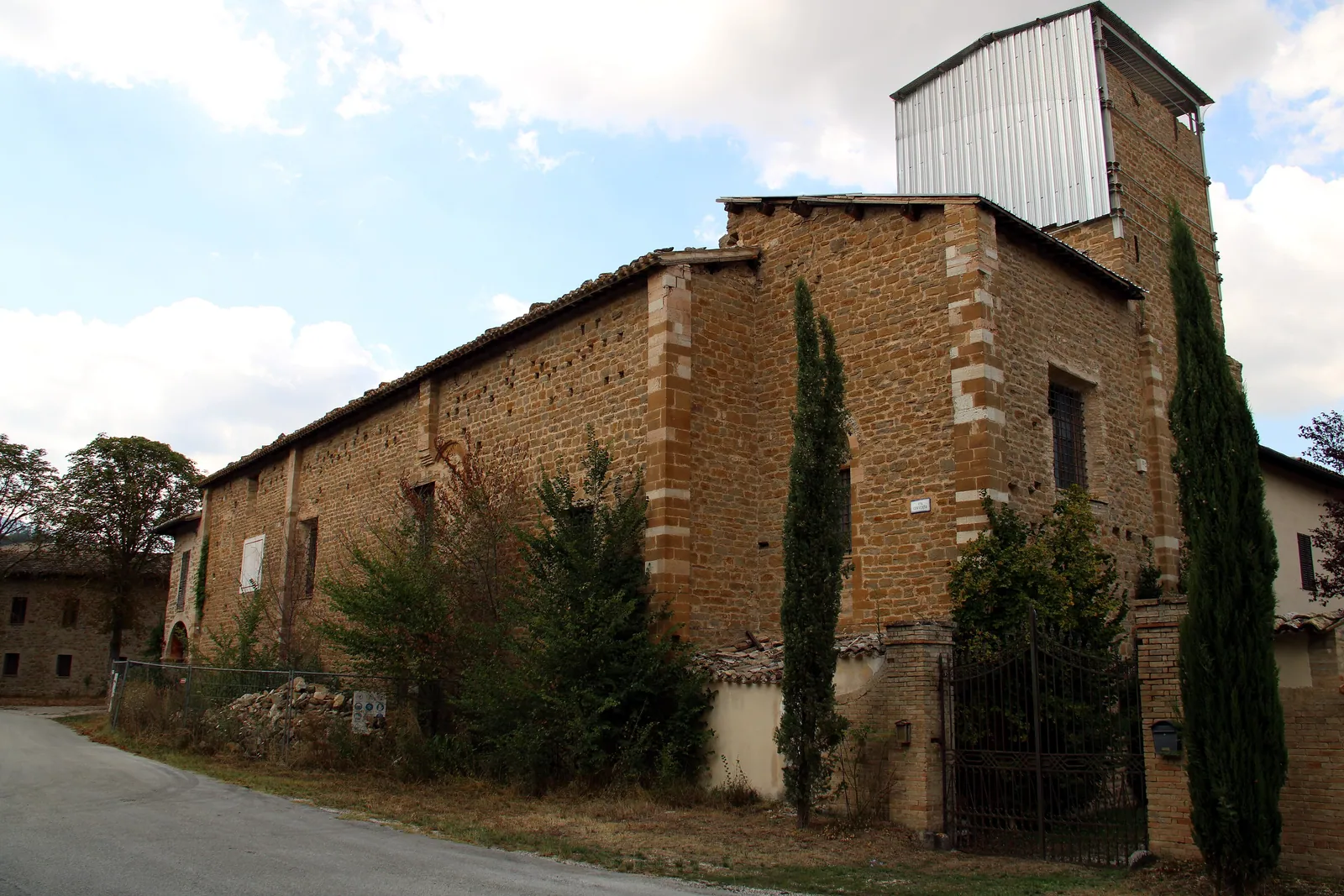
Church of San Francesco (Valfornace)
- Type
- Church
- Municipality
- PieveboviglianaValfornace (MC)
Source: site database, © OpenStreetMap contributors (ODbL).
The Church of San Francesco (Chiesa di San Francesco) in Valfornace stands in Pontelatrave, near Pievebovigliana, in the municipality of Valfornace, and is linked to a Franciscan convent. According to legend, the convent was founded around 1215 by St. Francis, who is said to have found shelter there to pray and rest. Since the 2016 earthquakes the church has been unsafe and closed to the public.
On the map
Points from the site database. Map © OpenStreetMap contributors · Protomaps.
History of the Church of San Francesco
Tradition places the origin of the complex in 1215. In that year St. Francis, traveling through Le Marche, is said to have stayed in a nearby wood. An episode from the Fioretti (Little Flowers of St. Francis) is linked to the building of the convent: the saint is said to have turned the well water into wine to quench the thirst of the workers on the first building.
The current appearance of the church and convent dates from the late 14th century. The convent was later rebuilt in the 18th century.
What to see in the Church of San Francesco
The architecture retains two-light windows, apses, a Gothic triumphal arch and a nave with a timber truss roof. Inside there were also important works of art, now inaccessible because the building is unsafe. A 19th-century copy of a 14th-century crucifix, similar to the one in San Damiano in Assisi, replaces the original. According to tradition, the original had been given to the convent by St. Francis, but it was destroyed in a fire in 1892.
Fragments of frescoes remain, showing the Crucifixion, Mary Magdalene and some faces of angels, attributed to Cola di Pietro. The Madonna della Misericordia on the high altar, frescoed and moved together with the entire wall, is by the Camerino painter Giovanni Angelo d'Antonio; it was once attributed to Girolamo di Giovanni. Under the portico, traces of 13th- and 15th-century frescoes with episodes from the life of St. Francis are still visible.
How to visit the Church of San Francesco
The interior cannot be visited. The bell tower partly collapsed in the earthquake of October 30, 2016, and the mayor at the time feared it would fall onto the apse. Before setting out, it is advisable to check the current condition of the area.
Where the Church of San Francesco is located
The convent stands a few kilometers from the village of Pievebovigliana, in the hamlet of Pontelatrave, on the road from Tolentino to Foligno. The site lies where the municipalities of Valfornace, Cessapalombo, Fiastra and Caldarola meet.
Around the Church of San Francesco in Valfornace
The Romanesque bridge of Pontelatrave, between the Beldiletto Castle and the convent, was the main access to Pievebovigliana and its valley. In the village of Pievebovigliana, the medieval Church of Santa Maria Assunta has a Romanesque crypt. In the hamlet of San Maroto is the Chiesa di San Giusto, considered one of the most important Romanesque monuments in the region.
Valfornace is also home to the Church of Rosario in Valfornace, a Baroque parish church built in the 17th century. Other sacred buildings in the area are on the page churches of the Sibillini Mountains.
Frequently asked questions
Can visitors go inside the Church of San Francesco in Pontelatrave?
Who founded the convent of San Francesco in Pontelatrave?
What happened to the crucifix St. Francis gave to the convent?
Who painted the frescoes in the Church of San Francesco?
Nearby
What to see nearby
- Beldiletto Castle (Valfornace)Castle or fortress700 m
- 1.5 km
- 2.0 km
Where to stay
- 1.3 km
- Sapori di Campagna, ValfornaceFarm stay1.4 km
- 2.2 km
Where to eat
- Locanda della Pieve, ValfornaceRestaurant1.6 km
- Bar Luigi 7.1, ValfornaceBar and café1.8 km
- 3.5 km
Straight-line distances.