


Church of San Liberatore (Castelsantangelo sul Nera)
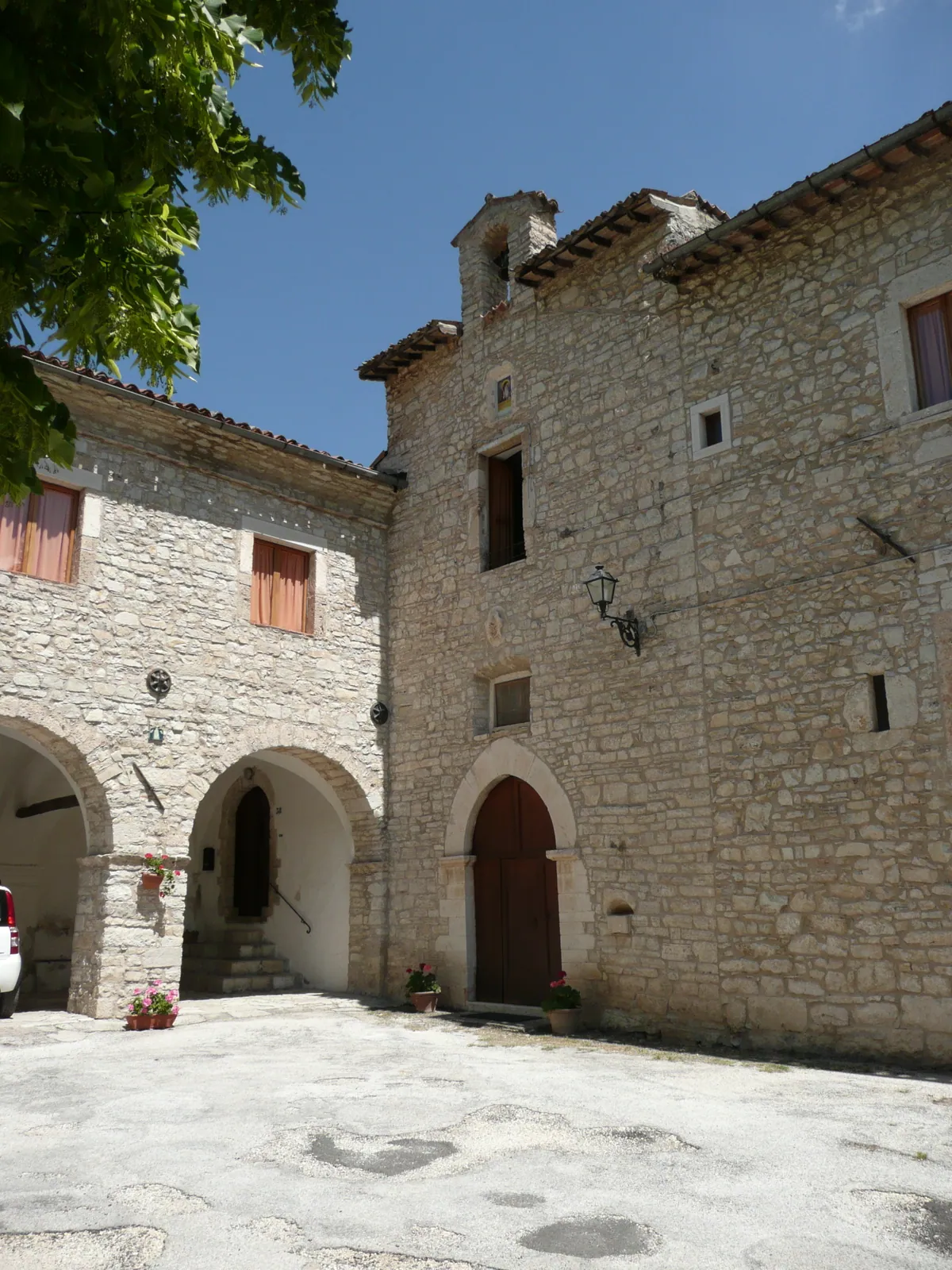
The Church of San Liberatore (Chiesa di San Liberatore) is part of the Benedictine monastery of the same name in Castelsantangelo sul Nera, in the province of Macerata. The building has an L-shaped Romanesque structure, lightened by a portico with two round arches. The chapel inside has frescoes of the Umbrian-Marche school from the 15th and 16th centuries. The 2016 earthquake seriously damaged the monastery, so before setting out it is worth checking accessibility.
Church of San Liberatore (Castelsantangelo sul Nera)
- Type
- Church
- Municipality
- Castelsantangelo sul Nera (MC)
Source: site database, © OpenStreetMap contributors (ODbL).
On the map
Points from the site database. Map © OpenStreetMap contributors · Protomaps.
History of the Church of San Liberatore
The first document attesting to the monastery dates from 1113: the Liber censuum Ecclesiae Spoletinae lists it among the churches dependent on Santa Maria di Visso. The complex was restored in the 1950s. In 1958 the Benedictine nuns, who had always been cloistered, handed it over to the Suore Benedettine della Provvidenza (Benedictine Sisters of Providence).
In October 2017 the removal of the rubble was completed, which allowed urgent safety work to be carried out despite the collapses.
What to see in the Church of San Liberatore
The monastery is built of stones of different cuts and sizes. Inside, vaults alternate with narrow corridors, where the bare stone is left exposed.
The main point of interest is the chapel. The apse is entirely frescoed, and in the center is Christ the Liberator between St. Benedict and the Madonna della Misericordia (Madonna of Mercy). Many of the frescoes are largely attributed to Paolo da Visso. After the earthquake the cross-vaulted room had been buried by rubble. In 2017 the frescoes were freed and the archive was recovered.
A fresco from 1475 of St. Christopher, attributed to Tommaso di Pietro, a pupil of Paolo da Visso, was detached in 1970 and kept inside the convent.
How to visit the Church of San Liberatore
Because of the 2016 earthquake, the artistic heritage of Castelsantangelo sul Nera can only be partly visited. It is therefore advisable to check accessibility before traveling.
Where the Church of San Liberatore is located
Castelsantangelo sul Nera is in the national park of the Sibillini Mountains, in the upper Valnerina. The monastery is inside the town walls: it is reached by climbing from Porta Nocrina, notable for its double arch. Ecclesiastically, it depends on the parish of Santo Stefano, in the diocese of Camerino-San Severino Marche.
Around the Church of San Liberatore in Castelsantangelo sul Nera
Castelsantangelo sul Nera has other churches. The Chiesa di Santo Stefano dates from around 1300 and has a 14th-century stone baptismal font. The Church of San Martino dei Gualdesi is Romanesque and was built around 1300. The Chiesa di San Sebastiano was built in 1528. The springs of the Nera river and the Pisciatore waterfalls are well suited to walks and photography. Other places of worship in the area are on the page churches of the Sibillini Mountains.
Frequently asked questions
Did the 2016 earthquake damage the Church of San Liberatore?
Who runs the monastery of San Liberatore?
How long has the monastery of San Liberatore existed?
Which frescoes can be seen in the monastery chapel?
Nearby
What to see nearby
- under 100 m
- 100 m
- 200 m
Where to stay
- 700 m
- 1.1 km
- 1.5 km
Where to eat
- Campanaccio, Castelsantangelo sul NeraBar and café200 m
- 200 m
- Norcineria Alto Nera, Castelsantangelo sul NeraButcher and pork products400 m
Straight-line distances.