


Temple of San Francesco in Camerino
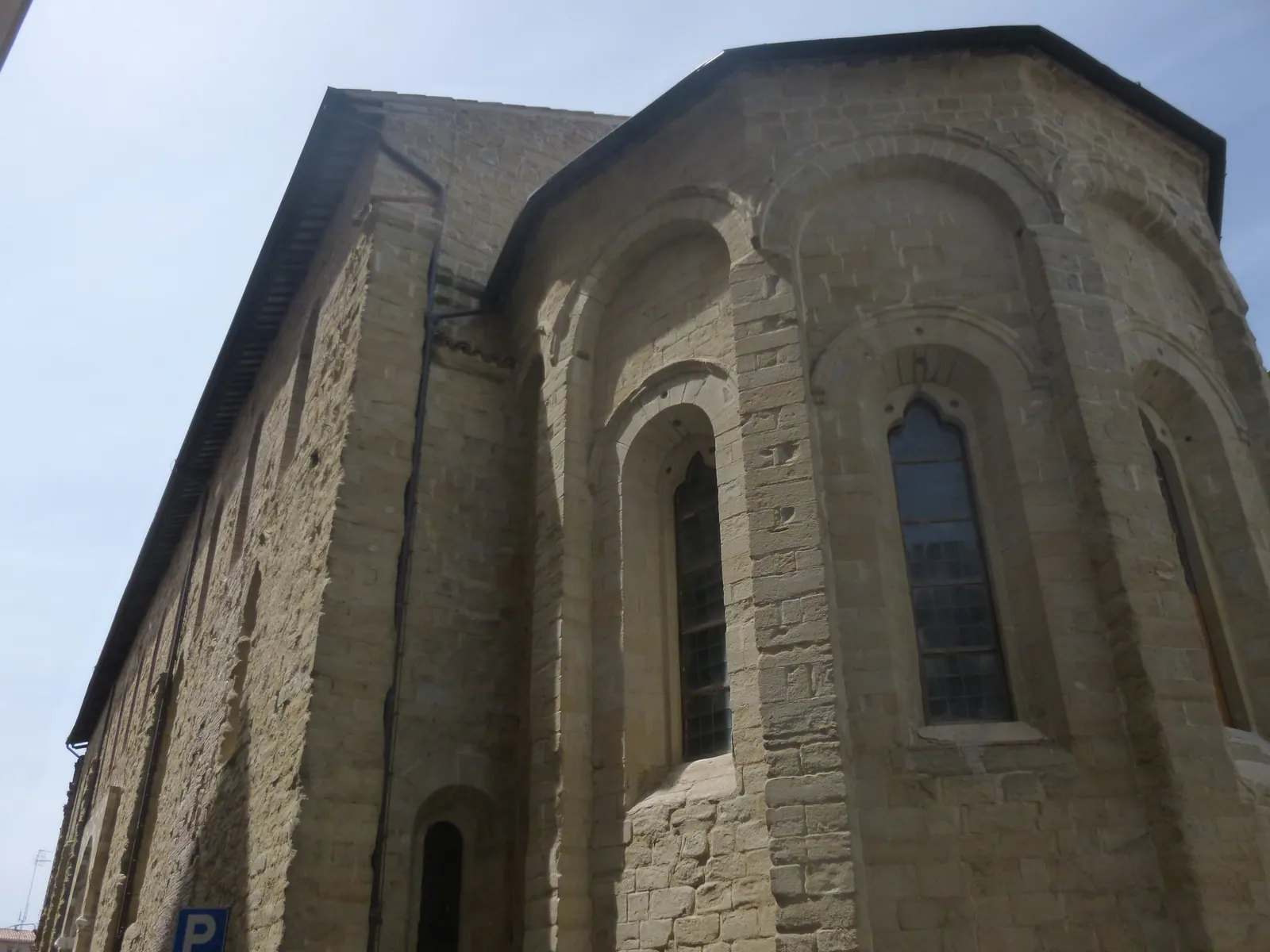
Temple of San Francesco in Camerino
- Type
- Church
- Municipality
- CamerinoCamerino (MC)
Source: site database, © OpenStreetMap contributors (ODbL).
The Temple of San Francesco (Tempio di San Francesco) in Camerino is the town's old Franciscan church, Romanesque-Gothic in layout and dating from the 13th century. Baroque-era alterations changed it. However, the tall polygonal apse, parts of the portal and early 15th-century frescoes survive. Camerino sits on a hill between the Chienti and Potenza valleys, with the Sibillini Mountains massif to the south.
On the map
Points from the site database. Map © OpenStreetMap contributors · Protomaps.
History of the Temple of San Francesco in Camerino
The church was founded in the 13th century in Romanesque-Gothic forms. In the Baroque period it was remodeled in ways that compromised its original appearance. Today it is deconsecrated and belongs to the municipality. In the past it housed the civic art gallery.
Next to the church stands the former convent, which is state property. From the late 19th century it was used as a barracks and later as a prison.
What to see in the Temple of San Francesco
The most striking feature of the medieval architecture is the polygonal apse, tall and pierced by windows. Some parts of the original portal and the early 15th-century frescoes also survive.
How to visit the Temple of San Francesco in Camerino
Since the church is deconsecrated and owned by the municipality, it is worth asking the Comune di Camerino whether it can be entered before planning a visit. The civic art gallery is no longer here: the Pinacoteca e Museo Civici (civic art gallery and museum) are in the former convent of San Domenico, which also houses the Museo delle Scienze (Science Museum).
Where the Temple of San Francesco is
The Temple of San Francesco is in Camerino, in the province of Macerata, in the Marche region. The town lies at 661 m above sea level. In winter snowfall is frequent and often heavy, while summers are warm but rarely muggy.
Around the Temple of San Francesco in Camerino
Other places of worship can be visited in Camerino. The Basilica of San Venanzio has a Gothic facade with a portal and rose window, and its crypt holds the Arca di San Venanzio (the saint's tomb). The Tempio della Santissima Annunziata was built between 1493 and 1508. The altarpiece by Giambattista Tiepolo painted for the church of San Filippo is now on display in the Diocesan Museum of Camerino. Other places of worship in the area are on the page about the churches of the Sibillini Mountains.
Frequently asked questions
Is the Temple of San Francesco in Camerino still a church?
What remains of the medieval building?
What was the former convent of San Francesco used for?
Where is Camerino's civic art gallery today?
Nearby
What to see nearby
- under 100 m
- Filippo Marchetti Theater in CamerinoTheater or auditorium100 m
- Diocesan Museum of CamerinoMuseum or art gallery200 m
Where to stay
- 200 m
- Affittacamere Leopardi 59, CamerinoGuesthouse200 m
- 300 m
Where to eat
- Noè Errante in CamerinoRestaurantunder 100 m
- Forever Bar in CamerinoBar and café300 m
- Taverna dell'Armigero in CamerinoRestaurant400 m
Straight-line distances.