


Camerino, Italy: Things to See and Do
At a glance
- Municipality
- Camerino
- Province
- Macerata
- Region
- Le Marche
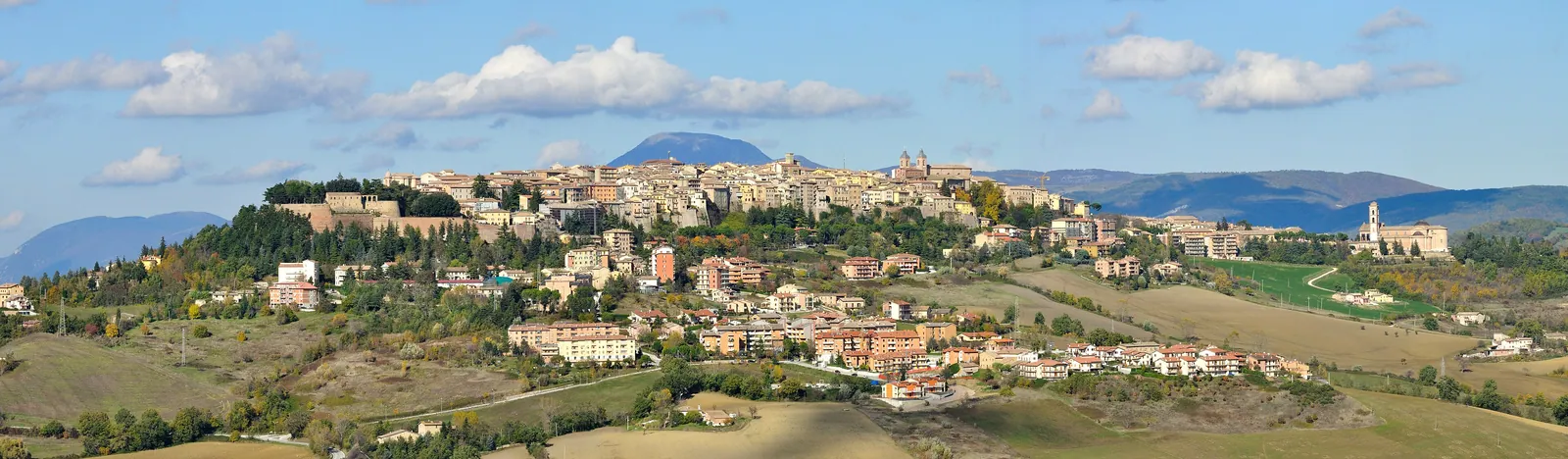
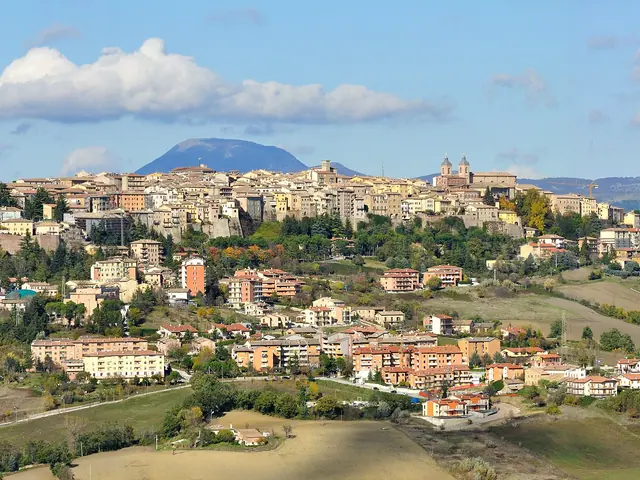
Camerino is a town in the province of Macerata, in Le Marche. It stands on a hill at 661 meters, between the Chienti and Potenza valleys, at the center of the province's mountain area: to the south it is closed off by the massif of the Sibillini Mountains, to the north by Monte San Vicino. It is known above all for its university, founded in medieval times, and for the monuments left by the Da Varano family. Giulio Cesare da Varano, lord of the town in the 15th century, completed the Ducal Palace (Ducal Palace) with its large Renaissance four-sided portico and had the Tempio della Santissima Annunziata built. Around the town the landscape is mostly hilly: cultivated fields, small woods and centuries-old oaks.
Before planning a visit, it is important to know that Camerino still bears the marks of the 2016 earthquake. After the tremors, its historic center became the largest red zone (no-entry area) in the entire earthquake zone. Since 2025 reconstruction has moved on to building sites, and cranes and workers can be seen in the center. Some landmark sites have already reopened, others are still unsafe or under restoration. A visit to Camerino today therefore also means seeing up close a town that is rebuilding itself.
On the map
Points from the site database. Map © OpenStreetMap contributors · Protomaps.
Things to see in Camerino
Today in Camerino it is possible to visit the Basilica of San Venanzio, the Archbishop's Palace with the Museo Diocesano, the Botanical Garden and the gardens of the Rocca Borgesca. Other important monuments, such as the Palazzo Ducale and the Duomo (cathedral), are still closed for work after the 2016 earthquake.
Piazza Cavour is the heart of the town. The Palazzo Ducale, the Duomo and the Archbishop's Curia face onto it. The Palazzo Ducale, the former residence of the lords and dukes of Camerino and now home to the University, has been unsafe since 2016. By September 2026 restoration work had begun. The Duomo is also closed. It had been rebuilt in the early 19th century by Andrea Vici and Clemente Folchi in place of the Romanesque-Gothic cathedral destroyed by the 1799 earthquake. In October 2025 the structural work was halfway done, and reopening was expected within a few years.
The Palazzo Arcivescovile (Archbishop's Palace), with porticoes and Renaissance forms, dates from the second half of the 16th century. It reopened on October 16, 2025 after nine years of closure, together with the Museo Diocesano "Giacomo Boccanera", whose spaces and displays have been renewed. The museum also shows works from the civic art gallery and from churches that are still unsafe. The diocesan collection includes paintings, sculptures, silverware, ceramics and sacred furnishings from the area; among the best-known works are the Triptych by Girolamo di Giovanni, the Saint Sebastian by Boccati (1446) and an Annunciation by Luca Signorelli.
The Basilica di San Venanzio is the church of the patron saint, in late Gothic style. The 1799 earthquake and the 19th-century rebuilding by architect Luigi Poletti spared the facade and the bell tower. Striking features of the facade are the portal, the rose window, the lunette with the Madonna and Child, and the two lions on corbels, examples of florid Gothic. Inside is a 1518 altarpiece by Venanzio da Camerino and Piergentile da Matelica; the crypt holds the Gothic Arca di San Venanzio (the saint's tomb). After the 2016 earthquake the basilica returned to worship thanks to work funded by the Fondazione Arvedi Buschini.
The Rocca Borgesca, or Borgia Fortress, was built by Cesare Borgia in 1503 to a design by Ludovico Clodio, to control the town from the southwest side. It has cylindrical towers and a massive keep. The public garden, with a view of the Sibillini, was laid out in 1924. The 2016 earthquake damaged the surviving structures again, and they are awaiting restoration. The gardens, however, have reopened after a period of work.
The former convent of San Domenico, which housed the art gallery and the civic museums, is among the buildings under reconstruction. Outside the town, in Renacavata, is the Convento dei Cappuccini, considered the cradle of the Capuchin order. Its construction was authorized by Pope Clement VII with a bull dated July 3, 1528. The small church holds a large majolica of the Virgin and Child and a wooden tabernacle from 1686. More monuments and details are on the page about things to do in Camerino.
Nature and trails near Camerino
For walking near Camerino there are the Botanical Garden, a stone's throw from the center, the nature routes of the area and above all the Cammino nelle Terre Mutate, a long-distance walk that passes through the town.
The University's Orto Botanico "Carmela Cortini" (botanical garden) was founded in 1828 by Vincenzo Ottaviani to grow medicinal plants. It covers about one hectare at 636 meters and is divided into two parts: a flat area with shrubs and herbaceous plants and a slope with tall trees and ferns. The trees include Ginkgo biloba, giant sequoia and beech; two greenhouses hold tropical plants such as orchids and carnivorous plants. It is open year-round, and a 16th-century spiral staircase connects it to the loggias of the Palazzo Ducale.
The Cammino nelle Terre Mutate crosses the areas hit by the earthquakes, and Camerino is both a finish and a starting point. Stage 2 arrives from Matelica (23.2 km, 842 m of elevation gain). Stage 3 runs from Camerino to Fiastra, in Sibillini National Park: 21 km, about 7 hours of walking, 870 m of ascent and 745 of descent, with a demanding difficulty level. The surface is 45% paved and 55% unpaved, and halfway along Lago di Polverina offers a break. The stage also exists in a mountain bike version.
The municipality also has marked routes for walking, horseback riding or cycling, such as "Sulle tracce dell'ultimo orso" (On the trail of the last bear). Before setting out, it is best to check the weather and bring water and suitable clothing.
Where to stay in Camerino
Camerino has various types of accommodation, also convenient as a base for exploring the Sibillini. The full list is on the page about Camerino hotels and places to stay. Those walking the Cammino nelle Terre Mutate should book a night in town in advance, between the stage from Matelica and the one toward Fiastra.
Where to eat in Camerino
Restaurants and cafés are spread between the center and nearby areas; the full list is on the page about Camerino restaurants. After the earthquake some businesses have returned to the square, but openings change as building work progresses: best to check them before visiting.
Camerino local products
Camerino's most representative product is torrone (nougat), made with honey and almonds, with the De.C.O. (Denominazione Comunale di Origine, municipal designation of origin) label. The first document in Le Marche in which the word "torrone" refers to the Christmas sweet dates from 1793: a deed filed with the Camerino notary Stefano Ricci. The historic version, the "Biondo di Camerino", was made without egg white: a concentrate of honey, almonds and sugar, very crumbly.
Torrone is celebrated on Epiphany with the Festa del Torrone, which closes Camerino's Christmas season. Until 2016 the festival consisted of a very long ribbon of torrone laid out through the streets of the historic center, which earned Camerino a place in the Guinness World Records in 2006, 2009 and 2014. Local pastry shops also sell biscotti al mosto (grape must cookies) and pan nociato (walnut bread). Shops and producers are on the page about Camerino local products.
Weather and how to get to Camerino
Camerino has a humid continental climate, typically sub-Apennine. In January the average temperature is about 2 °C, in July about 22 °C. Rainfall reaches 1,042 mm a year and falls mostly between fall and spring. The town faces east-northeast, so in winter it snows often and heavily. Summers are warm but rarely muggy, with frequent afternoon and evening thunderstorms. Winter travelers should allow for snow on the roads.
By car from the south, leave the A14 at Civitanova Marche, take the SS77 expressway toward Foligno/Roma and then follow the signs for Camerino. From the north, leave the A14 at Ancona Nord, head toward Fabriano and then follow the signs for Camerino.
By train there is no direct connection: the nearest station is Castelraimondo-Camerino, about 10 km away. From there buses reach the town in a quarter of an hour. Coming from the Rome-Ancona line, change at Fabriano; from the Adriatic line, change at Civitanova Marche. There are also buses linking Camerino to Rome, Ancona, Foligno and the towns of the province of Macerata. The other villages in the area are on the page about Sibillini Mountains villages.
In this section
4 results
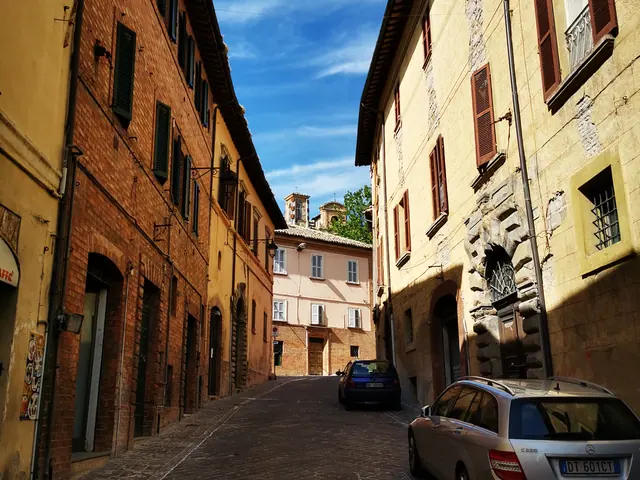 Things to Do in Camerino42 places
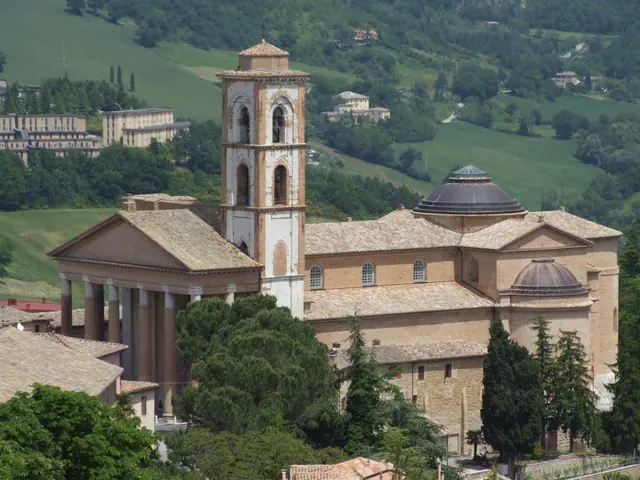 Camerino Hotels and Where to Stay32 places to stay
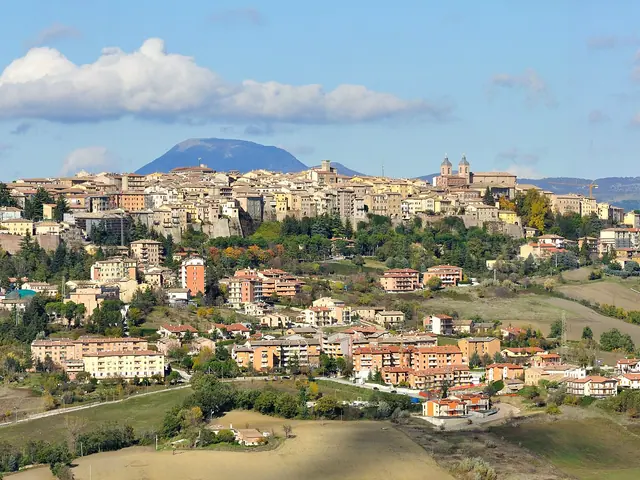 Camerino restaurants33 places
 Camerino local products and food shops8 places
No results with these filters.