


Things to do in Cessapalombo
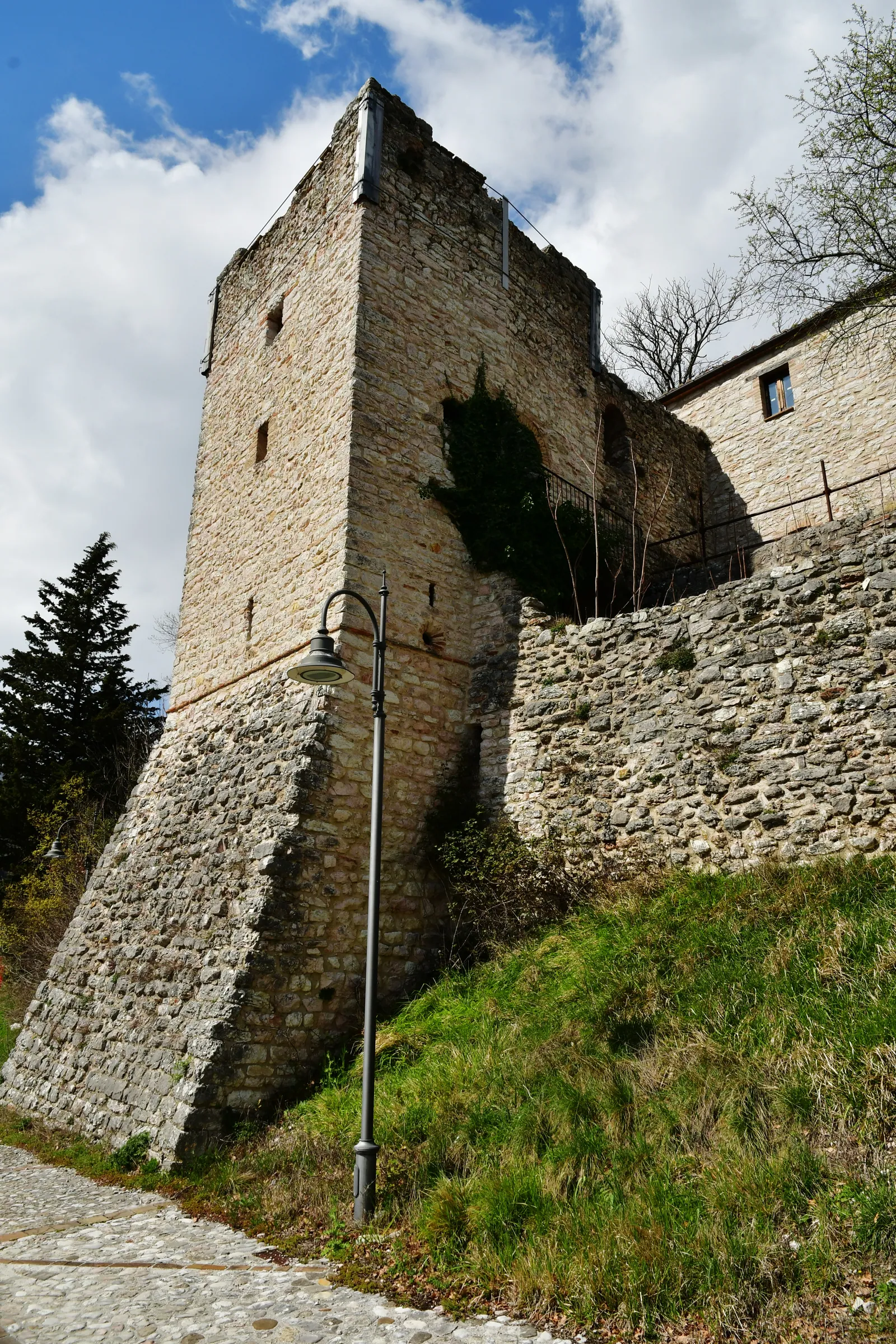
Cessapalombo, a municipality in the upper Fiastrone valley in the province of Macerata, partly inside the Sibillini National Park in the Sibillini Mountains, offers above all things to see and do among castle ruins, churches with 15th- and 16th-century frescoes, an abbey with four cylindrical towers and the charcoal kiln trail. The name recalls the old Latin term caesa, "cut forest". For centuries the woods were the mountain's resource, and the charcoal kilns have remained their symbol.
The village is medieval in origin and was largely destroyed by the earthquake of 1799. Today the territory is spread across hamlets (Montalto, Valle, Villa, Tribbio, Monastero), and each holds something to discover. For a broader picture, see the page Cessapalombo: what to see and do.
The places
5 results
 Montalto Castle (Cessapalombo)Castle or fortress · Cessapalombo
- ChurchChurch of Sant'Andrea (Cessapalombo)Church · Cessapalombo
- ChurchMadonna della Valle (Cessapalombo)Church · Cessapalombo
- Castle or fortressCol di Pietra Fortress in CessapalomboCastle or fortress · Cessapalombo
- Gole del FiastroneGuide
No results with these filters.
On the map
Points from the site database. Map © OpenStreetMap contributors · Protomaps.
Things to see in Cessapalombo: the map
Cessapalombo is about 25 kilometers southwest of Macerata. It has no single center to explore on foot: the points of interest are spread between the main village and the hamlets, so the map helps organize the day by area.
- Main village: in piazza Vittorio Emanuele stands the Church of Sant'Andrea.
- Montalto: the castle with its three rings of walls, the church of San Benedetto, the defensive tower with its medieval cistern, the monument to the 1944 massacre, Palazzo Simonelli with the Museo delle Carbonaie (closed after the 2016 earthquake) and the Giardino delle Farfalle. The hamlet is made up of the clusters of Tribbio, Villa and Valle.
- Villa: the church of Santa Maria Ausiliatrice, with a fresco from 1468.
- Monastero: the abbey of San Salvatore, below the village. Toward Monastero, starting from Villa di Montalto, there is also the way to the Grotta dei Frati.
- Col di Pietra: the ruins of the fortress, sheer above the Fiastrone river.
- La Città: an archaeological area.
Things to see in Cessapalombo: the highlights
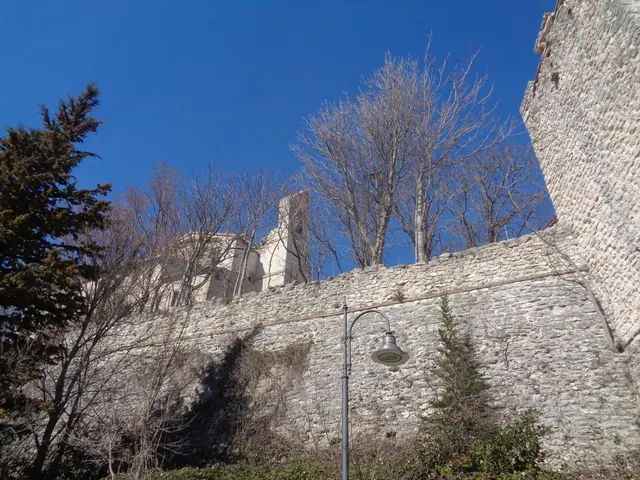
Montalto Castle. Founded in the 9th century, it was an important fortification of the Da Varano family, who owned it from the 13th century. It has three rings of walls, designed to protect different groups of people: the outermost for castle dwellers and servants, the second for soldiers and those in charge of defense, the innermost for vassals and lords. Within the innermost ring are the church of San Benedetto, already mentioned in documents of 1299-1300, and a cistern used by the whole community. Ruins of towers and walls remain in a very scenic position.
The church of San Benedetto holds frescoes by Giovanni Andrea De Magistris: the Mysteries of the Rosary date from 1526, while the Saint Anthony Abbot and the Madonna and Child are from 1544. Restoration work on the castle is planned, funded with post-earthquake reconstruction resources, in particular for the keep and the ruins.
Rocca di Col di Pietra. The fortress rises sheer above the Fiastrone, overlooking the valley, and had a defensive role. It belonged to the Casauria abbey and then to the Da Varano family from the 12th century. Today ruins remain, including the watchtower and some vaulted halls. In the village below stands the church of San Giovanni Battista, built on an earlier building: a brick on the outer wall bears the date 1611. The church once attached to the fortress, being unsafe, was demolished in the 19th century and rebuilt in the village.
Chiesa di Sant'Andrea. It stands in piazza Vittorio Emanuele and is dedicated to the village's patron saint, celebrated on November 30. It was rebuilt at the end of the 18th century after earthquake damage and restored in the 1950s. It is linked to the Madonna dell'Impollata, a 15th-century polychrome wooden statue by a master from the Marche.
Chiesa di Santa Maria Ausiliatrice, in Villa. It holds the fresco of the Mater Misericordiae with knights, dated 1468: the Madonna shelters the people under her cloak.
Abbazia di San Salvatore, in Monastero. Also called Santa Maria in Insula, it stands alone below the village, on the road leading to the friars' caves and the gorges. It shows traces of four cylindrical towers, in the style of Ravenna, and in the crypt a fresco of the Madonna and Child. The building has been heavily altered over the centuries.
Museo delle Carbonaie e della Nostra Terra. Housed in Palazzo Simonelli, in Montalto, it is devoted to the old production of charcoal, once the village's main activity. After the 2016 earthquake the building is unusable and the museum is temporarily closed: before visiting it is worth checking whether it has reopened. Outdoors there is the charcoal kiln trail, an educational loop where every stage of the process is reconstructed. The museum also includes a section on the natural features of the Sibillini Park.
Il Giardino delle Farfalle. At Montalto, it is a Park environmental education center devoted to local butterflies and moths. Visitors can observe eggs, caterpillars and chrysalises and stroll through the herb garden among aromatic and wild plants. It is designed for children, families and adults. All the information is on the page Il Giardino delle Farfalle.
Grotta dei Frati. It lies between Cessapalombo and Fiastra. Around the year 1000 it was a refuge for Benedictine monks; in 1234 a convent and a chapel were built there. It later became the hermitage of the so-called "Fraticelli", persecuted as heretics. The village of Villa grew up precisely as a stop on the road leading there.
Gole del Fiastrone. A landscape carved by water erosion. The gorge trail is closed by ordinance of the Comune di Fiastra. For access and routes, see the page Gole del Fiastrone: how to get there and trails.
Other places. In the hamlet of Montalto a monument recalls the massacre of March 22, 1944, when the Nazi-Fascists killed 32 people. In Monastero stands the church of the Madonna del Sasso, built between the 18th and mid-19th century in irregular stone.
Things to do in Cessapalombo: tips for the visit
It is best to split the visit by hamlet, as the sites are far apart. A good plan is Montalto (castle and Giardino delle Farfalle), then Monastero with the road toward the Grotta dei Frati and the gorges, and finally Col di Pietra with the fortress. The ruins of Montalto and Col di Pietra, the cave and the gorges are outdoor sites: suitable shoes and a weather check before setting out are needed.
From Col di Pietra it is also possible to reach the Molinaccio area, where the ruins of a power plant built in 1903 on an earlier mill remain. The trail from the village is of medium difficulty and takes about 45 minutes on foot. Along the way the Pian di Pieca and the Fiastrone valley come into view.
The area was affected by the 2016 earthquake and reconstruction work is under way. Before setting out it is worth checking which sites are accessible, especially castles and churches, by asking the Comune.
Among the events, the Sagra del fungo (mushroom festival) is held in May, while on the first two Sundays of October the hamlet of Villa di Montalto hosts the festival Antichi Sapori e Ricchezze del Bosco, devoted to rural traditions. Local cooking centers on chickpeas, lentils, extra virgin olive oil, Marchigiana beef, mushrooms and saffron. For an overnight stay, see the page on where to stay in Cessapalombo.