


Fiastra: things to see and do
At a glance
- Municipality
- Fiastra
- Province
- Macerata
- Region
- Le Marche
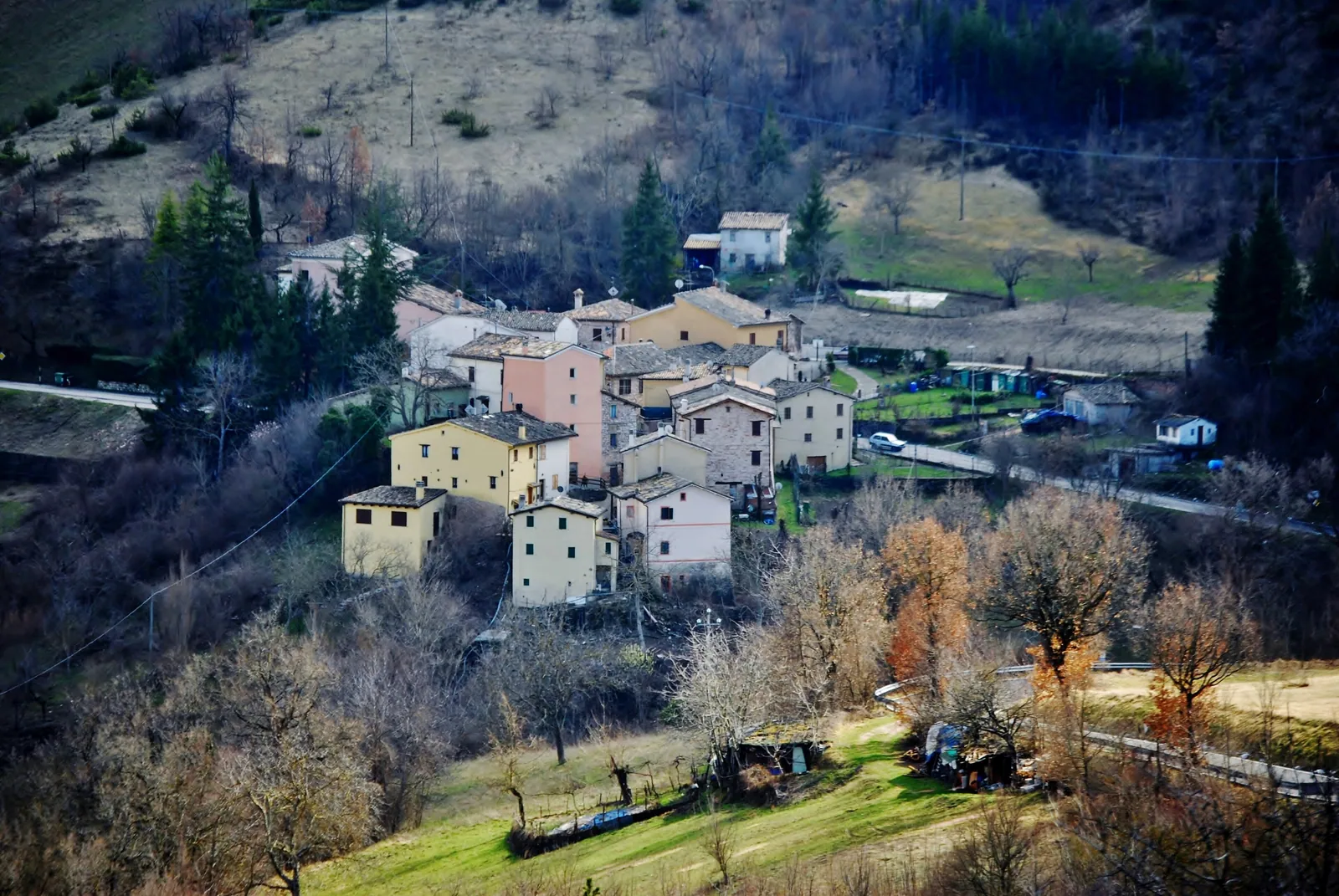
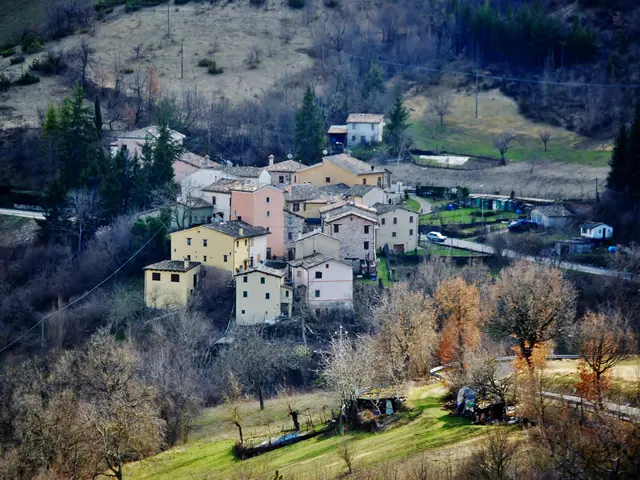
Fiastra is a scattered municipality in the province of Macerata, in Le Marche. The town hall is in Trebbio, and the town overlooks an artificial lake that changed the landscape without taking away its mountain character. The municipality is part of the Sibillini Mountains National Park, has just over 600 residents and sits at 732 meters. Lago di Fiastra is the best-known place in the area. It was formed in the 1950s, when the Fiastrone river was dammed. The dam is 86 meters high and 360 long. The lake is about 4 kilometers long and about 500 meters wide, and it is the largest hydroelectric reservoir in Le Marche.
Above the lake, on the hill of San Paolo, stand the ruins of Castello Magalotti, the ancient Castrum Flastrae, and the Romanesque church of San Paolo, badly damaged by the 2016 earthquake. All around, the land climbs through woods, abbeys, Romanesque churches, mountain passes and trails heading toward Pizzo Berro, Monte Priora and the highest elevations in the Park. Since January 1, 2017 the municipality has also included the former municipality of Acquacanina, which has become one of its hamlets.
On the map
Points from the site database. Map © OpenStreetMap contributors · Protomaps.
What to see in Fiastra
The lake. Almost every visit starts at the lake. The main small beach is at San Lorenzo al Lago, there are long stretches of free beach, and swimming is allowed only at the marked spots. The reservoir also affects the vegetation: it changes the local microclimate and creates conditions in which holm oaks become unusually dominant in the landscape.
Castello Magalotti. In ancient times it was called Castrum Flastrae. It is a group of buildings that arose on the hill of San Paolo, with origins dating from before the 11th century, and an example of Lombard military engineering with concentric defensive fortifications. The castle reached its greatest extent around the 16th century, covering 21,000 square meters. Then the spread of gunpowder marked its decline. Over the years, houses and walls were demolished for building stone. Today only the remains of two large towers, the keep and some sections of the fortress are visible. Life in the fortified village was governed by four books of statutes, published in 1436 in Latin and in Gothic script. In 1643 another 49 chapters were added, and the manuscripts are kept in the Fiastra municipal museum. The castle area is also the setting for Fiastra Fantasy, a creative games event inspired by the legends and traditions of the Sibillini, designed to promote the lands hit by the 2016 earthquake. The first edition was held in 2017.
The church of San Paolo. The church is dedicated to the community's patron saint and has its origins in the 11th century, in Romanesque style. The 2016 earthquake damaged it badly. A first round of restoration funding arrived in October 2023. The plan is almost square, with three naves divided by six columns: on the right, columns and arches are in brick; on the left, squared white stone alternates with blocks of pink limestone. The facade is gabled, with a round-arched portal topped by a small cross. Important works are linked to the church. The Conversion of Saint Paul by Baciccia, from around 1700, is kept in the left-hand chapel. The polyptych by Antonio Sparapane da Norcia was stolen in 1904. There remain a wooden Madonna Enthroned with Child, from the early 16th century, and a wooden Crucifix attributed to Lucantonio Barberetti.
The town and Acquacanina. Below the castle stands Palazzo Conti. Since 1923 it has been the seat of the Comune di Fiastra; it was built in the 18th century at the wish of Romualdo Conti. In the hamlet of Acquacanina, Benedictine monks founded an important center of ascetic life, the abbey of Rio Sacro. From the locality of Meriggio there is a wide view over Lago di Fiastra, and it was here that around the year 1000 the Benedictines built the Romanesque abbey of Santa Maria di Rio Sacro.
Nature and trails near Fiastra
Fiastra is one of the gateways to the northern sector of the Sibillini National Park. From the lake, trails lead toward the peaks of Pizzo Berro and Monte Priora and toward the Lame Rosse; the Gole del Fiastrone (Fiastrone gorges) trail is closed by ordinance of the Comune di Fiastra.
The Sentiero natura. This is the easiest walk: about 3 km along the eastern shore of the lake, waymarked, completely flat and partly on boardwalks over the water. The round trip takes about 2 hours.
The Lame Rosse. These formations stand above Lago di Fiastra, in the hamlet of San Lorenzo al Lago, between Monte Fiegni (1,323 m) and Monte Petrella (1,155 m). They are pinnacles and towers of gravel, clay and silt, shaped by erosion. The classic route starts from the lake dam at San Lorenzo al Lago and, after a short tunnel, follows trail no. 335. The best-known route is about 7 km long and classified as easy. The round trip takes about three hours. The elevation gain is moderate, but the last stretch on scree needs care. The environment is fragile, and signs along the route ask hikers not to climb the gravel gullies. Late September and October are a good time for the light, milder temperatures and fewer people. There are few parking spaces near the dam, but about 500 meters from the trailhead there is a lot set aside for parking. Access to the Lame Rosse is free, with no ticket, reservation or visitor cap. In 2021 an ordinance of the Comune di Fiastra had introduced a paid ticket and a limit of 600 people a day, but the Comune revoked it on July 6, 2021.
The Grotta dei Frati and the Gole del Fiastrone. The Grotta dei Frati opens on the south side of Monte Fiegni, in a rock face above the Gole del Fiastrone. It is actually a complex of three karst caves. It was a refuge for Benedictine monks around the year 1000; from the 13th century the Clareni, dissident Franciscans, settled there and built the church. Outside are the ruins of the friars' shelters; they lived here until the early 17th century. The entrance was rediscovered in the early 1950s. The cave is easy to reach from the hamlet of Villa di Montalto, in the municipality of Cessapalombo, toward Monastero. The gorges are a narrow ravine between high red and gray walls that in places almost touch. Access to the gorges is prohibited to everyone by ordinance of the Comune di Fiastra, as the Park also states.
Where to stay in Fiastra
Places to stay are mainly around the lake, along whose shores several tourist businesses have grown up. At San Lorenzo al Lago, besides the equipped beach, there is a campground that also takes campervans. In the hamlets above the lake there are also agriturismi (farm stays). The full list is on the page Fiastra hotels and places to stay.
Where to eat in Fiastra
At Lago di Fiastra, a few kilometers by car even from the trailheads, there are shops, bars and restaurants. Mountain cooking dominates: hand-rolled pasta, grilled meats, mushrooms in season, and the cured meats and cheeses typical of inland Le Marche. In the lake area several places serve local dishes, including truffle-based ones. Addresses and options are gathered on the page Fiastra restaurants.
Local products of Fiastra
The flavors of Fiastra are those of the mountainous upper Macerata area. Truffle, vincisgrassi (a baked layered pasta), cured meats and local pecorino cheeses often appear on menus around the lake. Some farms in the area offer these products, which can also be bought directly.
Weather and how to get to Fiastra
Climate. The climate of the Sibillini Park is very changeable and often stormy, and altitude increases both exposure to wind and sudden changes in weather. Even in spring and autumn it is wise to dress in layers and check the weather before a hike. Snow can fall down to the lake: on March 18, 2026 a thin but clearly visible layer of white covered the whole area of Lago di Fiastra and the Fiastrone valley.
By car. From the A14 highway, exit at Civitanova Marche, take the SS77 expressway toward Foligno/Rome and exit at Sfercia or at Maddalena di Muccia. Leave the SS77 near Lago di Polverina and take the SP98 Polverina-Fiastra. Coming from Foligno, take the SS77 toward Macerata and exit at Muccia. Near the hamlet of Pontelatrave, on the right, is the turnoff for Fiastra-Bolognola. From Ascoli Piceno, take the Salaria (SS4) to Mozzano, climb toward Comunanza and Amandola, pass Sarnano on the SP78, then turn left toward Caldarola and immediately after toward Fiastra-Bolognola. The last stretch is scenic, but the road is narrow and full of bends.
By public transport. The nearest train station is Camerino. From there you can continue by bus to the San Lorenzo al Lago stop.
In this section
5 results
 Fiastra activities and guides3 places to stay
 Things to do in Fiastra18 places
 Fiastra hotels and where to stay12 places to stay
 Where to eat in Fiastra7 places
 San Lorenzo al Lago, FiastraLe Marche · Macerata
No results with these filters.