


Things to do in Fiastra
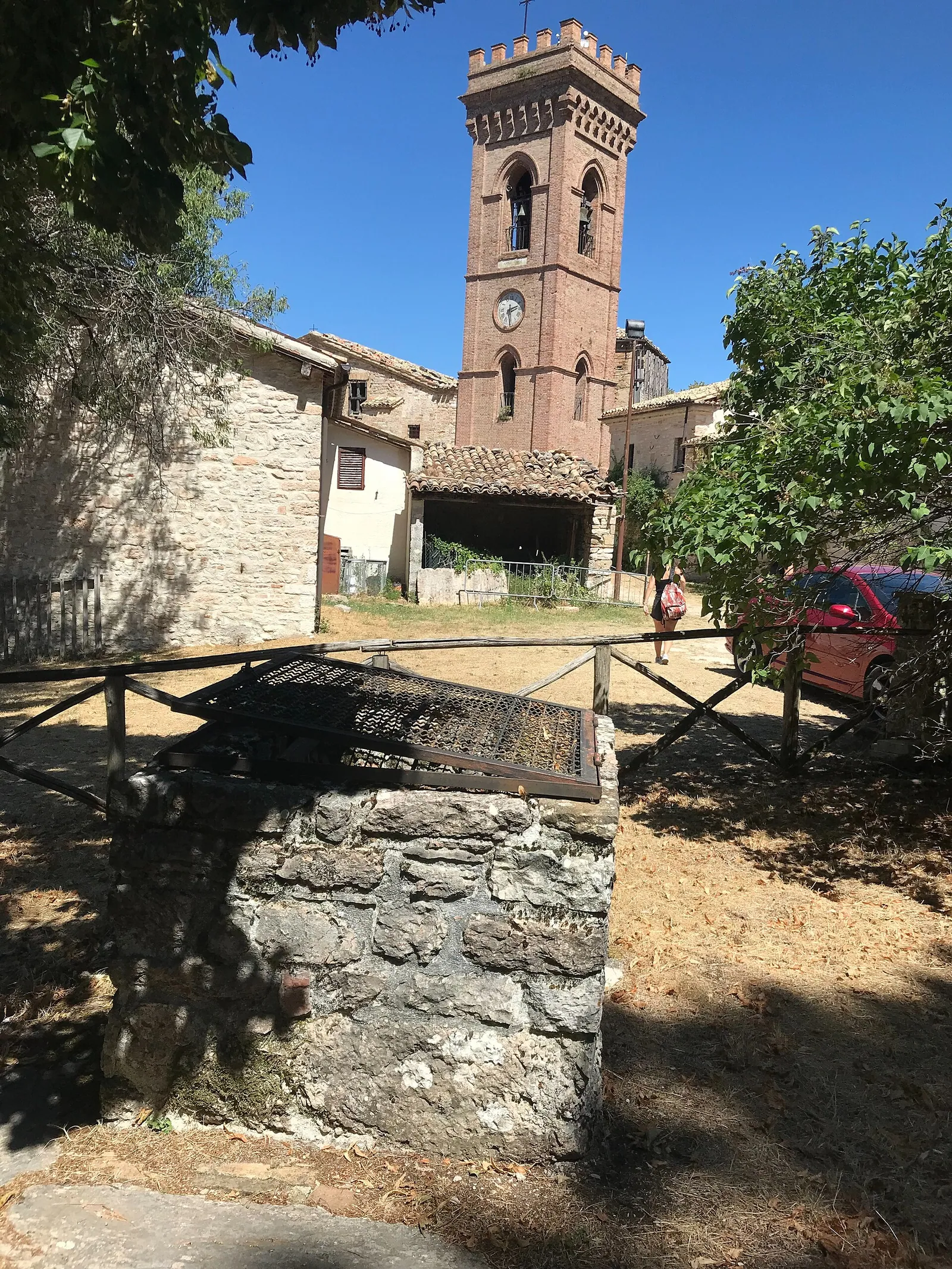
The main things to do in Fiastra, a scattered municipality in the Sibillini Mountains, are its lake, the Lame Rosse, the Grotta dei Frati, the village of Trebbio with the church of San Paolo, and the Museo del Camoscio (chamois museum). The town hall is in Trebbio, at 732 m, and the territory lies within the Sibillini National Park. The lake is the largest hydroelectric reservoir in Le Marche. It is an artificial basin from the 1950s, created to bring electricity to the valley. The rest of what Fiastra offers is split between medieval history and nature: castle ruins, Romanesque churches, gorges and a hermitage carved into the rock.
One day is enough for the lake and one or two spots in the village. Anyone who also wants to hike to the Lame Rosse or the Grotta dei Frati should set aside a full day. The list of activities is on the page about hikes and sports in Fiastra; for an overview there is also the page Fiastra: things to see and do.
The places
18 results
- Ruins or archaeological siteCastle of the Varano (Fiastra)Ruins or archaeological site · Fiastra
- Church of Santissimo Crocifisso (Fiastra)Guide
- ChurchChurch of Santissimo Salvatore in FiastraChurch · Fiastra
- ChurchChurch of Madonna di Rio Bagno (Fiastra)Church · Fiastra
- ChurchChurch of San Flaviano (Fiastra)Church · Fiastra
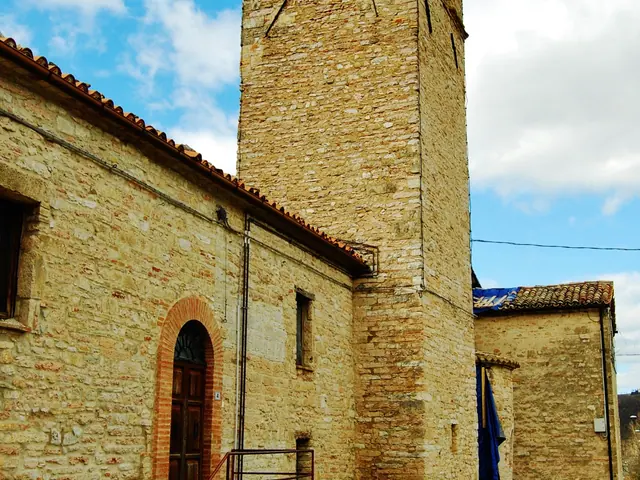 Church of San Lorenzo (Fiastra)Church · Fiastra
- ChurchChurch of San Marco in Colpolina (Fiastra)Church · Fiastra
- ChurchChurch of San Martino in Tedico (Fiastra)Church · Fiastra
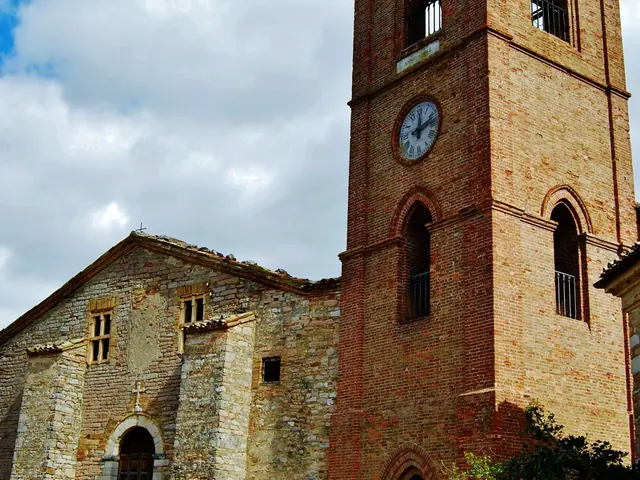 Church of San Paolo Apostolo (Fiastra)Church · Fiastra
- ChurchChurch of San Rocco (Fiastra)Church · Fiastra
- ChurchChurch of Sant'Ilario (Fiastra)Church · Fiastra
- ChurchChurch of Santa Maria Maddalena in FiastraChurch · Fiastra
- ChurchChurch of Madonna del Vallone in FiastraChurch · Fiastra
- Ruins or archaeological siteI Cascinali (Fiastra)Ruins or archaeological site · Fiastra
- Museum or art galleryChamois Museum (Fiastra)Museum or art gallery · Fiastra
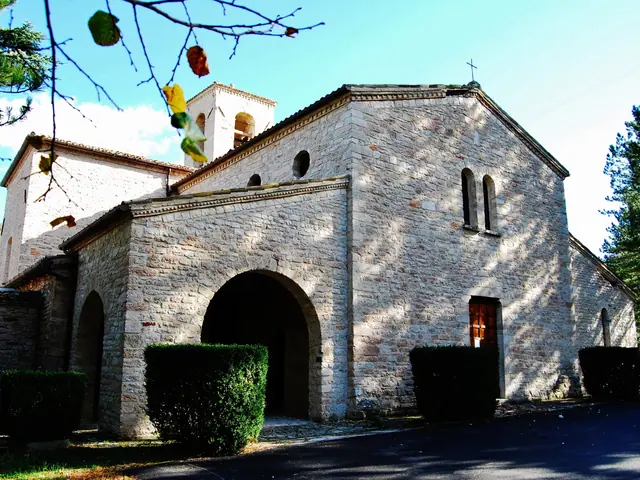 Santa Maria di Rio Sacro in FiastraChurch · Fiastra
- CaveGrotta dei FratiCave · Fiastra
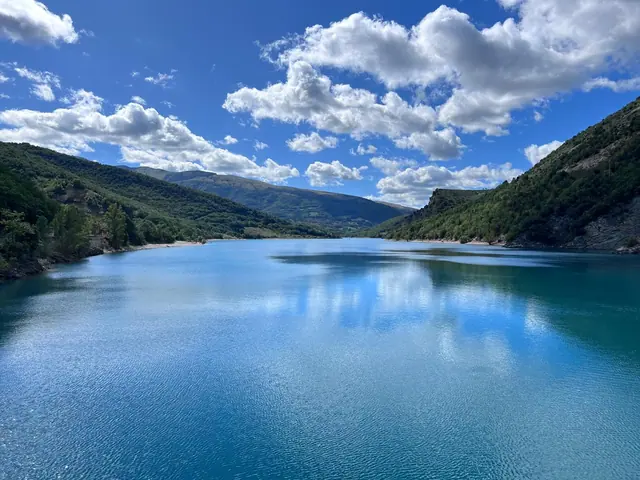 Lago di FiastraLake · Fiastra
No results with these filters.
On the map
Points from the site database. Map © OpenStreetMap contributors · Protomaps.
Things to see in Fiastra: the map
The territory is large and the sights are spread across several levels. Up high is Trebbio, with the church of San Paolo and the ruins of the old castle. The Castrum Flastrae stood on the hill of San Paolo. Further down, on the shore, is San Lorenzo al Lago, where tourist shops and recreation businesses stand next to the church of the same name. The village of Podalla is roughly halfway between San Lorenzo and the dam. The dam closes the lake at the other end.
The Museo del Camoscio is in Cupolo, home to the Park Visitor Center. Toward the valley of the Fiastrone stream are the Gole del Fiastrone (Fiastrone gorges), with the Grotta dei Frati; the gorge trail is closed for safety reasons. Toward the lake, the valley ends with the Lame Rosse.
Things to do in Fiastra: the highlights
Lago di Fiastra. Lago di Fiastra is the natural starting point of a visit. It was created by the dam, completed in 1954, to bring electricity to the Fiastrone valley. The dam is 86 m high. The water is valued for being clear and unpolluted. Swimming is allowed in the marked stretches, with free beaches, private equipped beaches and a dog-friendly area. The main small beach at San Lorenzo al Lago also has a lifeguard. Non-swimmers can rent pedal boats, canoes or mountain bikes, or try fishing, sailing, Nordic walking and paragliding.
For a walk there is the Sentiero Natura. It runs along the right side of the lake from San Lorenzo al Lago, takes about two hours, can be done on foot or by bike, and for a 900-meter stretch is also suitable for people with disabilities. It reaches the dam. The dam is also a good viewpoint, with the lake on one side and the Sibillini Mountains on the other. From the terrace of the Belvedere Ruffella, the view over the lake opens up to 270°. Another stop is Podalla: the village itself has no attractions, but it is a good spot to watch the sunset over the lake.
San Lorenzo al Lago. The name recalls San Lorenzo al Fiume, a village wiped out by the creation of the lake: it lies on the bottom and its remains can be glimpsed only when the water level drops. The hamlet is described on the dedicated page for San Lorenzo al Lago.
The Lame Rosse. They are nicknamed the "Canyon of the Marche" for rocks that recall American landscapes. They are pinnacles of gravel and clay standing out against the sky. They are held together by silt and shaped by erosion. They are extremely fragile natural monuments that crumble slightly. For this reason it is best to admire them without climbing on them. The most complete hike starts from the dam and also includes the Grotta dei Frati. The route described by the CAI (Italian Alpine Club) starts and ends at the Fiastra dam and takes several hours of walking. The difficulty is E (hiking grade), and there are no support points along the way.
The Grotta dei Frati and the Gole del Fiastrone. The Grotta dei Frati is in the territory of Fiastra but easy to reach from Cessapalombo. It lies on the south side of Monte Fiegni, on a rock face above the Gole del Fiastrone. Access to the Gole del Fiastrone trail is prohibited to everyone by ordinance of the Comune di Fiastra, for safety reasons. The cave is actually a complex of three karst caves. It was a refuge for Benedictine monks around the year 1000; in 1234 a convent and a chapel were built there. The chapel has a cross vault and is dedicated to Santa Maria Maddalena de Specu. The convent could house up to 16 friars and was active until the early 17th century. The remains of the walls, a stone altar, the stairs to the upper floor and the cistern are still clearly visible.
There are two ways to get there. The easiest starts from Villa, a hamlet of Cessapalombo: a wide dirt road and then a trail of just under one and a half kilometers. Another description gives an easy route through the woods of about 90 minutes each way. The second route is more demanding and passes by the Lame Rosse. The largest cave can be reached only with mountaineering equipment. The trail is waymarked; comfortable clothing and hiking shoes are recommended.
The village of Trebbio and the church of San Paolo. The Church of San Paolo Apostolo stands on a spur above the village. The parish church was built in the 11th century in Romanesque forms. Inside it holds a canvas of the Conversion of Saint Paul by Baciccia and a wooden statue of the Madonna and Child of the Abruzzo school. The bell tower was rebuilt in 1914 on the earlier one, dating from 1834. From behind the church there is a panoramic view over Lago di Fiastra.
The ruins of the Castrum Flastrae (Castello Magalotti). The castle has origins earlier than the 11th century and covered 21,000 square meters, with solid walls, towers and a mighty keep. Inside the walls were the residence of the Podestà and the General Council; there were seven towers. The valley's residents took refuge here during invasions. Today the ruins of the walls on three sides, of two large towers and of the keep remain. After the rule of the Varano and the Sforza, the castle was abandoned under Giulio Cesare Varano, as it no longer met defensive needs. The Statutes of the castrum are still kept in the small municipal museum.
The Museo del Camoscio. The Chamois Museum is in the Park Visitor Center at Cupolo. It is devoted to a species that since 2008 has returned to the Sibillini Mountains. The exhibit runs through four connected rooms arranged in a loop. The first room uses multimedia: a projection with surround sound shows the chamois at high altitude. In the next gallery, life-size silhouettes of red deer, roe deer and Apennine chamois can be compared, each paired with its call. Children especially enjoy the interactive route. In May 2025 two new mounted specimens arrived, provided by the Park. After the earthquake the Park listed the museum as not open to the public because of minor damage, and there are no fixed opening days: it is best to ask the visitor center whether it can be visited.
Churches and hamlets. The church of San Rocco holds an oil painting of San Carlo Borromeo and paintings of the Madonna di Loreto, San Sebastiano and San Rocco. In Fiegni, the Santuario del Beato Ugolino is of considerable artistic interest. Fiegni was one of the castles that stood from the 11th century along the upper course of the Fiastrone. At Vallecanto are the ruins of a fortress built by the Varano, with an arched entrance gate in white stone and part of the walls with arrow slits. Other places in the area have their own page, such as the Church of San Rocco and the Castle of the Varano.
Things to do in Fiastra: tips for the visit
To plan, it helps to separate the places reachable by car from those that require a walk. The lake, the dam, San Lorenzo al Lago, Trebbio and the museum can be visited without a hike. The Lame Rosse and the Grotta dei Frati, on the other hand, need to be planned as a walking outing: there are no refreshment points along the trail, so bring water and food. Checking the weather before setting out is useful.
The lake suits the warm season for swimming and water sports. Visitors at other times of year can focus on Trebbio, the museum and walks. For walking and cycling, the right bank is the easiest.
The area was hit by the 2016 Central Italy earthquake. Despite this, many activities are possible. Before traveling, it is wise to ask the Comune about the condition of roads and trails and whether individual sites, including churches, are open. For a longer experience, the territory is crossed by the Grande Anello dei Sibillini, a route of more than 120 km in nine stages. For organized activities, see the page on Fiastra activities.