


Sibillini Avalanche Bulletin (Bollettino Valanghe): How It Works
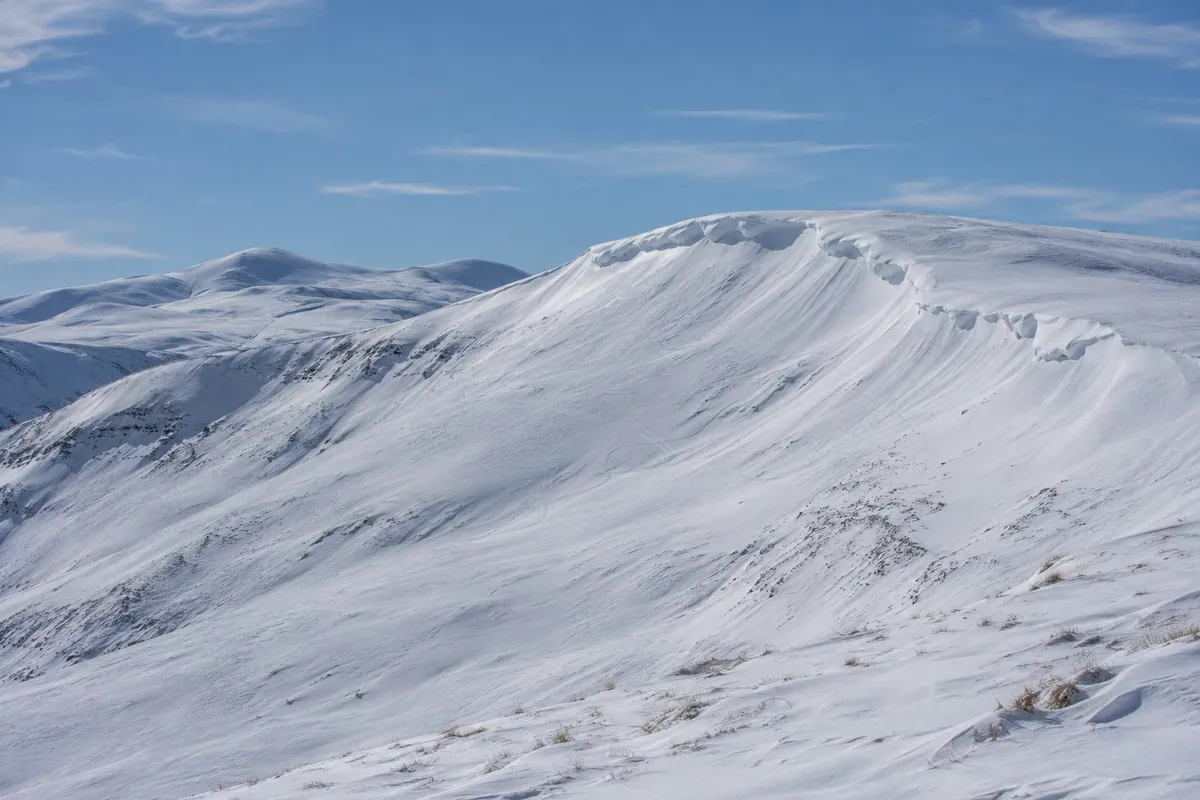
The bollettino valanghe, the avalanche bulletin for the Sibillini Mountains, is a snow and weather bulletin published by Meteomont, the service that monitors and forecasts avalanche danger nationwide and is run by the Arma dei Carabinieri. It is the tool to check before every outing on snow, in boots, on snowshoes or on skis. In the bulletins the danger is expressed on the European EAWS scale, with levels rising from 1 to 5. The Sibillini are a sector of their own: in bulletins with considerable danger they appear next to the southern Umbria-Marche Apennines.
The bulletin gives a general picture of the area and does not replace the assessment of an individual slope. Anyone heading into snowy mountains should read it with this limit in mind.
Sibillini Avalanche Bulletin: What to Know
Meteomont is the Carabinieri service to refer to for avalanche danger in the Sibillini. The bulletin is based on forecasts from the Italian Air Force weather service and on data collected every day by the Meteomont network, made up of automatic stations, manual stations and mobile survey teams. It is issued every day, holidays included, and also contains a forecast for the near future. In the Sibillini area the forest Carabinieri station of Visso operates, and it advises checking the bulletin every day.
The five levels of the scale are low 1, moderate 2, considerable 3, high 4, very high 5. A European change is in preparation: the top level will no longer be called “very high” but “extreme” and will be shown in dark red.
Level 3 is the one that appears most often in the bulletins on the Sibillini reported by the local press. For the considerable level, during an aerial check over the Sibillini the Carabinieri Forestali described the situation as follows: avalanches may be released by a light additional load on steep slopes and, in some situations, medium-sized spontaneous avalanches are possible. In the same flight, made with an Italian Air Force helicopter, the most critical avalanche sites were the slopes of Monte Vettore, the valley of Lago di Pilato, the village of Foce di Montemonaco and the Valle dell'Infernaccio. On that occasion the technicians also observed that at lower altitudes the snow was wetter and heavier, while higher up there were hard slabs that can cause avalanches if stressed.
The bulletin has clear limits:
- It provides a simplified picture of snow cover and snowpack stability on a synoptic scale, that is, over areas of no less than 100 km².
- It does not remove the need for a serious local assessment of each slope, where the danger can be considerably different.
- The level can change during the day. A classic situation is danger 1 at night and early morning and danger 3 in the middle of the day, partly because nighttime cloud cover can prevent refreezing.
To compare a day's conditions with the past, the archive on the Meteomont website can be used: snow and weather bulletins are available from 2009 onward.
Sibillini Avalanche Bulletin: the riskiest periods
Avalanche danger changes with snowfall, wind and temperature more than with the calendar. Documented episodes in the Sibillini range from midwinter to spring: an alert from the Soccorso alpino (mountain rescue) for January 27, 2013 and one on April 4, 2025.
The most delicate days are those after heavy snowfall. In April 2025, after heavy snow and northeasterly winds, avalanche danger above 1,800 meters stayed at “Considerable 3” on a scale of 5. Rising temperatures are not enough to make the snow safe: they help the snowpack settle, but they increase its load and therefore the chance of avalanches. In those days two snow slides broke away on Monte Vettore. Another mountain rescue warning spoke of a high probability of releases and of single medium and large avalanches on sunny slopes.
Ski mountaineers can also trigger releases. In an episode at the end of January 2013, three releases triggered by ski mountaineers affected Monte Rotondo, Monte Porche and Monte Argentella, along the Canale di San Lorenzo. The ski mountaineers involved were unhurt, but mountain rescue advised avoiding all off-piste routes on the highest-risk days.
When the season ends, the service changes format. On one occasion Meteomont suspended the survey season and issued a reduced “summer” bulletin. For the current season it is therefore worth checking on the Meteomont website that the bulletin is active and up to date.
To decide the altitude and slope for the day, besides the bulletin, the page on Sibillini Mountains Weather helps. For high-altitude areas there are also the pages Foce di Montemonaco weather (mountain), Forca di Presta weather (mountain) and Forca Canapine weather (mountain).
Sibillini Avalanche Bulletin: Practical Tips
Before setting off, read the day's bulletin and check its danger level. Meteomont recommends checking it before every ski mountaineering outing or any hike on snow. Mountain rescue points out that away from groomed slopes, avalanche danger remains even after releases on previous days.
For equipment, the Soccorso Alpino e Speleologico Umbria (the Umbria mountain and cave rescue service) lists as essential an avalanche transceiver (ARTVA), shovel and probe for avalanche self-rescue, suitable technical clothing, protection from the cold and a dry change of clothes, a charged phone, a power bank and GPS for navigation. The advice applies to ski mountaineers, snowshoers and anyone walking off-piste in the Sibillini. Rescues in the area also use the Recco system, which uses radar signals to detect reflectors in ski mountaineers' clothing or equipment.
On the ground, mountain rescue's guidance is as follows:
- Take great care on exposed routes, with steep slopes, ridges and gullies, where the snowpack may be unstable and prone to spontaneous releases.
- Avoid routes below rock faces or areas with wind-drifted snow.
- Do not cross slopes steeper than 30 degrees without a proper stability assessment.
- Three things to watch are the slope angle, the presence of cracks, settling and ripples, and signs of recent releases.
Zero risk does not exist, and rescue, however prompt, cannot be immediate. In an emergency, call the Numero Unico di Emergenza (the single emergency number) right away and ask for the Soccorso Alpino e Speleologico.
For altitude details and for the places closest to the critical points, see the pages Castelsantangelo sul Nera weather and Castelluccio di Norcia weather.