


Things to do in Sellano
Photo: Hagai Agmon-Snir حچاي اچمون-سنير חגי אגמון-שניר / CC BY-SA 4.0 / Wikimedia Commons
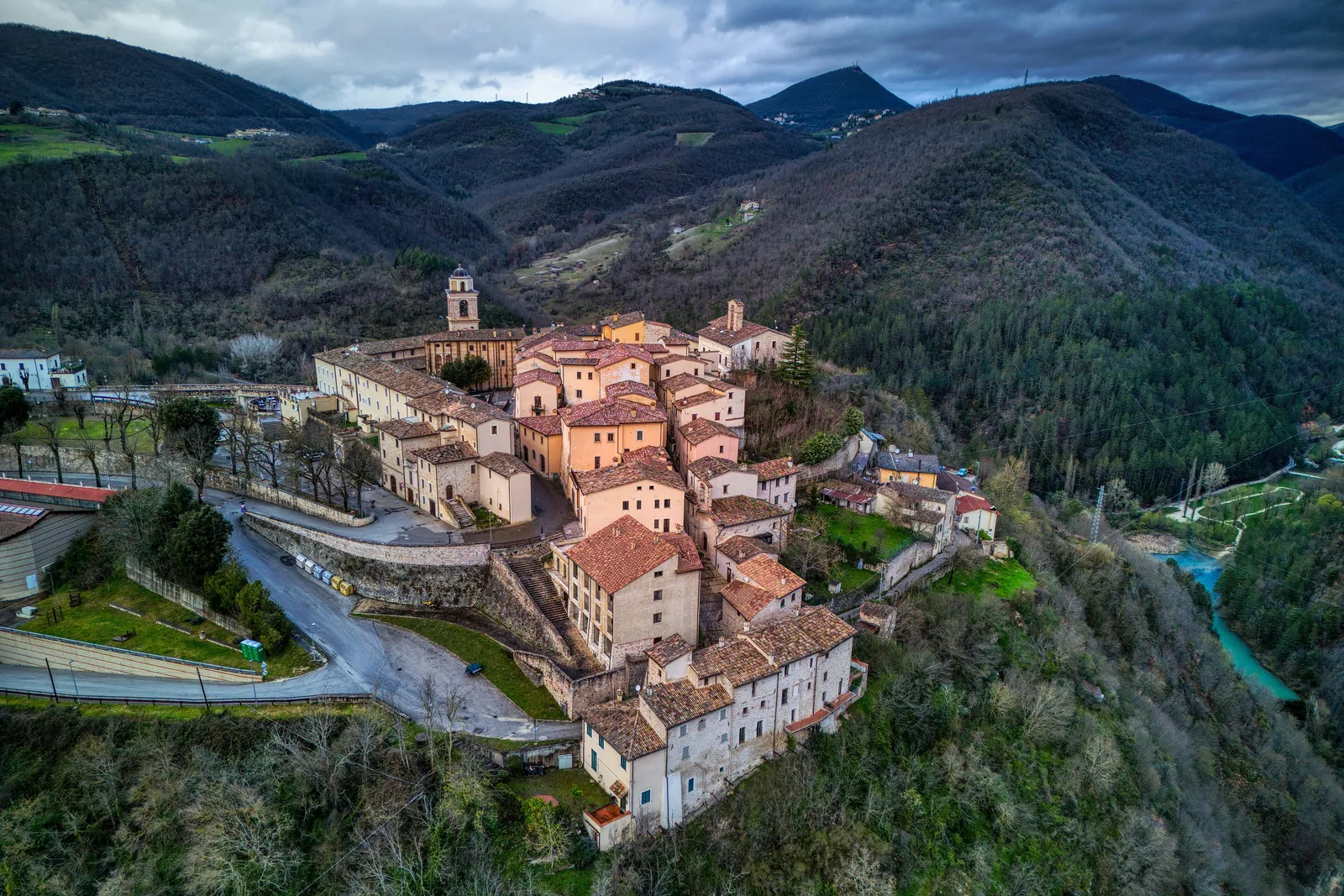
Sellano, in eastern Umbria on the border with Le Marche, is a mountain village at 640 m above sea level. It stands on a largely clay hill overlooking the valley of the Vigi stream. The things to do in Sellano start with a historic center that can be seen in a short time, with the Palazzo Comunale (town hall) and the churches of San Francesco and Santa Maria. Around it are the fortified village of Montesanto, the Castello di Postignano, Lago di Vigi, the waterfalls of the Le Rote stream and the Eremo di San Paterniano hermitage in a beech wood. The municipal territory covers about 85 square kilometers along the course of the Vigi. Beech and oak woods alternate with valleys and upland plains, and the village has many springs.
The places
6 results
- Castle or fortressMontesanto Castle (Sellano)Castle or fortress · Sellano
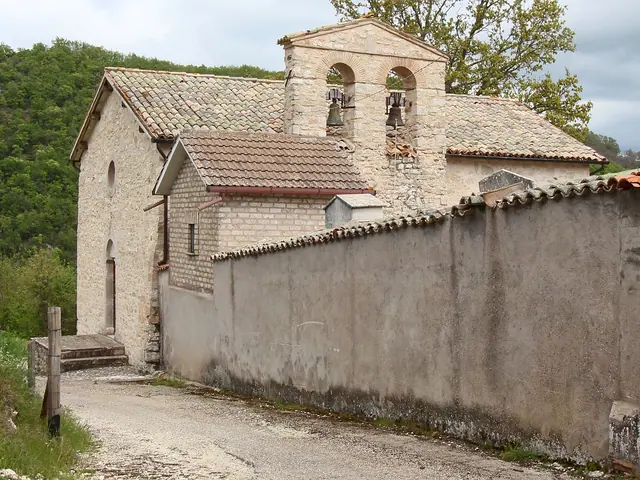 Church of San Giovanni Battista (Sellano)Church · Sellano
- Ruins or archaeological siteChurch of Sant'Antonio (Sellano)Ruins or archaeological site · Sellano
- Ruins or archaeological siteConvent of Santa Croce in SellanoRuins or archaeological site · Sellano
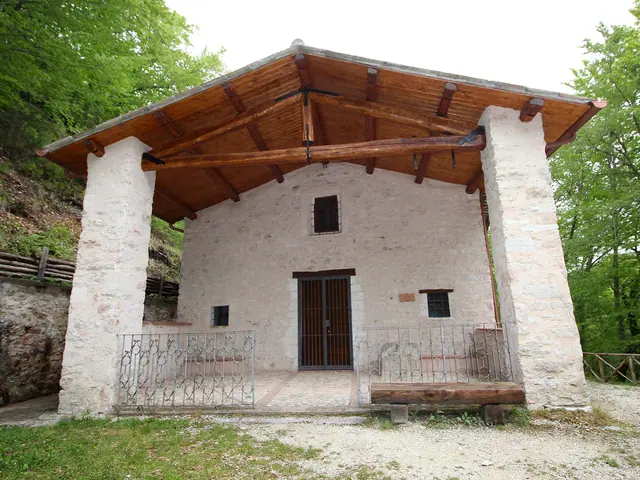 Hermitage of San Paterniano in SellanoMonastery or abbey · Sellano
- WaterfallCascata delle RoteWaterfall · Sellano
No results with these filters.
On the map
Points from the site database. Map © OpenStreetMap contributors · Protomaps.
Things to do in Sellano: the map
The center of Sellano sits on the ridge of a hill, at 640 m, above the Vigi valley. On the opposite side of the valley, facing the village, rises Montesanto. On the valley floor, just below Sellano, is the artificial lake of Vigi. From here the trail to the Cascate delle Rote starts.
The other sights are scattered among the hamlets. Postignano, Pupaggi, Sterpare and Villamagina are part of the municipality. The Eremo di San Paterniano is higher up, in a beech wood, a few kilometers from Pettino. Getting between these places takes a car or a pair of legs: the center can be explored on foot, while the rest calls for drives or hikes.
For an overview of the village and its activities, see the page Sellano: what to see and what to do.
Things to do in Sellano: the top sights
The historic center. The village was once entered through five gates. Two are still visible today: the Porta dell'Annunziata and the Porta Spoletina, also called Porta di Santa Maria. The Palazzo Comunale houses 16th-century frescoes. The Chiesa di San Francesco, also called Madonna della Croce, has an octagonal plan and three aisles. It was completed in 1538 and keeps 16th-century stucco altars. The main altar has a fresco of the Madonna and Child. The Chiesa di Santa Maria dates from the 13th century and was rebuilt in the 16th century. It holds the remains of Blessed Giolo, a medieval hermit and co-patron of Sellano. The earthquakes that have struck the area have damaged the village buildings several times, but it still keeps the layout of a medieval hilltop castle, with a main street running along the crest of the hill.
Montesanto. The Montesanto Castle is a walled village with a compact, very elongated shape. In its highest part the ruins of the old fortress can still be seen. It stands on the slope opposite Sellano and offers a view over the Vigi valley. Its position on the border between Spoleto, Norcia and the Varano duchy of Camerino made it a contested place for centuries. Spoleto bought it from Pope Pius II for 4000 florins, and the coat of arms of San Ponziano is still visible on the bell tower of the parish church. There are small palaces from the 16th-17th centuries with worked stone windows and doorways. At the center of the village is a square dominated by the town hall and the Pieve dell'Assunta, the parish church. The old community building houses the research center “Montesanto per la scienza”. Restoration of the buildings has begun, but some parts may not be accessible, so it is worth checking before visiting.
The Tibetan bridge. A suspension bridge between two wooded hills links Sellano to Montesanto. Many walking itineraries include it as the first stretch of the route to the waterfalls. In October 2026 the bridge was listed as not operating: it is best to check that it is open before going.
Lago di Vigi and the Cascate delle Rote. Lago di Vigi is a reservoir created in the Sixties. It is reached from Sellano along a small road signposted “impianti sportivi” (sports facilities). It is popular with anglers, and buzzards and herons can be seen nearby. The Cascate delle Rote form where the stream of the same name drops into the Vigi valley in small falls. A level trail leads to the lowest drop, where the water flows over banks of phytothermal travertine. The stretch to the falls is considered an easy walk. All the route details are on the page Cascata delle Rote: how to get there and trails.
Eremo di San Paterniano. The Hermitage of San Paterniano stands at about 1,020 m, in a beech wood with patches of pasture. The first records date from the 14th century, but the current building is more recent, probably from the 16th century or later, and has been restored several times. It has a gabled façade, a small bell gable and a wide portico for pilgrims. In the apse is a cell that has housed hermits over time. To the right of the entrance is a large stone with hollows, which popular tradition identifies as the prints of the saint's knee, elbow and staff as he prayed. According to local tradition, people with bone ailments kneel on that stone to be healed. Just before the hermitage stands one of the largest beech trees in the area, with a spring beside it. San Paterniano is the patron saint of Cammoro and his feast is on July 10: three processions set out for the hermitage from the villages of Orsano, Cammoro and Pettino. The surrounding area has tables, benches and barbecues for breaks. Walkers can follow a loop that starts from Cammoro and passes the hermitage.
The hamlets. The Castello di Postignano is a village whose history begins in the 9th century, abandoned since the Sixties. Its restoration, begun in the Nineties and definitively resumed in 2007, brought the village back to life as a tourist attraction in 2011. In Sterpare, the Chiesa della Madonna delle Grazie keeps a 13th-century wooden statue of the Madonna and Child. Villamagina developed the handcrafting of files and rasps. Sellano once had ten workshops of this kind, and a section of the Ecomuseo della Dorsale Appenninica Umbra is devoted to this tradition.
Things to do in Sellano: tips for the visit
The historic center takes little time. That leaves room for the surroundings, which are the richest part of the visit. A classic itinerary is the Sellano - Montesanto - Le Rote stream loop. It is a hiking route that takes a few hours on foot. It descends from Sellano toward Lago di Vigi, climbs back up to Montesanto, then drops down a steep mule track to the waterfalls and returns via the lake. The climb to the village is the only demanding stretch. For a short walk, there is the descent from Sellano to Lago di Vigi.
Swimming is not allowed at the Cascate delle Rote. The water is 8-10 °C, and in very hot summers the waterfall can run dry. It is therefore best to go after rainy periods and not always expect a strong flow of water.
For the Eremo di San Paterniano, the liveliest time is July 10, the feast day. Outside the celebration the place is quiet and suits a rest in the beech wood. As on any hike at altitude, it is wise to check the weather before leaving and wear shoes suitable for dirt trails.
To plan the stay, see the pages where to stay in Sellano and Sellano restaurants.