


Things to Do in Ussita
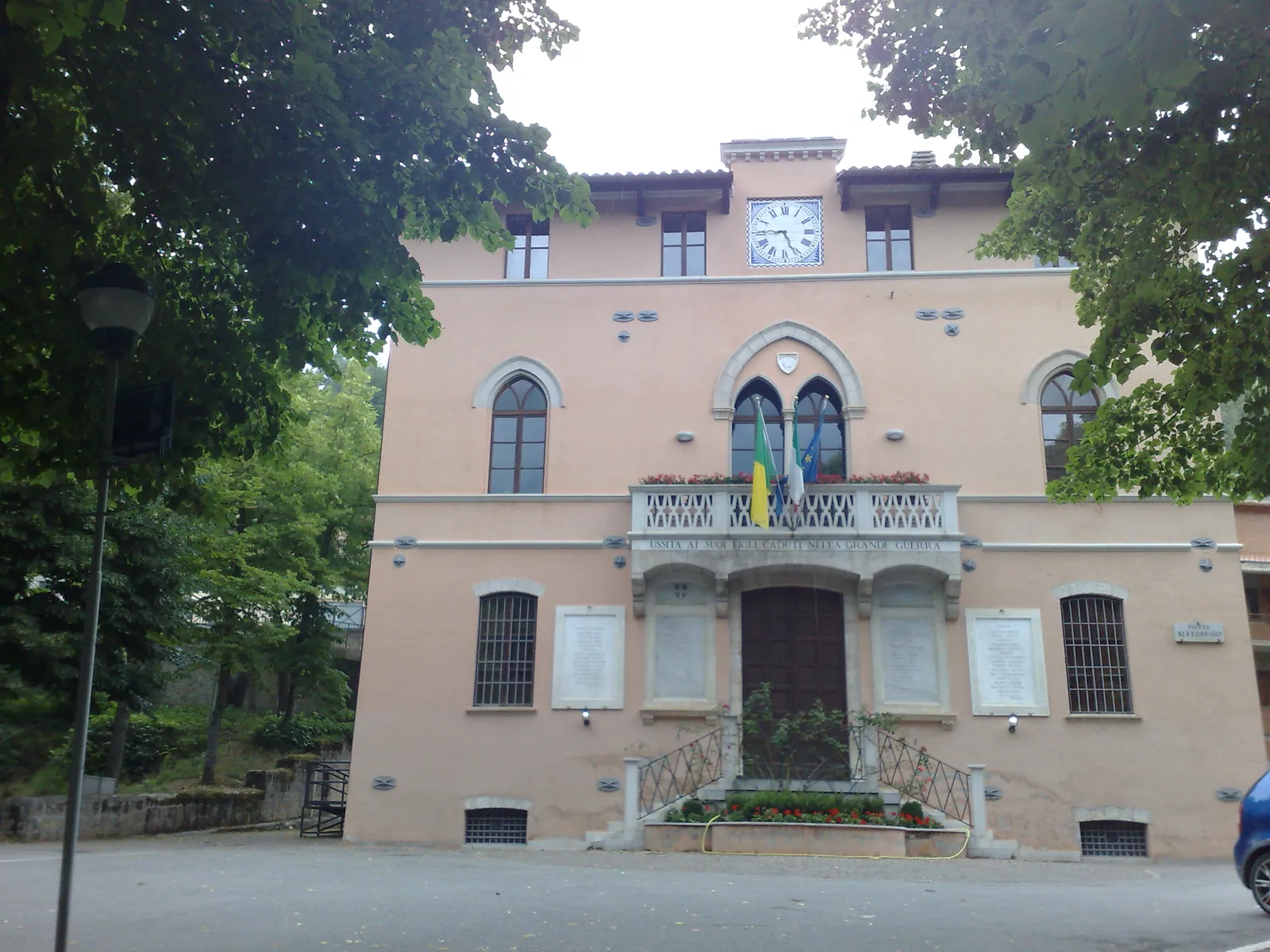
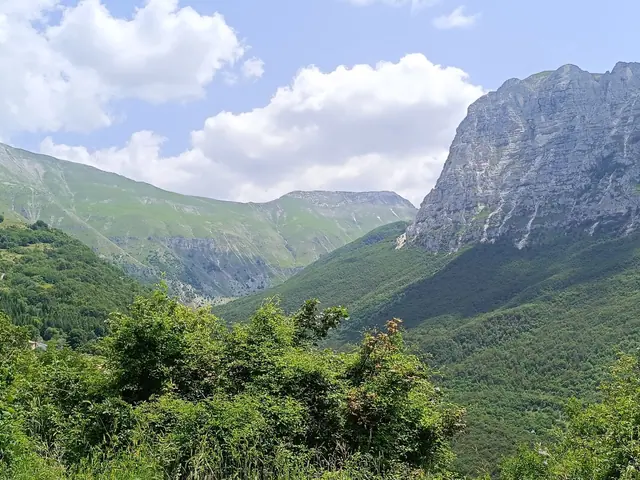
Things to do in Ussita include medieval churches scattered among the hamlets, the remains of a castle at Castelfantellino and the Callarelle waterfall. All around are Monte Bove and the trails of the Sibillini National Park in the Sibillini Mountains. The municipality, in the province of Macerata, lies at 744 m above sea level and covers 55.3 km². Rather than a compact town, it is a group of hamlets: Calcara, Casali, Castelfantellino, Frontignano, Pieve, Sorbo, Tempori, Vallestretta and others. The town hall is in Fluminata.
The name comes from the Ussita stream, which rises in the Valle di Panico, on the slopes of Monte Bove. The area preserves Romanesque and Gothic churches, old mills and medieval remains. The earthquake of October 26, 2016 had its epicenter right here, with a magnitude 5.9 tremor, and left damage that still has to be taken into account when planning a visit. The local trail network is very extensive.
The places
15 results
- ChurchChurch of Santi Rocco e Sebastiano (Ussita)Church · Ussita
- ChurchChurch of Madonna Immacolata (Ussita)Church · Ussita
- ChurchChurch of Sant'Andrea Apostolo (Ussita)Church · Ussita
- ChurchChurch of Sant'Ercolano (Ussita)Church · Ussita
- ChurchChurch of Santa Croce Vecchia (Ussita)Church · Ussita
 Church of Santa Maria Assunta (Ussita)Church · Ussita
- ChurchChurch of Santa Scolastica in UssitaChurch · Ussita
- ChurchChurch of Santo Stefano in UssitaChurch · Ussita
- WaterfallCascate delle CallarelleWaterfall · Ussita
- LakeLaghetto AzzurroLake · Ussita
- LakeLaghetto dei Giardini di UssitaLake · Ussita
- PeakMonte BiccoPeak · Ussita
 Monte Bove NordPeak · Ussita
 Monte Bove SudPeak · Ussita
 Monte BoveGuide
No results with these filters.
On the map
Points from the site database. Map © OpenStreetMap contributors · Protomaps.
Things to Do in Ussita: The Map
The sights are not concentrated in a single center. The churches and medieval remains are in different hamlets, including Tempori, Sorbo, Calcara and Castelfantellino. The natural sights, such as the Callarelle waterfall, the Val di Panico and Frontignano, are reached by heading up the valley toward Monte Bove. It is best to use the map to pick two or three stops close to each other and drive from one hamlet to the next.
Things to Do in Ussita: The Sights Not to Miss
Chiesa dei Santi Vincenzo e Anastasio. In Casali, this is the oldest church in the area: it was consecrated in 1093 by the Bishop of Spoleto. The stone facade was restored in 1929 and has an arched portal bearing the coat of arms of the Abbey of Sant'Eutizio.
Chiesa di Sant'Ercolano. In Tempori, this is a subsidiary church of the parish of Santa Maria Assunta in Pieve. It belonged to the Abbey of Sant'Eutizio and inside it holds frescoes by the school of Paolo da Visso. It suffered earthquake damage between 2016 and 2018. A dedicated page covers the Church of Sant'Ercolano in Ussita.
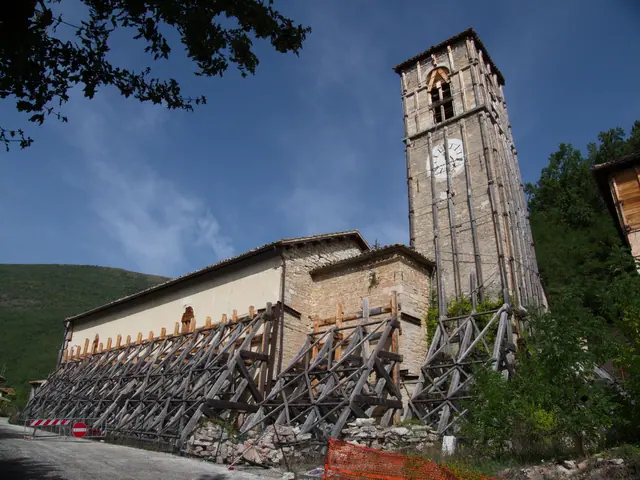
Chiesa di Santa Maria Assunta. In Pieve, this is an old 14th-century parish church (pieve) in Romanesque-Gothic style. The interior has 15th-century frescoes by Paolo da Visso and 16th-century ones by Camillo and Fabio Angelucci. The 2016 earthquake damaged it badly, with part of the facade collapsing, and safety works were later ordered. Before going, check whether it is accessible; details are on the page about the Church of Santa Maria Assunta in Ussita.
Chiesa di Santo Stefano. It dates from the 13th century and stands outside the village of Sorbo. Fuller information is on the page about the Church of Santo Stefano in Ussita.
Chiesa di Sant'Andrea Apostolo. It was rebuilt in 1926 on the remains of a Romanesque church and holds frescoes from the 14th and 15th centuries; it is now closed because of earthquake damage. It has its own page: Church of Sant'Andrea Apostolo, Ussita. The Church of Santa Scolastica (Ussita), the Church of Santa Croce Vecchia (Ussita), the Church of Madonna Immacolata (Ussita) and the Church of Santi Rocco e Sebastiano (Ussita) also have pages in the Culture section.
Castelfantellino. What remains in this hamlet are some parts of the castle built on the hill in 1380 and the Porta Calcaria gate; since the 2016 earthquake, it is worth checking their condition. The gate is what is left of the old fortified village, where it served an auxiliary role to the castle.
The center and the sculpture to Pietro Capuzi. Along Via Roma the Ussita stream flows over small drops, little bridges and cascades. At the end of the street, where the path opens into a large tree-lined avenue with Monte Bove behind, there is a sculpture in memory of Pietro Capuzi. Capuzi was a partisan from Visso and was killed by the Germans at that spot during World War II.
Cascata delle Callarelle. A small, hidden waterfall on the Ussita stream, on the slopes of Monte Bove. The easiest route starts from Calcara. The trail is easy, but the last stretch down to the base of the waterfall is steep and equipped with a rope. A second short trail, starting just after the gate of the hydroelectric plant, leads to the upper part. Here are the two Marmitte dei Giganti (giant's kettles), basins carved out by the water. The full route is on the page about the Cascate delle Callarelle: how to get there and trails.
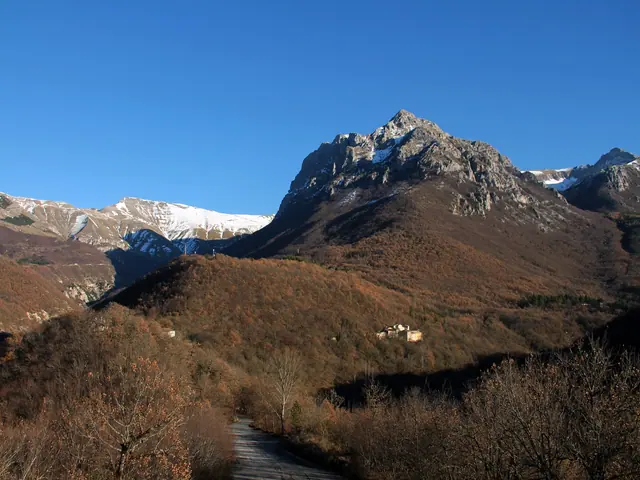
Val di Panico and Casali. For a longer walk there is a long full-day loop. The route climbs the upper valley of the Ussita stream to the Callarelle, then enters the Val di Panico through beech woods and descends to the small village of Casali. Here the face of Monte Bove Nord looms overhead. From Poggio Paradiso you can see the three great faces of Bove Nord and the landslides caused by the 2016 earthquake.
Frontignano. This is Ussita's ski resort, on the other side of Monte Bove from the Val di Panico. After more than five years of closure, the lifts officially reopened in February 2022. In summer the area is suited to trekking, Nordic walking, canyoning, rock climbing and mountain biking. More information is on the page about Frontignano, Ussita.
Rifugio del Fargno. The refuge stands on the pass it is named after, at 1,811 m, in the mountain territory of Ussita. It is reached by two dirt roads: one of about 13 km from Casali and a shorter but rougher one, of about 6 km, from Pintura di Bolognola. The refuge operates only from May to October, depending on the weather.
Things to Do in Ussita: Tips for Your Visit
Churches damaged by the 2016 earthquake may be closed or under repair. Before including them in an itinerary, check whether they are accessible. The same goes for the roads up to the Rifugio del Fargno: in spring 2025 a subsidence and safety works had made them impassable from both sides, so check road access before setting out.
For the Callarelle, shoes with good soles are needed for the final rope-equipped descent. The round trip takes roughly an hour and a half to two hours. Route directions vary from one description to another, so it is useful to carry a GPS track. As with any mountain outing, check the weather before setting out.
The Val di Panico and the Callarelle are especially beautiful in spring and summer, when the vegetation is at its peak and the stream water is refreshing on hot days. Frontignano, on the other hand, is the winter destination, with snow and lifts. For a local celebration, there is the patron saint's festival of the Santissimo Crocifisso, held on the first Sunday of September.
For accommodation and meals in the area, see the pages on where to stay in Ussita and restaurants in Ussita.