


Ussita, Sibillini Mountains: Travel Guide
At a glance
- Municipality
- Ussita
- Province
- Macerata
- Region
- Le Marche
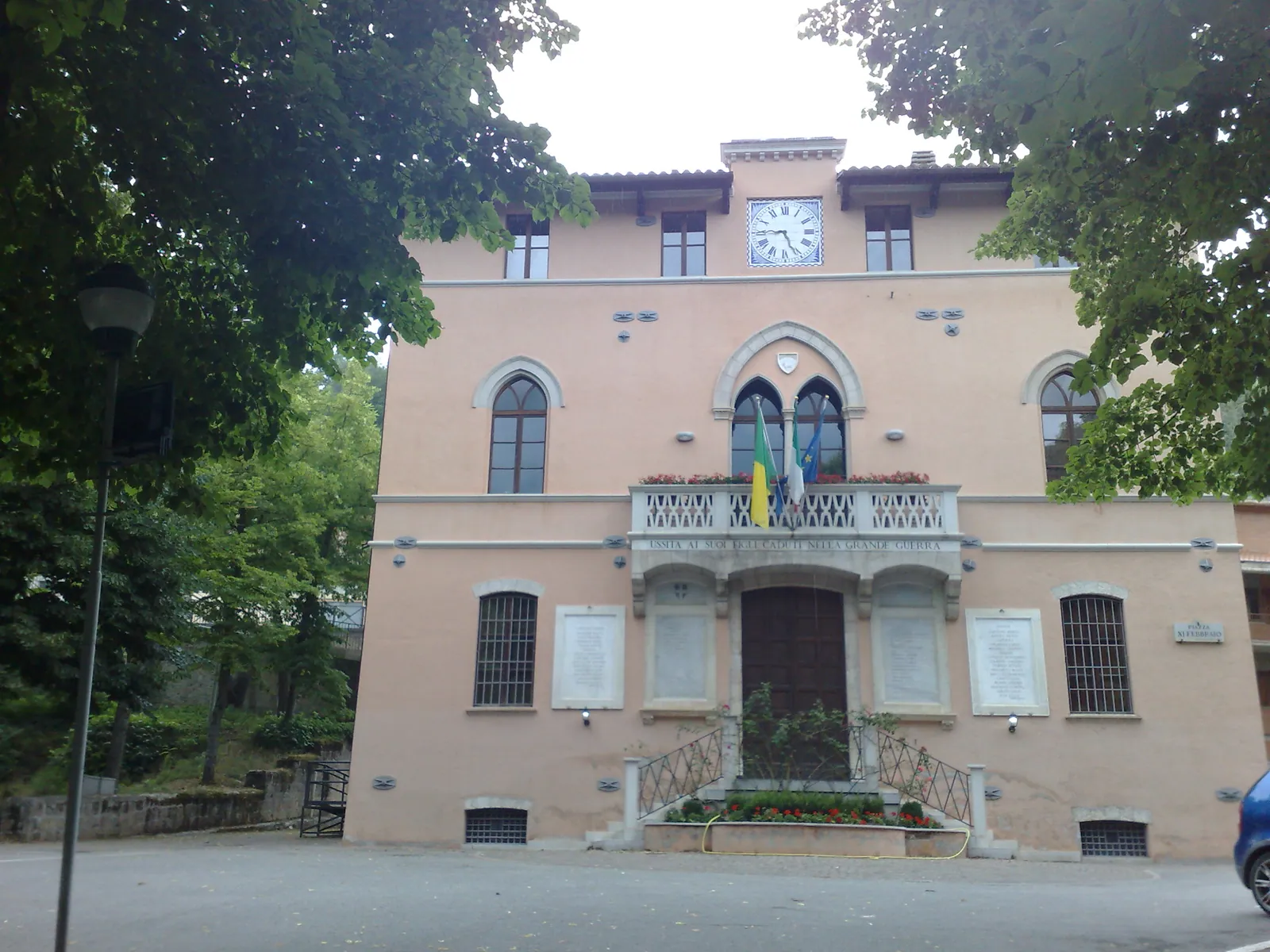
Ussita is a mountain municipality in the province of Macerata, in the Marche region, inside the Sibillini National Park in the Sibillini Mountains, at the foot of the Monte Bove massif. It has no compact historic center. It is a scattered municipality made up of small hamlets along the valley of the Ussita stream, a tributary of the Nera, with the town hall in Fluminata, at 744 meters above sea level. The municipal territory reaches up to 2,259 meters and includes Frontignano, the ski resort overlooked by the Bove and Bicco massifs.
For centuries the history of Ussita was tied to that of Visso. In the 13th century it was the most important of the five "guaite" (districts) that became part of that municipality, and only in 1913 did it become an independent municipality. The earthquakes of October 26 and 27, 2016 had their epicenter between Castelsantangelo sul Nera and Ussita itself, and left 90% of the buildings unusable, including the town hall. In 2026 reconstruction is still underway: today in Ussita building sites coexist with medieval churches, glacial valleys such as the Val di Panico and the Frontignano lifts, which are being renewed.
On the map
Points from the site database. Map © OpenStreetMap contributors · Protomaps.
Things to Do in Ussita
Ussita's heritage is spread across its hamlets: medieval churches with 15th-century frescoes, the remains of a 14th-century castle and small stone villages. The 2016 earthquake hit these buildings hard, so before planning to visit interiors it is worth checking the condition of each monument.
The church richest in history and art is Santa Maria Assunta, in the hamlet of Pieve. It is an old Gothic parish church (pieve), completed in 1389, on which twenty-two chapels and churches in the area depended. The single-nave interior holds a baptismal font from 1390, frescoes by Paolo da Visso from 1470 and, behind the high altar, a panel painting by the Angelucci of Mevale from 1584. The church had already been made unusable by the 1997 earthquake and was also badly damaged in 2016.
In Casali, on a natural terrace on the slopes of Monte Rotondo, the church of Santi Vincenzo ed Anastasio began as a Benedictine monastic cell in the Lombard era. An inscription inside records its consecration by the Bishop of Spoleto in 1093. From 1115 the church depended on the abbey of Sant'Eutizio, whose coat of arms is placed on the arch of the mullioned window on the facade. Just outside the village of Sorbo, which has kept its mountain-village look almost intact, stands the 13th-century church of Santo Stefano. On the back wall there is a fresco from 1474, attributed on stylistic grounds to Paolo da Visso.
The hamlet of Pieve almost merges with Fluminata. In the early 20th century the Roman architect Aristide Leonori gave Santa Maria Assunta a medieval-style appearance, thanks to funding from Cardinal Pietro Gasparri, born in Capovallazza. The 2016 earthquakes destroyed its facade. On the Fantellino hill stood the castle built in 1380 with the support of Rodolfo da Varano: a trapezoidal circuit of walls with five towers. A stone tower was incorporated into the municipal cemetery: since the 2016 earthquake, it is worth checking its condition before visiting. The village of Castelfantellino also has a small 15th-century church.
In the woods, along the trail between Castelfantellino and Calcara, is the Fontana del Fantasma (Ghost Fountain), an old fountain probably used as a washhouse. Legend tells of a sleepwalking girl who disappeared one night on the trail, whose face supposedly appeared carved on the fountain the next day. Ussita also has an unusual history linked to energy. In 1928 Cardinal Gasparri had a first small hydroelectric plant built at Vallazza. The turbine wheel of the San Simone power station, built in 1973 with a 250-meter head of water, is displayed on the forecourt in front of the plant. More details are on the page about things to do in Ussita.
Nature and Trails near Ussita
Ussita is a base for hikes on the Monte Bove group, in the Val di Bove and in the Val di Panico. Routes range from loops of a few hours to long high-altitude circuits. The main starting points are Frontignano, at about 1,350 meters, and the hamlets of Casali and Calcara.
At Frontignano the Frontignano–Cornaccione gondola lift is under construction, with 10-seat cabins, rising from 1,350 to 1,909 meters along a 2,069-meter line. Work began on July 12, 2025. Completion, originally scheduled for December 2025, was postponed during 2026. The new lift replaces the old Selvapiana, Cornaccione and Ginepro chairlifts. It will be able to carry bicycles, wheelchairs and people with disabilities, making the area usable in summer as well. Until December 31, 2026, ordinance no. 48 of August 25, 2026 issued by the Municipality of Ussita prohibits the movement of vehicles and pedestrians because of the works: the Park lists it as the trail status of the Monte Bove loop (E8), which is closed even on foot until that date. The closed sections are shown on the Park's map of ordinances.
Some routes starting from the Ussita area:
- Upper Val di Panico from Casali: a loop of about 12 km with 850 m of elevation gain, difficulty E (hiking). It climbs to the Forcella del Fargno, a pass with the refuge of the same name, and returns past the springs of the Ussita stream. The Val di Panico is a glacial valley below the north face of Monte Bove, home to the chamois and the golden eagle.
- Val di Bove from Frontignano: about 12.4 km, 4.5-5 hours of walking, medium difficulty, with a stop at the Cristo delle Nevi refuge (1,830 m). The steepest stretches and the scree slopes are in the first part. It uses the trails of the E8, which is closed even on foot until December 31, 2026 by Municipality of Ussita ordinance no. 48 of August 25, 2026.
- Monte Bove loop from Frontignano: 14.4 km, 1,230 m of elevation gain and about 5 hours and 10 minutes according to the Park (route E8, for expert hikers). The route makes a panoramic circuit of the group's peaks and goes above 2,000 m. Until December 31, 2026 it is closed even on foot under Municipality of Ussita ordinance no. 48 of August 25, 2026.
- Calcara–Croce di Monte Bove (1,905 m): a 7.2 km loop, demanding and with a climbing section. The best period is from July to October; in winter there is snow at the top.
Lower down along the Ussita valley, the Callarelle waterfall is worth a stop. In winter the Val di Bove is suited to ski mountaineering; in summer there is hiking, mountain biking and Nordic walking. Lifts and slopes are described on the Frontignano page.
Where to Stay in Ussita
Accommodation in Ussita has also been affected by the 2016 earthquake, which hit most of the buildings in the municipality. Some properties are still being rebuilt. For example, in September 2026 a grant of almost €19 million was awarded to restore a historic hotel in Frontignano, which will also become a training and conference center.
For several days of skiing or hiking on Monte Bove, the list of accommodations is on the page about where to stay in Ussita.
Where to Eat in Ussita
The square and the town's main shops are in Fluminata, the center of the municipality. In winter, when the Saliere lifts are running, the refuge on the slopes at Frontignano also opens.
Higher up, along the trails, there are refuges such as the Fargno and the Cristo delle Nevi: before counting on them for a break, check whether they are open and what services they offer. A selection of places is on the page about restaurants in Ussita.
Local Products of Ussita
The product most closely linked to the name of Ussita is the Sopravissana sheep, a breed native to the Marche whose name comes from the area's position, "sopra Visso" (above Visso). The breed came close to disappearing, and some local breeders, including in Vallestretta, are bringing it back. Its gray wool has been nicknamed "Italian cashmere".
Over the years Ussita's sheep farming has also produced pecorino cheeses and mutton cured meats such as salsicciotti, lonze and prosciutti. In Vallestretta they also raise the Facciuta della Valnerina goat, sheep, donkeys, cows and horses, which live free-range in the high mountain pastures for about eight months a year. Capovallazza is home to the bottling plant of Roana mineral water.
Weather and How to Get to Ussita
The most convenient way to get to Ussita is by car. From the east, take the SS 77 Civitanova Marche–Foligno, exit at Muccia and follow the signs for Visso and Ussita. From the west, follow the SS 209 Valnerina from Terni to Visso, about 6 km from Ussita. Ussita lies about 45 km southwest of Macerata. The nearest train stations, Tolentino and Terni, are several dozen kilometers away; the Ancona-Falconara and Perugia airports are farther.
Ussita can be visited all year round, but the seasons are very different. At Frontignano the ski season usually runs from late December to mid-March. In 2025-2026 the opening was brought forward thanks to heavy snowfall, with the Saliere and Belvedere chairlifts and the beginners' area. The Canalone sector stayed closed pending the new gondola lift, and the operators have announced the return of high-altitude skiing from December 2026. For the higher trails the best period is from July to October. In every season, before a hike on Monte Bove, check the weather and conditions at altitude.
In this section
4 results
 Things to Do in Ussita15 places
 Where to Stay in Ussita8 places to stay
- Ussita Restaurant Guide4 places
- Frontignano, UssitaLe Marche · Macerata
No results with these filters.