


Visso: things to see and do
At a glance
- Municipality
- Visso
- Province
- Macerata
- Region
- Le Marche
Visso is a village in the upper Valnerina, in the province of Macerata, at the foot of the Sibillini Mountains. The village sits in a basin where five valleys and as many streams meet, between steep wooded slopes and gentler peaks covered in meadows and pastures. The municipal territory is crossed by the watershed between the Tyrrhenian and the Adriatic and belongs largely to the basin of the Nera river. Since 1993 Visso has been the headquarters of the Sibillini National Park. It is a member of the Borghi più belli d'Italia (Most Beautiful Villages in Italy) club and holds the Bandiera arancione (Orange Flag) of the Touring Club Italiano.
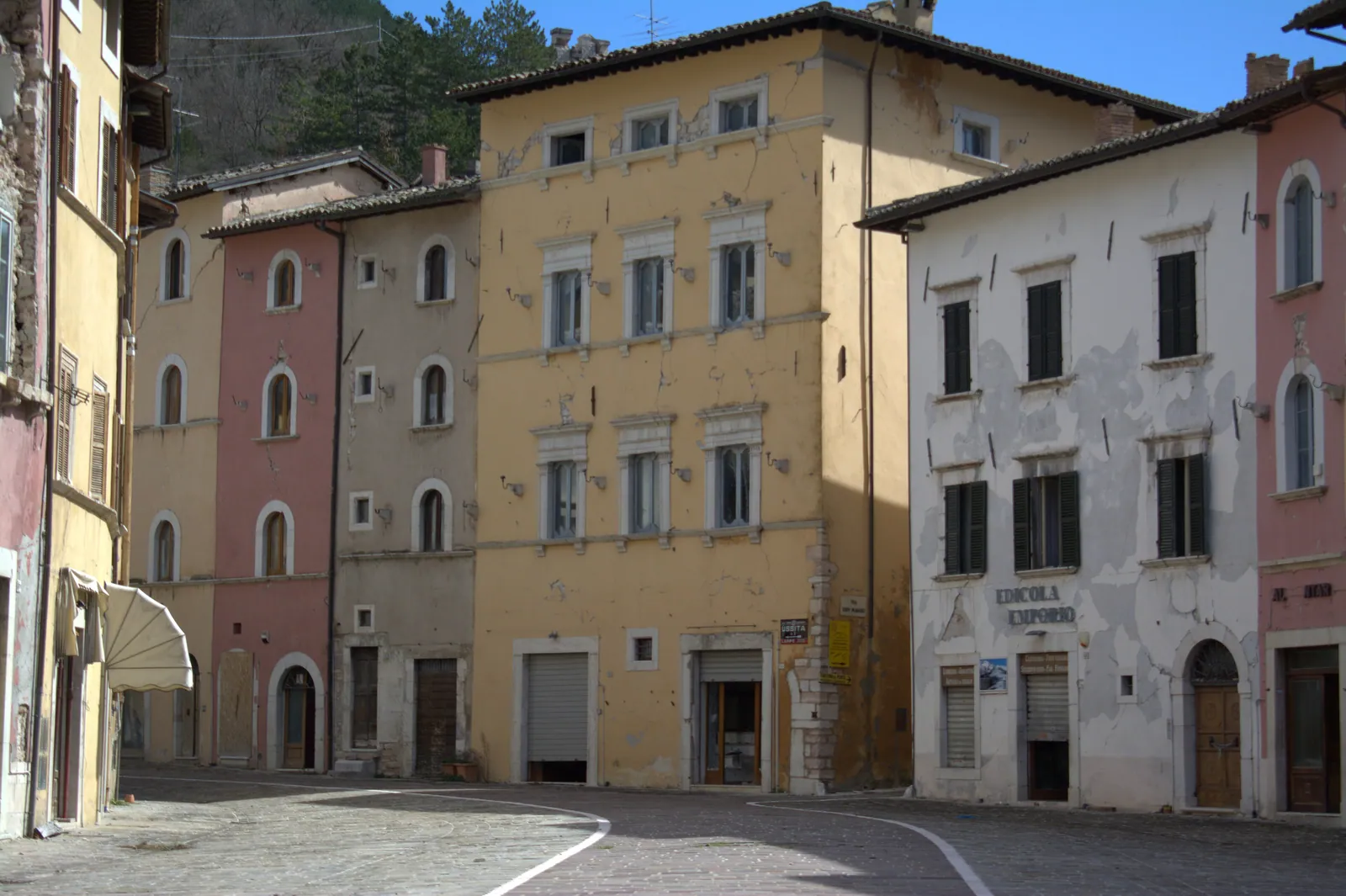
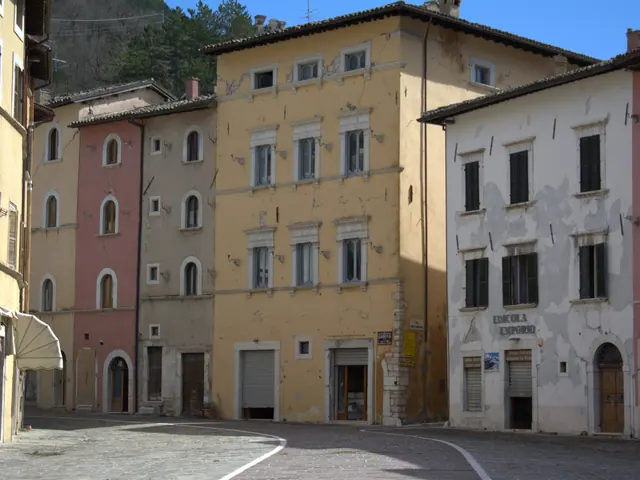
The look of the historic center comes largely from the Renaissance. The first settlement stood on the Colle di San Giovanni. After the earthquake of 1328 the population moved down to the valley floor, around the parish church of Santa Maria. After the Peace of Lodi, trade resumed and a series of restorations gave the palaces and main streets the Renaissance forms they still have today. In 2016 the shocks of October 26, of magnitude 5.4 and 5.9, and that of October 30, of magnitude 6.5, made 90% of the buildings unsafe and caused many collapses, especially in the historic center. After the earthquake, the heart of the village stayed closed. In 2026 the first public reconstruction projects began. Today Visso is a village under reconstruction: there are emergency housing districts (SAE) and temporary spaces for shops and businesses.
On the map
Points from the site database. Map © OpenStreetMap contributors · Protomaps.
Things to see in Visso
Almost all of Visso's artistic heritage is in the historic center. This part of the village has been closed since the 2016 earthquake and is undergoing reconstruction work. For this reason, the churches and palaces described here should not be considered accessible stops. In January 2026 work began on Palazzo Santissima Trinità, one of the worst-hit buildings. In July 2026 the site of the Palazzo dei Priori was handed over, the first public project in the historic center. Detailed design has begun for the Palazzo dei Governatori. For the church and palace of San Giacomo, work was expected to start by the end of October.
The heart of the village is Piazza Martiri Vissani, a trapezoid-shaped square. Thanks to a Renaissance-style play of perspective, it looks larger than it really is. Facing the square are the Collegiata, the Museum and the Palazzo dei Governatori. The square continues into the long Piazza Capuzi up to the Palazzo dei Priori, which has had its current form since 1482. Its facade has a Gothic portal, Renaissance windows and a clock with two faces. Inside, the Sala Consiliare (council chamber) preserves a fresco by Paolo da Visso.
The Romanesque-Gothic Collegiata di Santa Maria was consecrated in 1256 on the original parish church of 1143 and completed around the middle of the 14th century. It holds 14th-century frescoes, including a large Saint Christopher, and a cycle by the Giotto-Rimini school in the apse. The Gothic church of Sant'Agostino is the home of the Museo civico diocesano (civic and diocesan museum), closed since the 2016 earthquake. The church of San Francesco dates from the 14th century. After the flood of 1858 its facade was moved back 8 meters to build the embankment of the Ussita stream. In March 2017 the Caschi Blu della Cultura (the Italian "Blue Helmets for Culture" unit) found a fresco there, probably by Paolo da Visso.
The medieval walls still surround much of the village and have four gates: Santa Maria, Ponte Lato, Sant'Angelo and Ussitana. Above stands the Rocca di San Giovanni, what remains of the fortifications of the first village, which offers a view over the basin and the massif of Monte Bove.
Visso owns a municipal collection of manuscripts by Giacomo Leopardi, including a version of "L'infinito". After the earthquake the manuscripts were moved to safety. A Museo Leopardiano was then funded in a temporary location, pending the reconstruction of the Sant'Agostino complex. The museum is to house the manuscripts and a collection of sacred art from the 12th to the 15th century.
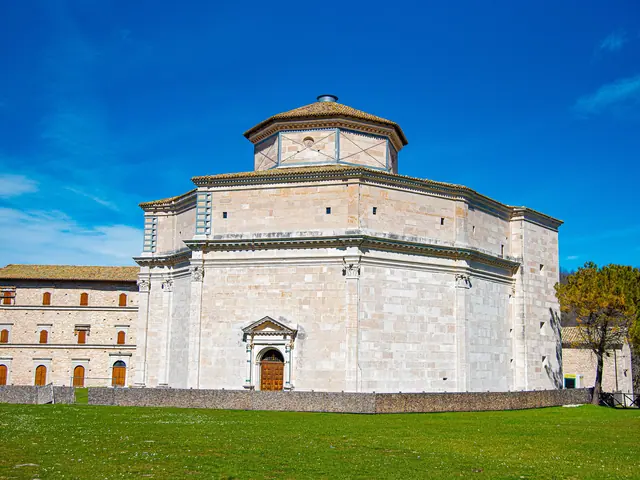
The Santuario di Macereto is a few kilometers from the village, on the Cupi plateau, at about 1,000 meters above sea level. It is considered the finest expression of 16th-century Renaissance architecture in the Marche. It is an octagonal church clad in travertine. It was built by Giovan Battista da Lugano, who took up a 1505 design by Bramante, around a statue of the Madonna already venerated in the 14th century. Inside are works by Simone de Magistris from 1580-82. The 2016 earthquake made it unsafe. In August 2025 consolidation work was under way, with completion expected perhaps in summer 2026. In the hamlets are the parish churches of Fematre and Mevale, known for the frescoes of the Angelucci brothers. More details on the individual monuments are on the page on things to do in Visso.
Nature and trails near Visso
Several Park routes start from the village, suited both to easy walks and to multi-day treks. The Sentiero Natura di Visso (N1) is a historic nature trail that starts from the Colle della Torre and crosses the territory of the old guaite (medieval districts). It is graded as tourist difficulty and takes about 2 hours. The route is affected by works, so it is best to check its condition with the park authority before setting out. A woodland loop starts from Borgo San Giovanni, reaches the Vinghetto spring and returns past the Church of Madonna di Cardosa.
Route E7 runs from Visso to the Santuario di Macereto along a stretch of the old Via Lauretana, which linked the Kingdom of Naples with the Chienti valley and Loreto. Visso is also the end of the Norcia–Visso stage of the Sentiero Italia CAI. The stage from Campi Vecchio also ends here; it takes about 3 and a half hours, passes the Casali dell'Acquaro and climbs the wooded valley that once linked Visso and Norcia.
The Gole della Valnerina (Valnerina gorges), carved by the Nera, can be driven by car. Monte Bove, with its Dolomite-like appearance, hosts all the high-altitude plant communities typical of the Sibillini. By car it is also possible to follow the Grande Via del Parco, a long clockwise loop around the mountain range that starts from Visso with Fiastra as its first stop. To the south, the road leads to Castelsantangelo sul Nera and climbs toward Forca di Gualdo, a mountain pass. Above Gualdo opens the plateau of Castelluccio di Norcia, where in 1522 the Battle of Pian Perduto was fought between the people of Visso and Norcia. Before a hike, it is worth checking the weather and trail conditions.
Where to stay in Visso
After the earthquake, hospitality businesses also reorganized in a village that has changed its face, with new areas built outside the historic center pending reconstruction. The list of places to stay with services and contacts is on the page where to stay in Visso.
Where to eat in Visso
Visso's cooking is mountain fare, made of cured meats, sheep's cheeses and handmade pasta dishes. Cordelle are a long pasta made from water and flour, similar to a thick spaghetti, dressed with guanciale (cured pork cheek), oil, pepper and pecorino. Other local dishes are Nera trout, brown or salmon trout, and castrato (mutton). Restaurants and trattorias are listed on the page of Visso restaurants.
Local products of Visso
The product most closely linked to Visso is ciauscolo, a cured pork sausage born here and known for being spread rather than sliced. The mixture is made with pork (belly, shoulder, trimmings of ham and loin), salt, wine and garlic. Ciauscolo received IGP (PGI) status in 2009. Producers who carry out every stage of processing and aging in the mountains may write "Prodotto della montagna" (mountain product) on the label. Alongside ciauscolo are the other cured meats of the norcino (pork butcher) tradition.
Pecorino is made with the milk of the Sopravissana sheep, once famous for the quality of its wool. Produce from the land includes black truffle, the summer scorzone truffle and the legumes typical of the Sibillini: lentils, farro (spelt) and cicerchia (grass pea). For desserts there are maccheroni dolci, the torta Paolo da Visso and the Christmas torciglione. Torciglione is a dry spiral-shaped cake with raisins, walnuts, dried figs, cocoa and alchermes. The shops where these can be found are on the page of Visso local products and shops.
Weather and how to get to Visso
Visso is reached by car. The village is about 50 km southwest of Macerata and about 80 km from Ancona. From the A14 highway, exit at Civitanova Marche and take the expressway toward Macerata and Tolentino as far as the Muccia exit, then follow the signs for Visso and the Valnerina. From the Umbrian side, the road is the 209 Valnerina, which follows the Nera upstream from Terni to Visso. To reach the Valnerina from the A1, exit at Valdichiana when coming from the north, then head toward Perugia, Assisi and Spoleto. Coming from the south, exit at Orte and take the Flaminia to Spoleto, then the 4 km tunnel to the Valnerina.
The village of Visso lies at about 607 meters above sea level. The municipal territory rises to about 1,800 meters on Monte Cardosa. In winter, snow and ice can make driving on the 209 difficult. In the past, roadworks along this road caused temporary closures, with detours onto the Macereto provincial road. Before setting out, it is worth checking the weather forecast and road conditions.
In this section
4 results
 Things to do in Visso18 places
 Where to stay in Visso9 places to stay
 Visso restaurants8 places
 Visso Local Products and Shops5 places
No results with these filters.