


Gorges and valleys of the Sibillini
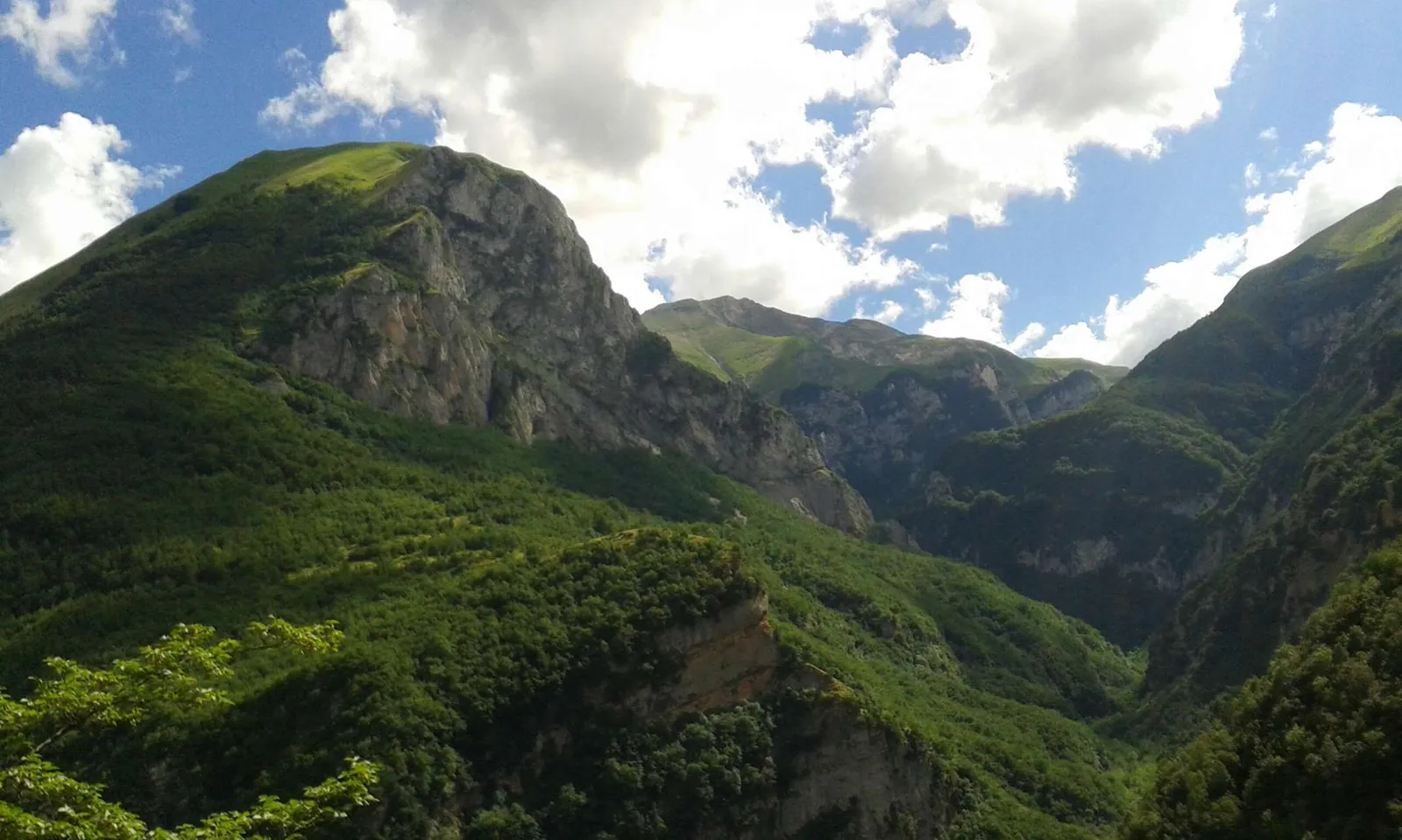
The gorges and valleys of the Sibillini are among the most visited places in the National Park of the Sibillini Mountains. The Gole dell'Infernaccio are a natural gorge carved by the Tenna river, between Monte Sibilla and Monte Priora. They lie in the municipality of Montefortino, in the province of Fermo. Along the trail there are sheer limestone walls, turbulent water and a centuries-old beech forest leading to the Eremo di San Leonardo, a hermitage.
On the Macerata side, the valley of the Fiastrone stream ends with Lago di Fiastra and the Lame Rosse. In Montefortino the Valle dell'Ambro is carved by the stream of the same name, between Monte Priora and Monte Castel Manardo. Some routes are subject to closures or bans: before setting out it is wise to check trail conditions, as explained below.
The places
12 results
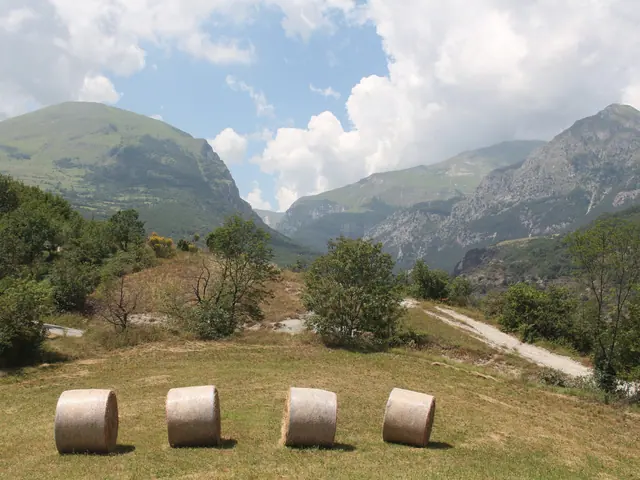 Monte SibillaPeak · Montemonaco
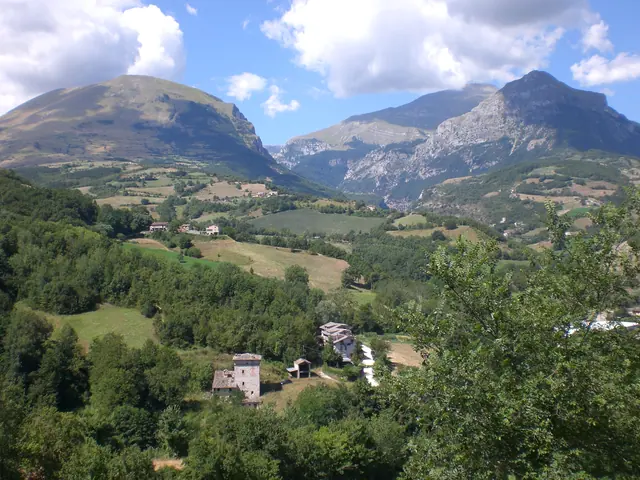 Monte PrioraGuide
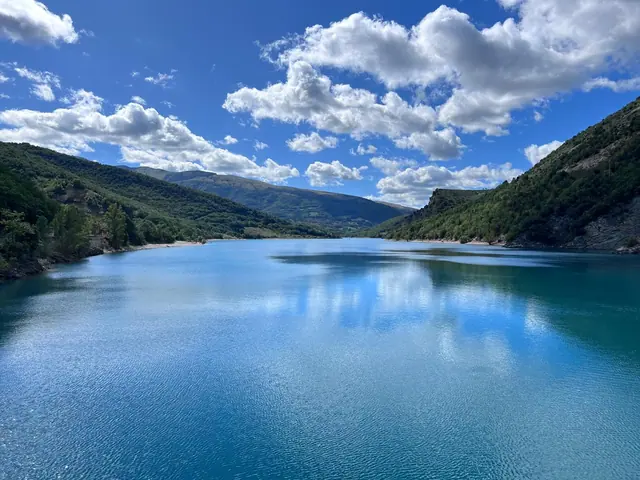 Lago di FiastraLake · Fiastra
- Monte Castel ManardoGuide
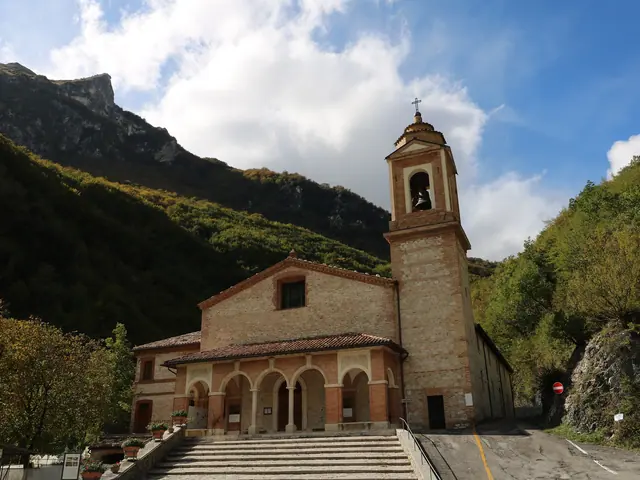 Sanctuary of Madonna dell'Ambro (Montefortino)Sanctuary or hermitage · Montefortino
- Valle dell'Acquasanta e CascataGuide
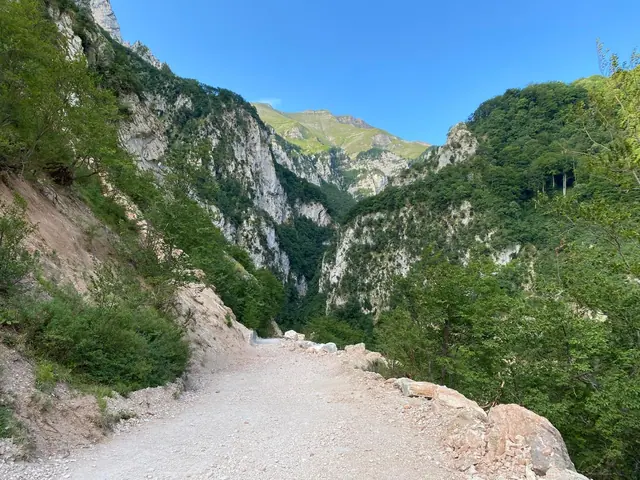 Gola dell'InfernaccioGuide
- LakeLaghetto dell'InfernaccioLake · Montefortino
- CapotennaGuide
- CaveGrotta dei FratiCave · Fiastra
- Gole del FiastroneGuide
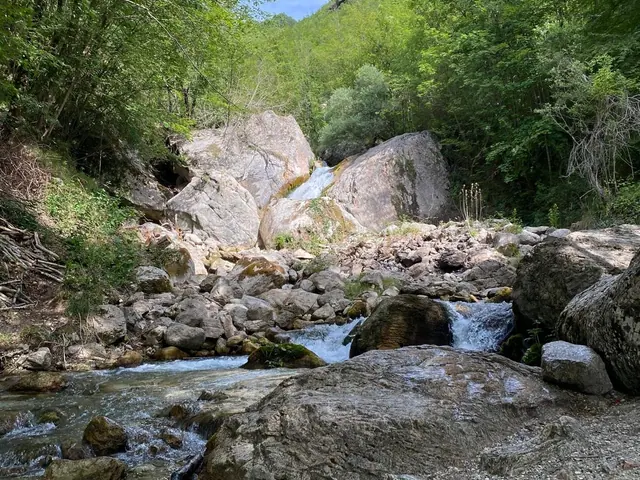 Valle dell'AmbroGuide
No results with these filters.
On the map
Points from the site database. Map © OpenStreetMap contributors · Protomaps.
Gorges and valleys of the Sibillini: the map
The places on this page are concentrated in two areas. The first is around Montefortino, with the Gola dell'Infernaccio, the source of the Tenna at Capotenna and the Valle dell'Ambro. The second lies between Cessapalombo and Fiastra, in the province of Macerata, where the Fiastrone flows.
For the Infernaccio the reference point is the hamlet of Rubbiano. Rubbiano is about 6 km from Montefortino. Reaching it involves a stretch by car and then a walk. The Valle dell'Ambro is reached from Montefortino by following the signs for the Sanctuary of Madonna dell'Ambro, about 5 km away.
For the Fiastrone, the starting point is Cessapalombo. Coming from the hamlet of Villa, it is possible to drive up to the parking area where the road ends; from there the trail continues on foot through the woods.
There is also the Valle dell'Acquasanta, with its waterfall, described on the page about the Valle dell'Acquasanta and its waterfall.
Gorges and valleys of the Sibillini: the top places
Gola dell'Infernaccio. The full name is "Orride Gole dell'Infernaccio" (the dreadful gorges of the Infernaccio). From May to October the trail inside the gorge is walked by thousands of visitors. At the start are the Pisciarelle, small cascades that come down from Monte Zampa and form a ford. Farther on there is a junction. To the right, the trail leads to the Eremo di San Leonardo through an old beech forest. The classic outing is the hike to the hermitage, low in difficulty and about 3 hours long. A local legend says that the fairies asked Queen Sibilla for permission to join a night dance in the gorge. For this reason the route is also called the "cammino delle fate" (the fairies' path). More details are on the page about the Gola dell'Infernaccio.
Capotenna. From the junction, the left branch leads to Capotenna, the source of the Tenna river, where after the 2016 earthquake the "Laghetto della Sibilla" formed. After the gorge reopened, the trail beyond the second junction for San Leonardo toward Capotenna remains closed to vehicles and pedestrians by ordinance of the Municipality of Montefortino: before setting out, check whether it has reopened. Routes and access are on the page about Capotenna.
Gole del Fiastrone. The valley is covered with Mediterranean scrub, hornbeams, oaks, holm oaks and, higher up, beeches. The Lame Rosse are pinnacles and towers of gravel, clay and silt, shaped by erosion. The trail leads to the Grotta dei Frati, which lies in the territory of Fiastra but is easily reached from Cessapalombo. Benedictine monks took refuge here around the year 1000, and in 1234 they built a convent and a chapel. There is, however, an important warning about the stretch that enters the gorge: by ordinance of the Municipality of Fiastra, as the Park also states, the Gole del Fiastrone trail is closed to everyone for safety reasons. The page on the Gole del Fiastrone covers this in more detail.
Valle dell'Ambro. The Santuario della Madonna dell'Ambro, at an elevation of 658 meters, is the starting point for many trails. The easiest walk leads to the waterfall: it starts behind the sanctuary and in about ten minutes reaches a clearing from which the waterfall can be seen. The sources of the Ambro take more effort. The trail is recommended only for those already familiar with grade E hikes, and the main spring is a small cave. There is also a longer loop that takes a full day of walking. All the details are on the page about the Valle dell'Ambro.
Gorges and valleys of the Sibillini: visiting tips
The first thing to do is check accessibility. The Gole dell'Infernaccio may be closed for safety reasons, especially during weather alerts or in winter because of avalanche risk. After the 2016 earthquake, safety works allowed them to reopen; in the winter and spring of 2026 they were closed again because of avalanche damage and reopened with ordinance of the Municipality of Montefortino no. 32 of July 17, 2026 as far as the second fork for the Eremo di San Leonardo, while the stretch toward Capotenna remained closed. Ordinances are published on the website of the Comune di Montefortino. For the Fiastrone the reference is the Comune di Fiastra, which issued the ordinances on the trail.
At the Infernaccio a helmet is recommended, because small stones may fall. The route is not accessible with strollers. The gorge also offers cool relief in summer, but in winter it is best to check conditions first.
In the Valle dell'Ambro it is better not to rely on signage: at the start of the route, and often along the way too, signs are missing. For a short outing, the waterfall behind the sanctuary is enough. For other routes, see the pages on the waterfalls of the Sibillini Mountains and on Sibillini Mountains nature.