


Fortress of the Ponte di Cecco
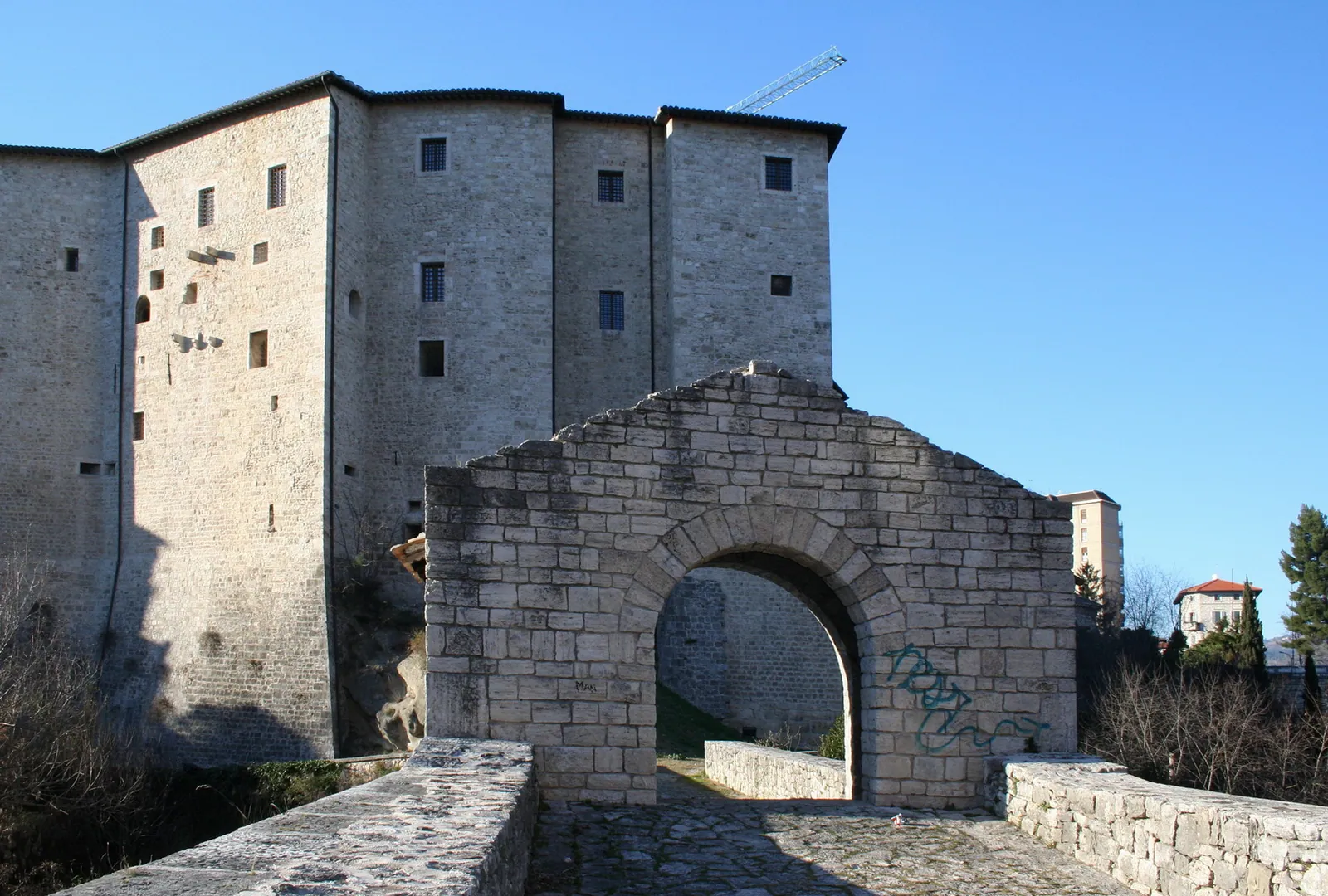
Fortress of the Ponte di Cecco
- Type
- Castle or fortress
- Address
- Ponte di CeccoAscoli Piceno (AP)
- Website
- habitualtourist.com
Source: site database.
The Fortress of the Ponte di Cecco (Fortezza del Ponte di Cecco) in Ascoli Piceno is today a handful of ruins, visible at the end of the Ponte di Cecco, in the Porta Maggiore district. They stand on the steep eastern bank of the Castellano stream, among recently built apartment blocks. The bridge, the oldest in town, is of Roman origin and leads to nearby Malatesta Fort in Ascoli Piceno.
On the map
Points from the site database. Map © OpenStreetMap contributors · Protomaps.
History of the Fortress of the Ponte di Cecco
Little is known about the fortress itself. Its history is read mainly through the bridge, the obligatory passage for anyone entering the town from the east. The bridge dates from the 1st century BC, and the consular Via Salaria left the town across it. For a long time it was thought to be medieval, until the archaeologist Giambattista Carducci recognized it as a Roman work of the Republican age.
In 1349 the bridge was restored by Mastro Cecco Aprutino, on the orders of Galeotto Malatesta. In June 1944 retreating German troops blew it up. It was then rebuilt after the war with the original stones that were recovered.
What to see at the Fortress of the Ponte di Cecco
Of the old fortification, some perimeter walls remain flanking the stairway that climbs up from the bridge. In the travertine wall, the remains of the vault of a covered passage stand out; the road very likely ran beneath it.
The bridge, 25 m high and 43 m long, has two arches. Above the larger arch stands a small building, the "casetta del dazio" (toll house), which served as a gate and customs barrier. A popular legend attributes the bridge to Cecco d'Ascoli, who supposedly built it in one night with the devil's help.
How to visit the Fortress of the Ponte di Cecco
The ruins can be viewed outdoors, in an urban setting. The bridge can be seen well from the Porta Maggiore bridge and from inside Forte Malatesta.
Forte Malatesta reopened to the public in November 2010, after a restoration lasting from 2000 to 2010. Today it houses a museum complex, and a visit requires an admission ticket.
Where the Fortress of the Ponte di Cecco is
The fortress is in Ascoli Piceno, just outside the historic center, in the Porta Maggiore area. From the center, the Castellano stream is a few steps away and, a little farther on, Forte Malatesta. A parking area linked to the Palazzo Malaspina area makes it possible to reach the center in a few minutes, avoiding the narrow streets and the ZTL (limited traffic zone).
Near the Fortress of the Ponte di Cecco
Forte Malatesta houses the Museo dell'Alto Medioevo, which displays the grave goods from the Necropoli longobarda di Castel Trosino (Lombard necropolis). In the moat that partly surrounds the fort is the park dedicated to the sculptor Giuseppe Marinucci, with iron sculptures. In the center are the Ventidio Basso Theater, which since 2026 has been part of the UNESCO site of the condominium theaters of central Italy, and the Polo culturale Sant'Agostino. More stops are on the page about things to do in Ascoli Piceno.
Frequently asked questions
What remains of the Fortress of the Ponte di Cecco today?
Why is it called the Ponte di Cecco?
Is the Ponte di Cecco original or rebuilt?
How high is the Ponte di Cecco?
Nearby
What to see nearby
- Malatesta Fort in Ascoli PicenoCastle or fortressunder 100 m
- Monument to Cecco d'AscoliMonument or memorial200 m
- 300 m
Where to stay
- 200 m
- 200 m
- 300 m
Where to eat
- Macelleria Spina Emanuele, Ascoli PicenoButcher and pork productsunder 100 m
- Il Ruspante, Ascoli PicenoRestaurant300 m
- Caffè dei Sogni in Ascoli PicenoBar and café300 m
Straight-line distances.