


Malatesta Fort in Ascoli Piceno: history and how to visit
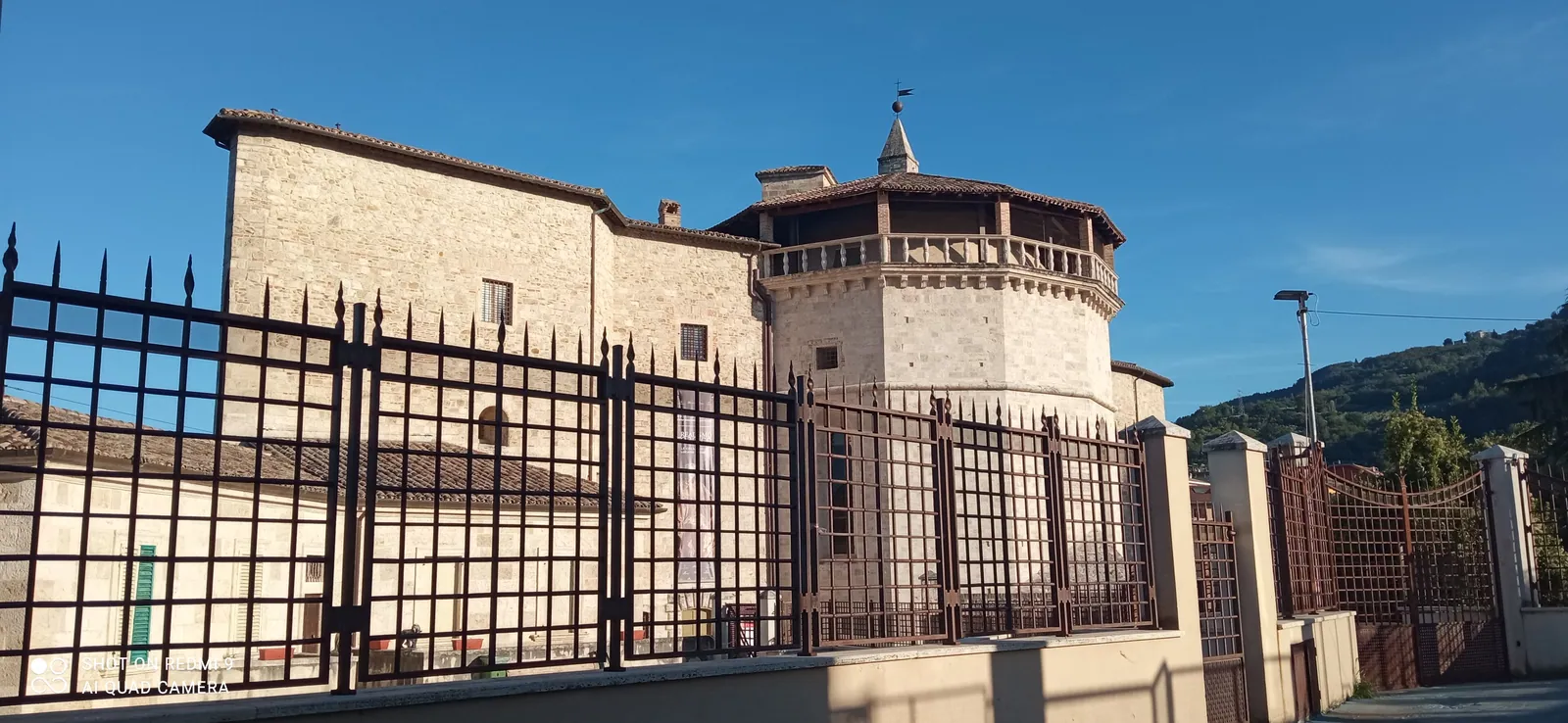
Malatesta Fort in Ascoli Piceno
- Type
- Castle or fortress
- Address
- Ponte di CeccoAscoli Piceno (AP)
- Phone
- 0736 262833
- musei.civici@comune.ascolipiceno.it
- Website
- ascolimusei.it
Source: site database, © OpenStreetMap contributors (ODbL).
Malatesta Fort (Forte Malatesta ad Ascoli Piceno) in Ascoli Piceno is a Renaissance fortress on the Castellano stream, adjacent to the Ponte di Cecco. For centuries this spot was the obligatory passage for anyone entering the town from the east. Its present form, an irregular star-shaped plan, is the work of Antonio da Sangallo the Younger, who designed and built the fort between 1540 and 1543 on behalf of Pope Paul III Farnese. Beneath its walls lie the layered remains of a Roman bath complex, a 14th-century stronghold and a church turned into a keep.
The fort served as a barracks and then, for about a century and a half, as the town prison. After a restoration lasting from 2000 to 2010, it reopened to the public in November 2010. Today it is a museum complex of the Comune of Ascoli Piceno. It houses the Museo dell'Alto Medioevo (Museum of the Early Middle Ages) with the Lombard grave goods from Castel Trosino, the Cinema & territorio museum "I Costumi nel cinema" (film costumes) and rooms for temporary exhibitions. The moat holds the park dedicated to the Ascoli sculptor Giuseppe Marinucci. The fort is a few minutes' walk from the historic center.
On the map
Points from the site database. Map © OpenStreetMap contributors · Protomaps.
History of Malatesta Fort in Ascoli Piceno
Malatesta Fort as it appears today dates from 1540-1543 and is the work of Antonio da Sangallo the Younger. The name, however, comes from Galeotto I Malatesta, who in 1349 had strengthened the stronghold that stood on the same site. And that stronghold, too, rested on much older buildings.
In Roman times the area hosted a bath complex, the "terme del Lago". Brackish water arrived from the spring at Castel Trosino through a conduit faced in opus reticulatum, which can still be seen today. In 1776 the historian Francesco Antonio Marcucci described the bath hall as a large chamber with pools and a small fountain. A large travertine block from the early Imperial age, decorated with low-relief scrolls of leaves, is attributed to the same building. Today the block is in the left aisle of the Church of San Vittore.
Chronicles also mention defensive works built by the Piceni near the Ponte di Cecco, to strengthen the entrance to the town after the defeat inflicted on the people of Ascoli by Gnaeus Pompeius Strabo in 91 BC. Destroyed by the Lombards, the fortification was repaired, but in 1242 it was razed to the ground once more.
In 1349 Galeotto I Malatesta, lord of Ascoli, called in by the town to fight against Fermo, strengthened the existing stronghold, which became a medieval fort to live in. He needed to defend it from the people of Ascoli themselves, who resented his tyranny. In documents it is called "Cassero a mare", "Forte Minore", "Arcicula" or "Rocchetta", to distinguish it from the Pia Fortress. In May 1349 Bishop Isacco Bindi, who had denounced Galeotto's abuses to the people, was imprisoned here. From this phase the square eastern tower is still recognizable.
In 1353 a popular revolt drove Malatesta out of the town and destroyed the fort. The chronicles disagree on the day: some give June 2, others September 7. Further serious damage came in 1376, during the uprising against Blasco Garcia Albornoz. From 1533 to 1536 the building was entrusted to the former Poor Clares of the convent of Santa Maria delle Donne.
The turning point came with Sangallo. The project brought together in a single complex the remains of the earlier buildings and the church of Santa Maria del Lago, which was deconsecrated, turned into a keep and divided over three levels. Giorgio Vasari relates that Sangallo made the fortress defensible in a few days, so that the people of Ascoli, convinced it would take years, were astonished. In 1543 the commissioner Angelini had a Latin inscription set up to mark the end of the works. The inscription records that the stronghold had been ordered by decree of Paul III to put an end to factions and tyrannies in the town.
The fort was restored again in 1600. Between 1797 and 1798 the Papal Government used it as a barracks. From 1828 to 1978 it housed the town's judicial prison, which was then moved to the new prison at Marino. The changes made for its use as a prison have left their mark on the present structure. The restoration overseen by the Soprintendenza delle Marche (the regional heritage authority) took place between 2000 and 2010. Since then the building, owned by the municipality, has been a museum complex.
What to see at Malatesta Fort in Ascoli Piceno
A visit to Malatesta Fort covers two things: the military architecture and the museums set up inside.
The first thing to look at is the fortress itself. Facing the Castellano are the gunports, openings for artillery, arranged in three tiers: the lower ones are almost all rectangular, the upper ones "bell-shaped". The eastern tower of the 14th-century stronghold and the old church of Santa Maria del Lago, which became the keep, can also be made out. The entrance portal is in the style of Francesco di Giorgio, the architect who worked on the Palazzo Ducale in Urbino.
On the top floor, since 2014, is the Museo dell'Alto Medioevo. Its core is the Lombard section, with two tombs and other grave goods from the Castel Trosino necropolis, previously kept in Rome, at the Museo nazionale dell'Alto Medioevo, and at the Museo Archeologico Statale in Ascoli. The necropolis was discovered by chance in April 1893, during farm work in the hamlet of Castel Trosino, near Ascoli Piceno. The excavations brought to light numerous burials. The museum also has late Roman, Byzantine and Gothic sections, with finds that came largely from the archaeological museums of the Marche. On display are fibulae (brooches), necklaces with glass beads and pendants, rings and weapons. Reading stands and touchscreen stations make it possible to zoom in on the details of the craftsmanship and learn about the places where the finds were made.
The Cinema & territorio museum "I Costumi nel cinema" opened in November 2021. With video projections and audio guides, the route shows the stages of creating a costume for the film set. Some costumes are enriched with lace and bobbin lace made in the area.
In the moat, which partly surrounds the fort, the "Giuseppe Marinucci" park has been open since June 2022. Along the path are sinuous iron sculptures by the Ascoli artist, an interpreter of 20th-century art.
The other rooms host temporary exhibitions. In 2025 the fort hosted Antonio Marras's exhibition "Vedere per credere. L'ombra di Cecco", dedicated to Cecco d'Ascoli and to the building's many lives: fortress, church, prison and museum. From October 3 to November 7, 2026, a major retrospective on the Ascoli painter Dino Ferrari is open.
How to visit Malatesta Fort in Ascoli Piceno
Malatesta Fort is part of the Musei Civici (civic museums) network of Ascoli Piceno. A single ticket gives admission to the fortified complex and the Museo dell'Alto Medioevo. The venue is active all year round: in 2026 it hosted exhibitions, conferences, public talks and even an international strongman competition.
A visit usually takes a couple of hours or less. Much depends on the time spent in the museums and the current exhibitions. It is best to arrive a little early, because last entry is allowed up to half an hour before closing.
Inside there is a ticket office, bookshop, cloakroom, a conference room on the second floor, a space for educational activities and a screening room. The temporary exhibition rooms are also accessible to people with disabilities. The museum is part of the Carta Musei Marche scheme.
Guided group tours are organized from time to time. In February 2026, for example, the fort and the Museo dell'Alto Medioevo were a stop on the "Camminata dei musei" (museum walk), with a licensed tour guide and a limited number of participants.
Where Malatesta Fort is in Ascoli Piceno
Malatesta Fort is on the east side of Ascoli Piceno, just outside the historic center. It stands on the banks of the Castellano stream, near the Ponte di Cecco, at a point where the town narrows around a gorge with stone walls dropping down to the water.
It is easy to reach on foot. There is a parking area near Palazzo Malaspina: from there, a few steps lead to the Castellano and the fort without driving into the narrow streets and the ZTL (limited traffic zone) of the center. Corso Vittorio Emanuele links the fort to the heart of the town.
Those arriving by train get off at Ascoli Piceno, the end of the line from San Benedetto del Tronto. The station is a little out of the way, but the center can be reached on foot or by city bus.
Near Malatesta Fort in Ascoli Piceno
The Ponte di Cecco crosses the Castellano right at the foot of the fort. It is the oldest bridge in town, from the Roman era (1st century BC), built with large blocks of travertine and stone. It has two asymmetrical arches, one twice as wide as the other. Destroyed during the Second World War, it was rebuilt after the war using the original material. According to popular tradition it is one of Italy's many "devil's bridges", built in a single night with the help of the devil.
In town, the Chiesa di San Vittore holds the Roman travertine block attributed to the baths that stood where the fort is today. Heading toward the center along Corso Vittorio Emanuele, the walk passes the Church of Santa Maria del Carmine. The street then leads toward Piazza del Popolo in Ascoli Piceno.
To better understand the collections of the Museo dell'Alto Medioevo, it is worth also visiting Castel Trosino, the hamlet where the Lombard necropolis was discovered in 1893. More ideas for the day are on the page about things to do in Ascoli Piceno.
Frequently asked questions
How long does it take to visit Malatesta Fort?
Why is it called Malatesta Fort if Sangallo built it?
What can you see in the Museo dell'Alto Medioevo at Malatesta Fort?
Where can you park to visit Malatesta Fort?
Nearby
What to see nearby
- Fortress of the Ponte di CeccoCastle or fortressunder 100 m
- Monument to Cecco d'AscoliMonument or memorial100 m
- 200 m
Where to stay
- 200 m
- 300 m
- 300 m
Where to eat
- Macelleria Spina Emanuele, Ascoli PicenoButcher and pork products100 m
- Il Ruspante, Ascoli PicenoRestaurant200 m
- 300 m
Straight-line distances.