


National Archaeological Museum of Ascoli Piceno
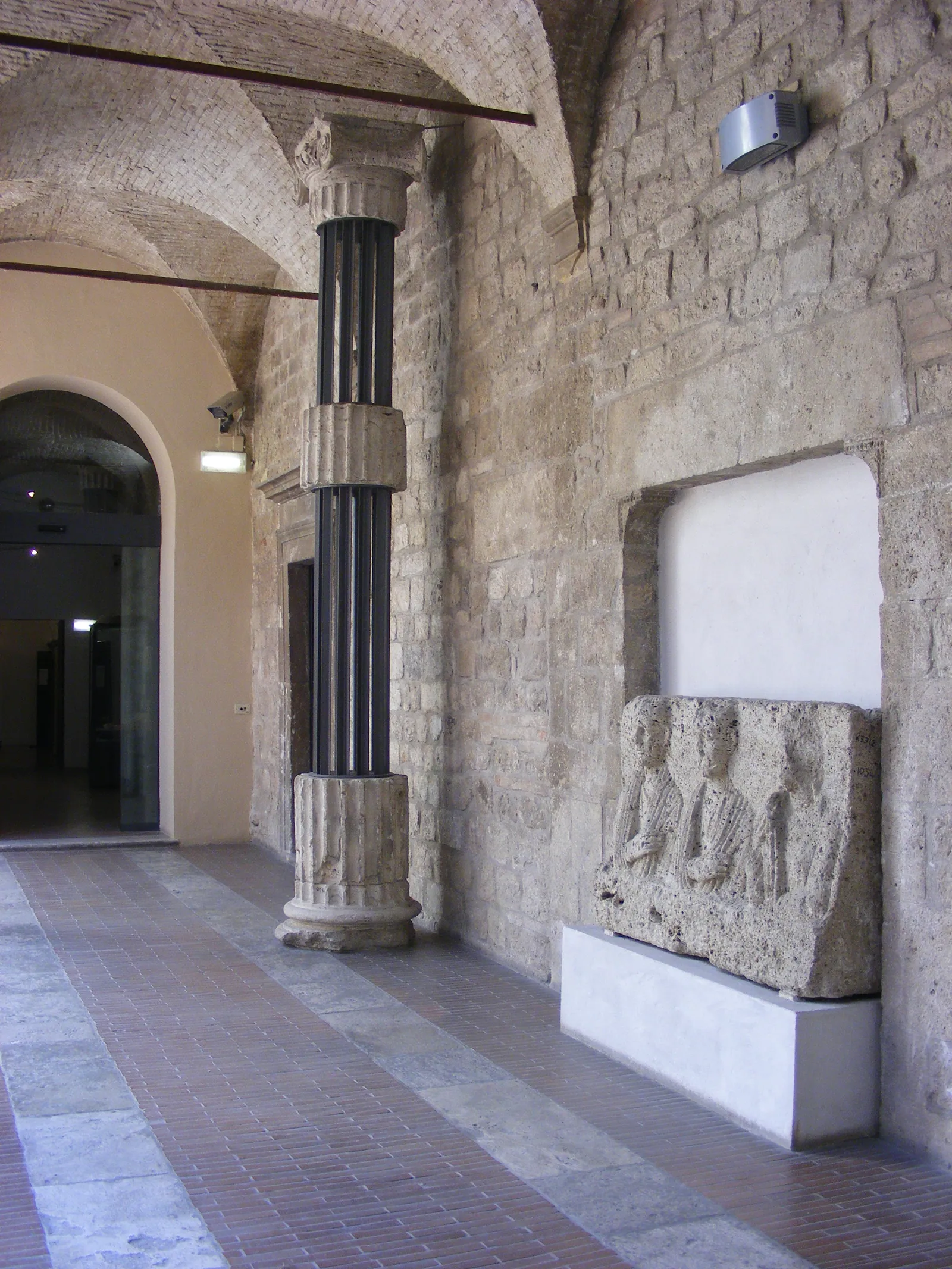
The Museo Archeologico Statale di Ascoli Piceno, also known as the Museo archeologico nazionale (National Archaeological Museum), is housed in Palazzo Panichi, in the historic center of the city, overlooking Piazza Arringo. Opened to the public in 1981, it was created as a museum of the local area and holds finds from the Tronto valley, the Tesino valley and the Salino valley, in the Teramo area, which in the 19th century came under Ascoli. The route runs from prehistory to the Roman age. At present the prehistoric and Picene sections are closed for reinstallation.
National Archaeological Museum of Ascoli Piceno
- Type
- Museum or art gallery
- Address
- Piazza Arringo 28Ascoli Piceno (AP)
- Hours
- Tu-We 08:30-14:00; Th-Su 14:00-19:30; Jan 01,Dec 25 off
- Phone
- +39 0736 253562
- museoarcheologicoascolipiceno@beniculturali.it
- Website
- museinazionalimarche.cultura.gov.it
Source: site database, © OpenStreetMap contributors (ODbL).
On the map
Points from the site database. Map © OpenStreetMap contributors · Protomaps.
History of the National Archaeological Museum of Ascoli Piceno (Museo Archeologico Statale di Ascoli Piceno)
The original core is a small bequest from Monsignor Alessandro Odoardi, bishop of Perugia, who left it to Ascoli, his native city. From that base the Civica collezione archeologica (civic archaeological collection) took shape, expanded over time with the results of excavations by the Soprintendenza archeologica delle Marche. The museum was established in 1981 and is now managed by the Direzione regionale Musei Marche.
The building has a history of its own. Palazzo Panichi stands on medieval structures and was rebuilt in the 16th century at the wish of the governor Giovanni Maria Spinola. In the 18th century the facade was altered. In the first decades of the 20th century it was at risk of demolition, to make way for a road to the new bridge over the Tronto. Its purchase by the State in 1958 saved it.
What to see in the National Archaeological Museum of Ascoli Piceno
The route is chronological and spreads over three floors. It begins with the prehistoric complexes, from the Paleolithic to the Bronze Age. Next comes the Picene section, the heart of the collection, with the Stele di Castignano, evidence of South Picene writing. Among the Picene materials are also the women's parure (jewelry set) from Monteprandone and the lozenge-shaped belts from the Salino necropolis. A collection of inscribed sling bullets documents Picene resistance to Romanization during the Social War (91-88 BC).
For the Roman age, highlights include the mosaic with a two-faced herm from the Palazzo di Giustizia and the portrait of Trajan, as well as the lapidarium. Scientific reconstructions, such as mannequins of ladies and warriors with period costumes and weapons, help explain the finds. The main hall displays the original frescoes from the palace facade.
How to visit the National Archaeological Museum of Ascoli Piceno
Before setting out it is worth checking the status of the reinstallation, because the prehistoric and Picene sections are closed. Opening hours are shown in the information box.
The museum is wheelchair accessible. The route currently open has no architectural barriers, and the upper floors are served by an elevator.
Where the National Archaeological Museum of Ascoli Piceno is
The museum is in Piazza Arringo, in the historic center of Ascoli Piceno, next to the Cathedral. The area is a ZTL (limited traffic zone), so the entrance cannot be reached by car. The nearest parking lots, both paid, are in Piazza della Viola and at Porta Torricella.
Near the National Archaeological Museum of Ascoli Piceno
Piazza Arringo is the starting point for a walk through the historic center. Next to the museum stands the Cathedral of Sant'Emidio in Ascoli Piceno. More stops in the city are on the page things to do in Ascoli Piceno.
Frequently asked questions
Can the Picene and prehistoric sections be visited?
Can you drive up to the museum?
Is the museum accessible to wheelchair users?
Since when has the museum existed and where is it housed?
Nearby
What to see nearby
- under 100 m
- Diocesan MuseumMuseum or art galleryunder 100 m
- Cathedral of Sant'EmidioChurchunder 100 m
Where to stay
- under 100 m
- under 100 m
- under 100 m
Where to eat
- Vincè fa la carità a lu Dome, Ascoli PicenoBar and caféunder 100 m
- Maclé Salsamenteria, Ascoli PicenoRestaurantunder 100 m
- Osteria Nonna Nina, Ascoli PicenoRestaurantunder 100 m
Straight-line distances.