


Diocesan Museum
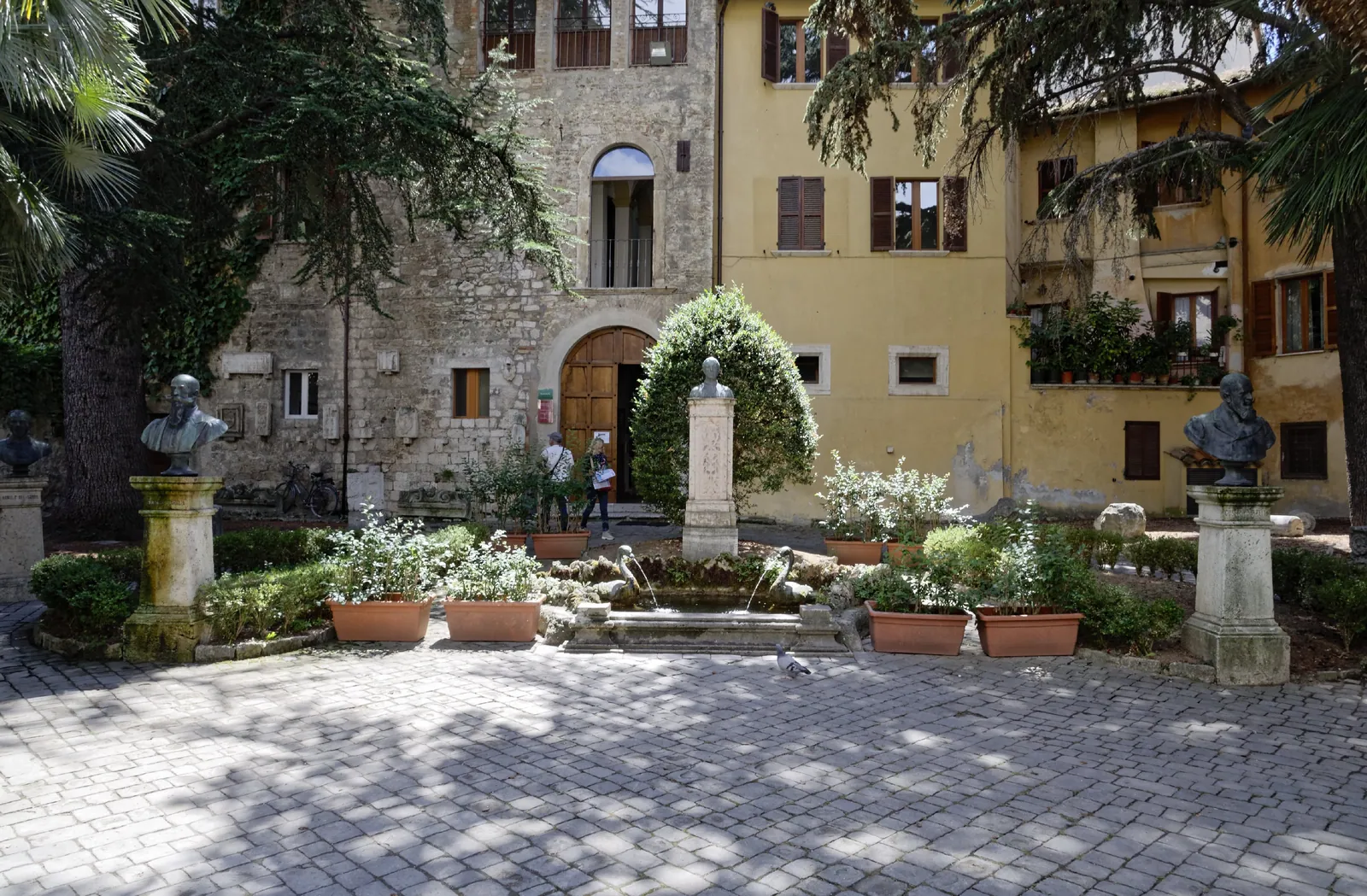
Diocesan Museum
- Type
- Museum or art gallery
- Address
- Piazza Arringo 10Ascoli Piceno (AP)
- Hours
Sat–Sun 10:30–12:30 - Phone
- 0736252883
- info@museodiocesanoascoli.it
- Website
- museodiocesanoascoli.it
Source: site database, © OpenStreetMap contributors (ODbL).
The Diocesan Museum (Museo Diocesano) in Ascoli Piceno keeps the sacred art of the Ascoli diocese on the second floor of the 16th-century Palazzo Roverella. The palace is part of the Episcopio (bishop's palace) complex, in Piazza Arringo. The museum was inaugurated in 1961 and expanded after the 2018-2019 restoration. It holds paintings by Carlo Crivelli, Pietro Alemanno and Cola dell'Amatrice, sacred silverware and the fresco cycle of the Stories of Moses. After the closure that followed the 2016 earthquake, it reopened to the public on July 3, 2023.
On the map
Points from the site database. Map © OpenStreetMap contributors · Protomaps.
History of the Diocesan Museum in Ascoli Piceno
The museum was created to bring together and preserve most of the diocese's artistic heritage. It was inaugurated in 1961 by Bishop Marcello Morgante. The objects come partly from the city of Ascoli and partly from churches and places across the diocese.
The palace that houses it is the result of joining three buildings from different periods. Palazzo Roverella, the section with the Renaissance rusticated base, takes its name from Bishop Filos Roverella (1518-1552), who had it built.
After the 2016 earthquake the building was consolidated and restored. In 2018-2019 the exhibition route was substantially expanded, with more works and with the inclusion of the Salone di Mosè. The museum reopened on July 3, 2023, with the blessing of Bishop Gianpiero Palmieri.
What to see in the Diocesan Museum in Ascoli Piceno
The current route comprises 14 rooms, covering about 800 square meters, and is divided into two sections. The Sezione Antica (Ancient Section) covers the earliest centuries, while the Sezione Storica (Historical Section) runs from post-Tridentine devotional painting to the 21st century. Between them lies the Sala del Fogolino, with the fresco cycle of the Stories of Moses painted by Marcello Fogolino from Vicenza. The cycle is signed and dated 1547. Bishop Roverella had met the painter in Trento and brought him to Ascoli.
Another notable space is the Sala dell'Eden, once the residence of the vicar general. The name comes from the travertine columns depicting Adam and Eve. It preserves a painted coffered wooden ceiling, dating from around 1474.
Among the works in the collection:
- Carlo Crivelli: the small panel of the Madonna di Poggio di Bretta, painted around 1470-72. The Venetian painter was active in the Ascoli area from 1468.
- Pietro Alemanno: the Tavola cuspidata (cusped panel) of 1485, from Cerreto di Venarotta. Alemanno was Crivelli's main pupil.
- Cola dell'Amatrice: the Pala di San Vittore altarpiece, from 1517.
- Statue of Sant'Emidio: a silver work by Pietro Vannini, 152 cm tall and worked in repoussé. It bears the date 1482, the year Pope Sixtus IV granted Ascoli the «libertas ecclesiastica». It depicts the patron saint in pontifical robes, giving a blessing.
- Arm reliquary of Sant'Emidio: a gilded silver work 87 cm tall, also attributed to Vannini and dating from the 15th century. It contains a relic of the saint. The gold clasp has four rubies and four emeralds and bears a stylized depiction of Ascoli, with a bridge and many towers in front of a she-wolf.
- 16th-century Florentine crosier: in repoussé silver, 180 cm long, with a design attributed to Giorgio Vasari. It was donated to the Chapter of Ascoli by Cardinal Girolamo Bernerio.
How to visit the Diocesan Museum in Ascoli Piceno
The museum has been open to the public since July 2023. Admission is by free donation, during the hours shown in the information box on the page. Outside those hours, guided tours for groups are arranged by reservation. For information, contact the Ufficio Arte Sacra e Beni Culturali of the Diocese of Ascoli Piceno.
Before setting out it is worth checking the updated hours, because they may vary during the year.
Where the Diocesan Museum in Ascoli Piceno is
The museum is in Piazza Arringo, in the historic center of Ascoli Piceno. It occupies the second floor of Palazzo Roverella, in the right wing of the Episcopio palace, which faces the square next to the Cathedral.
Near the Diocesan Museum in Ascoli Piceno
Piazza Arringo is also called the "square of museums" for its concentration of art collections: besides the Diocesan Museum it is home to the Civic Art Gallery in Ascoli Piceno and the National Archaeological Museum of Ascoli Piceno. Also facing the square are the Cathedral of Sant'Emidio and the Baptistery of San Giovanni in Ascoli Piceno. To organize the rest of the day, more places are gathered on the page things to do in Ascoli Piceno.
Frequently asked questions
Is the Diocesan Museum in Ascoli Piceno open, or still closed because of the earthquake?
How much does admission to the Diocesan Museum in Ascoli cost?
What are the most important works in the Diocesan Museum in Ascoli?
Why is one room of the museum called the Sala dell'Eden?
Nearby
What to see nearby
- Cathedral of Sant'EmidioChurchunder 100 m
- National Archaeological Museum of Ascoli PicenoMuseum or art galleryunder 100 m
- under 100 m
Where to stay
- under 100 m
- 100 m
- 100 m
Where to eat
- Vincè fa la carità a lu Dome, Ascoli PicenoBar and caféunder 100 m
- Osteria Nonna Nina, Ascoli PicenoRestaurant100 m
- Maclé Salsamenteria, Ascoli PicenoRestaurant100 m
Straight-line distances.