


Pallotta Castle (Caldarola)
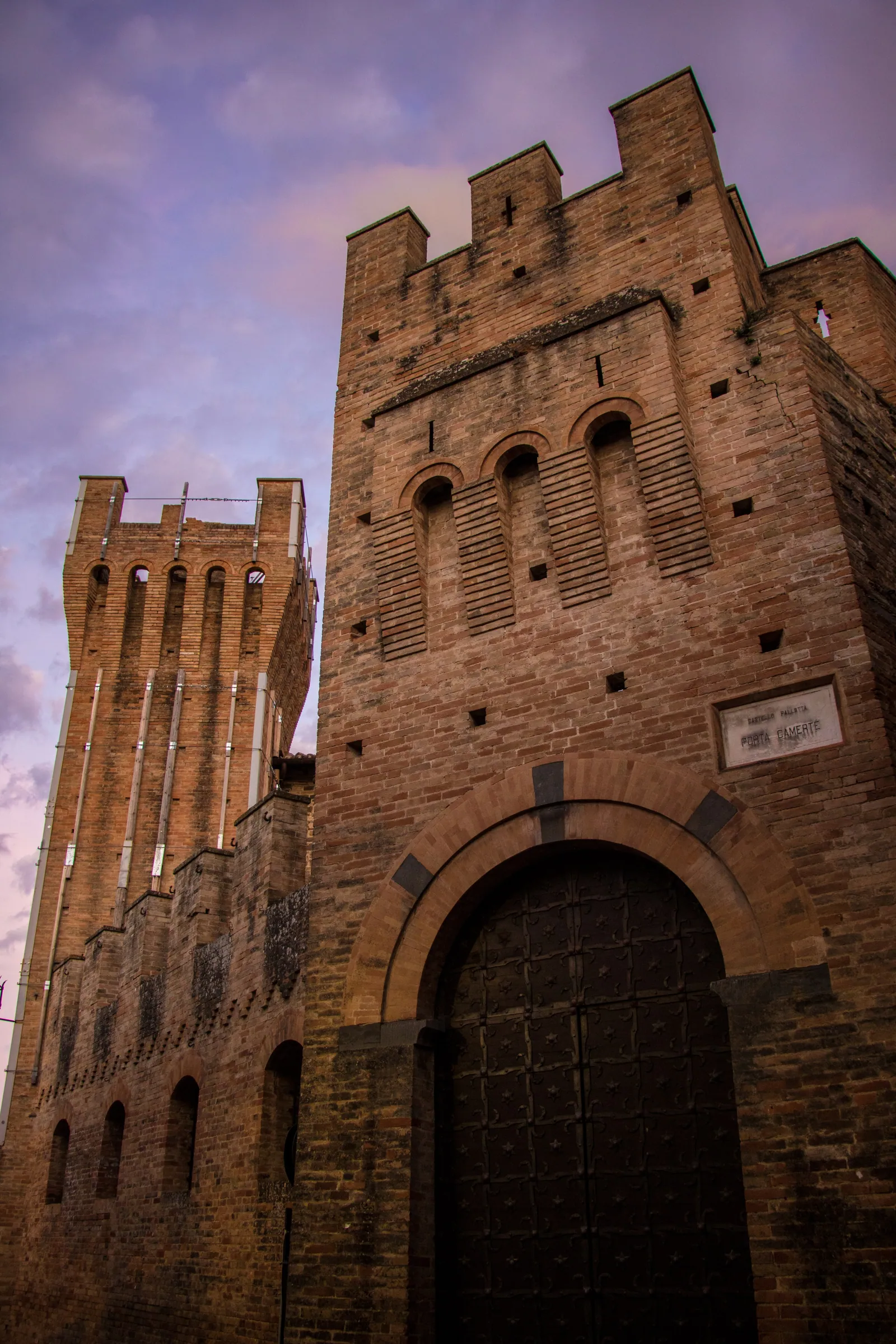
The Pallotta Castle (Castello Pallotta) in Caldarola, in the Marche region, stands on the Colcù hill and overlooks the town from above. It was built around the second half of the 9th century and remodeled toward the end of the 16th century, when Cardinal Evangelista Pallotta wanted it as a summer residence in Renaissance style. It is a castle-museum, lived in by the Counts Pallotta since 1450.
Anyone planning a visit should know that the castle is closed today. The town hall lists it as temporarily closed to the public for restoration work after the 2016 earthquake. For now it can only be seen from the outside and from the town. The rest of this page explains its history, what the castle holds and how to check for its reopening.
Pallotta Castle (Caldarola)
- Type
- Castle or fortress
- Address
- Via del Cassero 2, 62020 Caldarola (MC)Caldarola (MC)
- Phone
- +39 0733 905467; +39 0733 906505; +39 347 7974639
- info@castellopallotta.com
- Website
- castellopallotta.com
Source: site database, © OpenStreetMap contributors (ODbL).
On the map
Points from the site database. Map © OpenStreetMap contributors · Protomaps.
History of the Pallotta Castle in Caldarola
The castle was built in the second half of the 9th century on the slopes of the Colcù hill. From 1240 to 1434 it belonged to the da Varano of Camerino, then to the Maurizi of Tolentino and finally to the Pallotta, who still own it. In the corner tower next to Porta Camerte, two plaques recall the papal bull of Eugene IV that transferred power from the Maurizi to Jacopo Pallotta.
The decisive transformation came at the end of the 16th century. Cardinal Evangelista Pallotta radically changed the building and turned it into a summer residence. He called in the De Magistris, painters from Caldarola, to decorate the rooms. Among the illustrious visitors, Pope Clement VIII arrived in 1598, Cardinal Casimir in 1644 and Christina of Sweden in 1666. The guests also included Felice Peretti, the future Sixtus V.
Another major intervention dates to the 19th century. In 1885 Count Desiderio had the keep, the north tower, the Guelph battlements, the drawbridge and the sentry walks restored. The tower guarding the north corner was dedicated to the Combatants on November 4, 1928, at the wish of the count himself, to hold two plaques.
What to see at the Pallotta Castle
From the outside the castle displays its defenses. It keeps its curtain walls, sentry walk, Guelph battlements and drawbridge. Past the bridge, the way to the palace courtyard was protected by a 15th-century ravelin. This is a long corridor between two battlemented walls, designed to make an enemy's advance difficult. In the Renaissance courtyard, a low wall supports busts of Dante, Petrarch, Tasso and Ariosto.
Before the closure, the interior offered a very varied tour. At least twenty rooms could be visited, including the carriage room, the armory, the kitchen, the bedroom, the dining room with 18th-century Marche ceramics, the library, the yellow drawing room and the small chapel. The collections include arms and armor from various periods, a saddlery, carriages and antique clothing. The library also held incunabula and manuscripts. Some painted panels tell of Clement VIII's arrival in Caldarola. Within the walls there is also a park with centuries-old trees and plants typical of Mediterranean flora.
The castle is also linked to a legend. It is said that the ghost of Maddalena Pallotta wanders there; according to tradition, she was poisoned with yew berries from the park.
How to visit the Pallotta Castle
At present it is not possible to go inside. The earthquake caused serious structural damage, which required extraordinary works and funding. The restoration concerns a private property of the Counts Pallotta, but one of public interest. In one phase of the work, the interventions on the outer walls and the drawbridge were completed. In an attic, 17th-century frescoes hidden under paint and plaster then came to light.
The reopening has been postponed compared with the first forecasts. The mayor of Caldarola expects the work to end in 2027 and the castle to reopen at the end of 2027 or at the latest at the beginning of 2028. This is an estimate, not a fixed date. Before planning the trip, it is advisable to check announcements from the town hall and the castle. Before the closure, guided tours were offered.
Where the Pallotta Castle is located
The castle is in Caldarola, in the province of Macerata. The town is about 60 km southwest of Ancona and about 25 km southwest of Macerata. The castle stands on the Colcù hill, in a commanding position over the town. The exact address and contact details are in the information box on this page.
Around the Pallotta Castle in Caldarola
In the historic center, in Piazza Vittorio Emanuele, stands the Palazzo dei cardinali Pallotta, home of the town hall. This building is also awaiting restoration and seismic upgrading: the final project was approved in January 2026. Among the notable buildings is the Collegiate Church of San Martino in Caldarola, inaugurated in 1590.
Caldarola is also called the "Terra dei cinque Castelli" (Land of the five Castles) and is surrounded by the medieval villages of Vestignano, Pievefavera, Croce and Valcimarra. The "Le vie dei castelli" route starts from the Pallotta Castle and takes in Vestignano, Croce, Pievefavera and Valcimarra. For more, see the page on the Vestignano Castle (Caldarola). Other fortifications in the area are on the page on castles of the Sibillini Mountains.
Frequently asked questions
When will the Pallotta Castle reopen after the earthquake?
Does the Pallotta Castle still belong to the Counts Pallotta?
Which illustrious figures stayed at the Pallotta Castle?
Which other castles are in Caldarola?
Nearby
What to see nearby
- under 100 m
- Parish Theater (Caldarola)Theater or auditorium100 m
- 100 m
Where to stay
- 200 m
- 400 m
- Tesoro, CaldarolaHotel500 m
Where to eat
- Caffè Manzoni, CaldarolaBar and café200 m
- Bar Gelateria "Da Savè", CaldarolaBar and café300 m
- Pizza in Piazza, CaldarolaRestaurant500 m
Straight-line distances.