


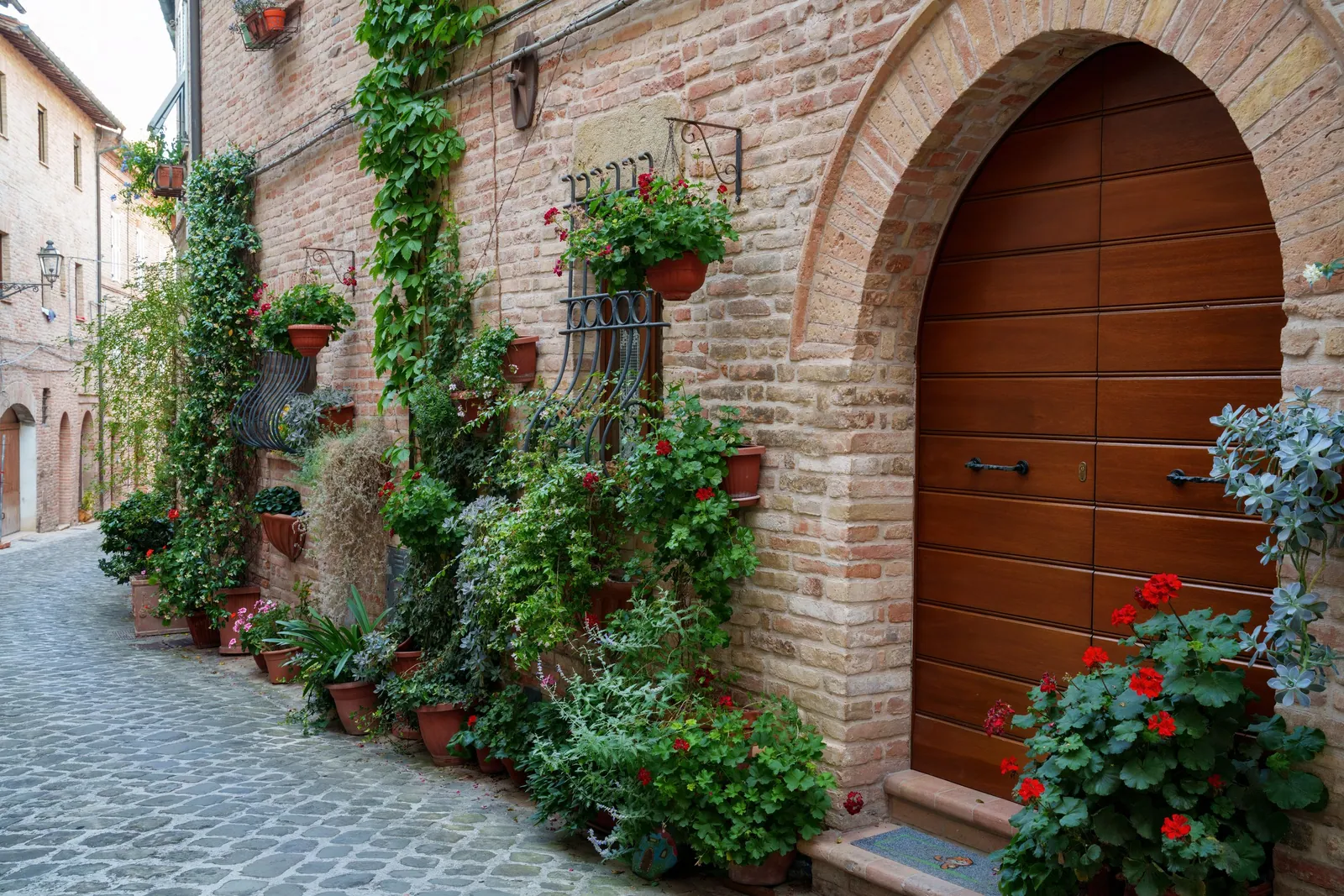
Palaces and squares of the Sibillini
The palaces and squares of the Sibillini are concentrated in two villages of the Marche at the foot of the range. The first is Amandola, with two squares connected by an uphill street. The second is Montefortino, where a 16th-century palazzo houses the art collection of a painter and collector from the village. Amandola is a medieval town at about 500 m above sea level, on the left bank of the Tenna river, on the eastern side of the National Park. Montefortino is a small village, also at the foot of the mountains.
In Amandola, the historic center is entered through the Gothic Porta San Giacomo, which opens onto Piazza Risorgimento. Climbing through the lanes leads to Piazza Umberto I, the highest point of the town, with the Torrione del Podestà, the La Fenice Theater in Amandola and a viewpoint facing the range.
The places
3 results
- Historic building or squareFortunato Duranti's House (Montefortino)Historic building or square · Montefortino
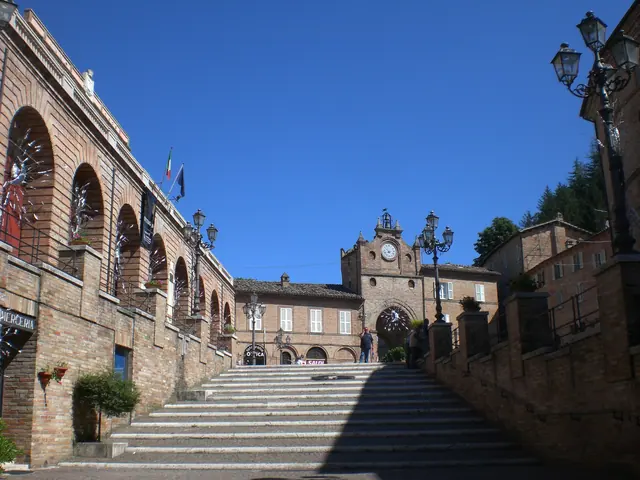 Piazza Risorgimento (Amandola)Historic building or square · Amandola
- Historic building or squarePiazza Umberto I and the Podestà Tower (Amandola)Historic building or square · Amandola
No results with these filters.
On the map
Points from the site database. Map © OpenStreetMap contributors · Protomaps.
Palaces and squares of the Sibillini: the map
The places on this page are in two municipalities of the province of Fermo, Amandola and Montefortino. Amandola is considered the eastern gateway to the national park of the Sibillini Mountains.
In Amandola the center is a maze of lanes going up and down, and the two squares lie at different heights. Piazza Risorgimento is the lower and liveliest part of the center. Piazza Umberto I, also called Piazza Alta, is reached by climbing, for example along Via Roma, and is the highest point of the town's hill. A tourist information point is located under the portico of the main square.
In Montefortino there are two buildings to look for: Palazzo Leopardi, home of the civic art gallery, and the birthplace of the painter Fortunato Duranti.
Palaces and squares of the Sibillini not to miss
Piazza Risorgimento (Amandola). The square has a semicircular plan. Arriving from Porta San Giacomo, it can be recognized by the clock at the top and the pointed arch. Overlooking the square are the Palazzo Comunale (town hall), with its loggia, and a long flight of steps. The steps lead down to the Sanctuary of Beato Antonio, dating from the 14th-15th centuries, which has a Gothic portal. For more, see the page on Piazza Risorgimento in Amandola.
Piazza Umberto I and the Torrione del Podestà (Amandola). Piazza Umberto I was the old platea comunis, the center of the town's social and religious life. Here stand the oldest and noblest buildings of the Amandola lordship. The Torrione del Podestà is massive and austere. It dates from the 14th century and was restored in 1547. It has been renovated several times over the years and now hosts performances. A little farther on is the building of the former Palazzo del Comune. The Teatro La Fenice dates from the 19th century and keeps an elliptical hall with three tiers of boxes. The square ends with the Belvedere garden, from which much of the range can be seen. Nearby stands a 15th-century house with a dovecote. Detailed information is on the page about Piazza Umberto I and the Torrione del Podestà. The theater is also covered in historic theaters of the Sibillini.
Palazzo Leopardi (Montefortino). The palazzo is a 16th-century building, commissioned by a cadet branch of the Leopardi family of Recanati. It was built for Ser Desiderio Leopardi as a temporary residence for the bishops of Fermo during their pastoral visits. Today it houses the Fortunato Duranti Civic Art Gallery in Montefortino, with large rooms and frescoed ceilings. The collection numbers 150 works. Among them are works by Perugino, paintings and drawings by Duranti, an oil painting by Corrado Giaquinto and works by Cristoforo Unterperger. The collection comes from the donation Duranti himself made to his fellow townspeople. Other collections in the area are described in museums in the Sibillini Mountains.
Casa di Fortunato Duranti (Montefortino). Fortunato Duranti was born in Montefortino in 1787, the son of a shoemaker. After his studies and the years spent in Rome, he renovated his father's house in a late 18th-century classical style. The building has a Neoclassical porch with columns in blocks of "pietra spugna" (a porous stone) and was called the Casa delle Colonne (House of the Columns). More information is on the page about the Fortunato Duranti's House.
Tips for visiting the palaces and squares of the Sibillini
In Amandola the two squares can be visited on foot in a single route. It is best to start from Piazza Risorgimento and then climb toward Piazza Umberto I, where the view of the range is best enjoyed in the clear light of a fine day. The center is made of climbs and lanes, so comfortable shoes are needed.
The historic center of Amandola was hit hard by the 2016 earthquake. Before setting out, find out about access to individual buildings, especially the theater and the palazzi. The background is explained in The 2016 earthquake and reconstruction in the Sibillini Mountains.
The information point in Amandola gives directions on getting around the area, where to stay and what events are scheduled. It also explains the rules of conduct to follow in the protected area.
In Montefortino it is worth spending time at the art gallery, because the works are numerous and the palazzo itself is part of the visit. Before going, it is best to check whether it is open.