


Things to Do in Amandola
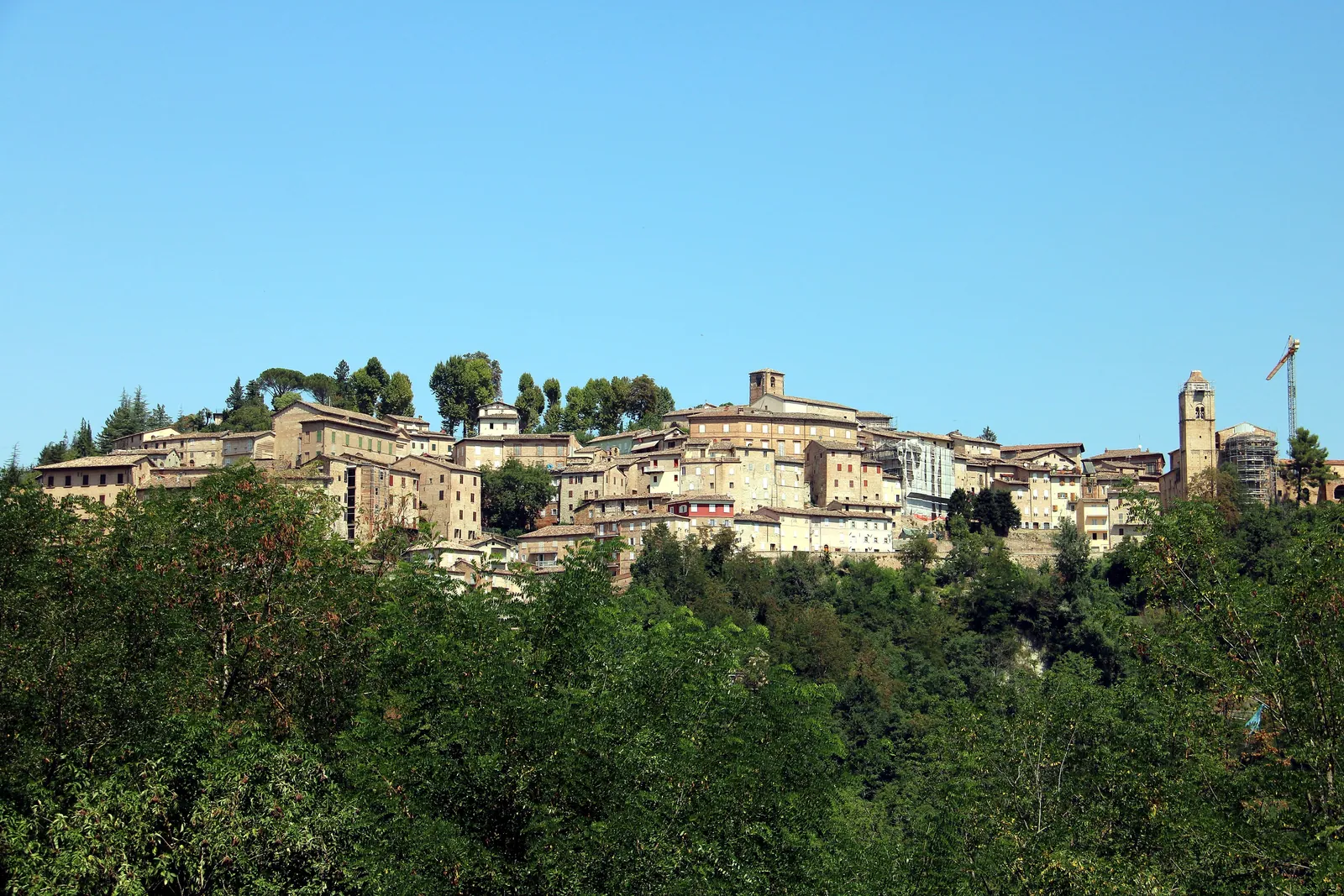
What are the best things to do in Amandola? The historic center, spread over the three hills of Marrubbione, Castel Leone and Agello on the left bank of the Tenna river, is best explored on foot. The walk starts at Porta San Giacomo, crosses Piazza Risorgimento and climbs to the viewpoint of Piazza Umberto I, with the Podestà tower and the Teatro La Fenice. Amandola, in the province of Fermo, is considered the "eastern gateway" to the Sibillini National Park in the Sibillini Mountains and is a Touring Club Orange Flag (Bandiera Arancione) village.
The town was founded in 1248 from the union of three castles, and the old core is recognizable by its solid brick structures. It reaches 550 meters above sea level. According to tradition, the name comes from the almond tree, which is also the town's emblem. The village was already inhabited in Picene times and grew strongly in the late Middle Ages, first through the farming of the Benedictine monks, then through wool working. After the 2016 earthquake some landmark buildings, such as the church of San Francesco and the Teatro La Fenice, remained closed for a long time: the sections below cover this.
The places
13 results
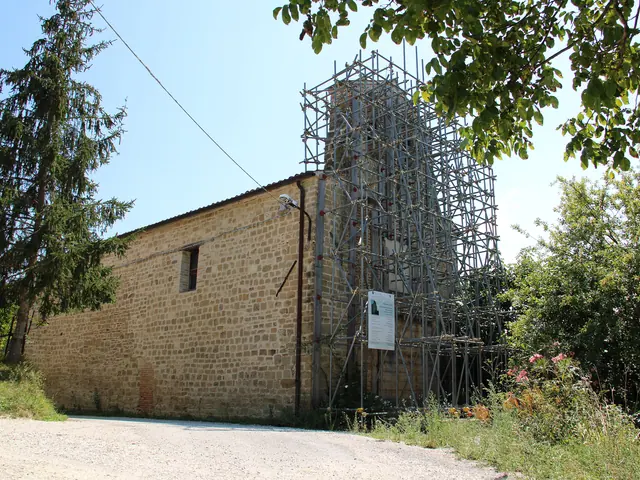 Church of San Pietro Apostolo (Amandola)Church · Amandola
- ChurchChurch and Cloister of San Francesco in AmandolaChurch · Amandola
- Monastery or abbeyMonastery of San Lorenzo (Amandola)Monastery or abbey · Amandola
- Museum or art galleryMU6 AmandolaMuseum or art gallery · Amandola
- Museum or art galleryAnthropogeographical Museum (Amandola)Museum or art gallery · Amandola
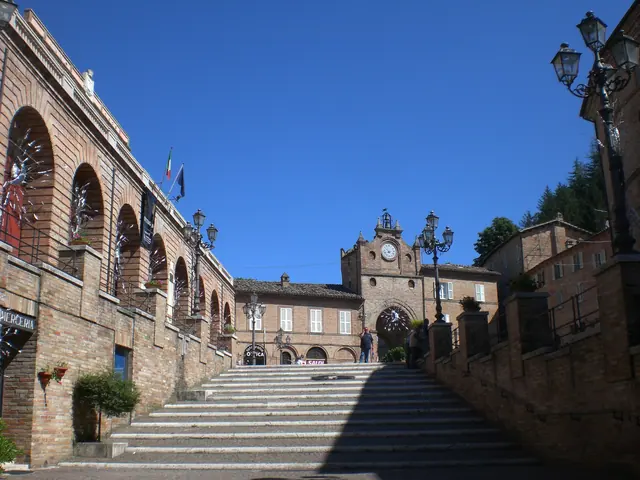 Piazza Risorgimento (Amandola)Historic building or square · Amandola
- Historic building or squarePiazza Umberto I and the Podestà Tower (Amandola)Historic building or square · Amandola
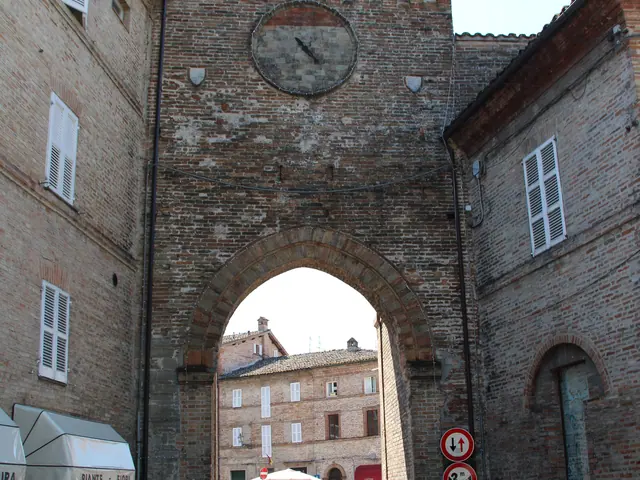 Porta San Giacomo in AmandolaCity walls and gates · Amandola
- Sanctuary or hermitageSanctuary of Beato Antonio (Amandola)Sanctuary or hermitage · Amandola
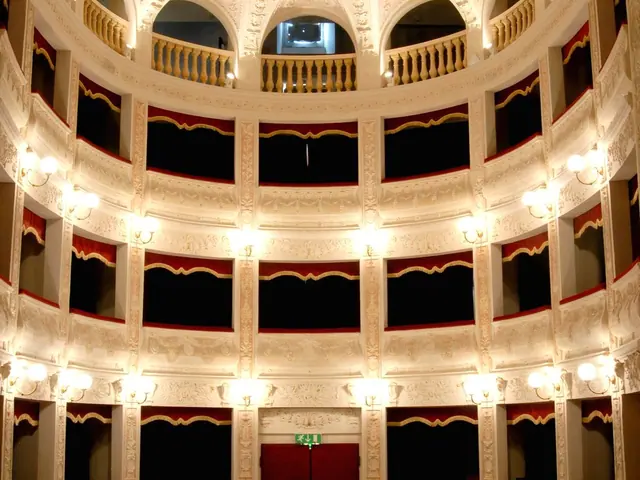 La Fenice Theater in AmandolaTheater or auditorium · Amandola
- LakeFonte d'Acqua di Contrada Castello TennacolaLake · Amandola
- LakeLago di San RuffinoLake · Amandola
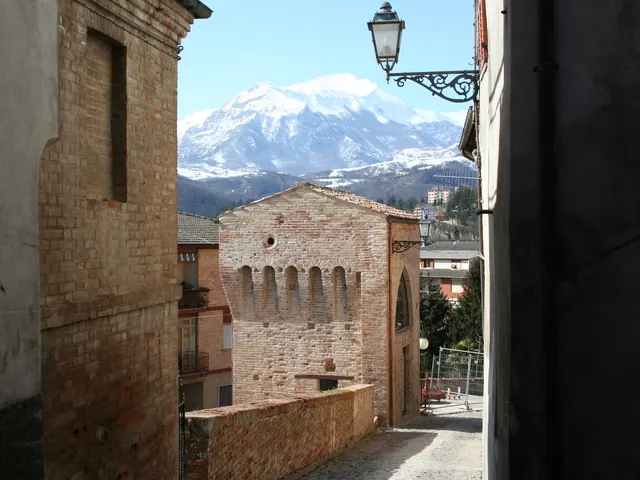 Monte AmandolaPeak · Amandola
No results with these filters.
On the map
Points from the site database. Map © OpenStreetMap contributors · Protomaps.
Things to do in Amandola: map of the sights
The main sights are almost all in the historic center and follow one another along an uphill route. You enter through Porta San Giacomo, reach Piazza Risorgimento and from there climb the lanes to Piazza Umberto I, also called Piazza Alta. Just below the Teatro La Fenice is the church of San Francesco.
The hills around the village hold other points of interest. On the Marrubbione hill are the church of San Bernardino and the Capuchin convent. On the Agello side stand the church of San Pietro and the monastery of San Lorenzo, covered on the pages on the Church of San Pietro Apostolo in Amandola and the Monastery of San Lorenzo. Outside the town, about ten kilometers away in the Tenna valley, are the lake and the abbey of San Ruffino.
Top things to see in Amandola
Porta San Giacomo and Piazza Risorgimento. Porta San Giacomo is the only survivor of the five ancient town gates. It is built of brick, with a pointed arch, and has a clock on its outer side. Beyond the gate opens Piazza Risorgimento, semicircular in shape and the center of local life. Facing it are the Palazzo Comunale (town hall), with its 19th-century loggia, and the stairway leading down to the sanctuary.
Santuario del Beato Antonio (church of Sant'Agostino). An Augustinian hermitage already stood here in the 13th century. The prior Antonio Migliorati enlarged it, building a convent, cloister and church. The Sanctuary of Beato Antonio dates from the 14th century and was enlarged in the 15th. The Gothic portal in Venetian style is dated 1468, while the bell tower was completed during the 15th century. The single-nave interior was renovated in neoclassical style in the 18th century. A 16th-century cloister leads to the chapel where the remains of the Blessed Antonio are kept. The church was damaged by the 2016 earthquake and is among the buildings awaiting reconstruction: it is best to check whether it is open before visiting.
Antonio Migliorati was born in Amandola in 1355 and died on January 25, 1450. He was beatified in 1759 by Pope Clement XIII and is the town's patron saint.
Piazza Umberto I and the Podestà tower. Climbing the lanes leads to the ancient platea comunis, today Piazza Umberto I, with its noble palazzi. The Torrione del Podestà is a massive square tower of 14th-century origin. In 1547 it underwent rebuilding or restoration. The viewpoint offers one of the most admired views of the Sibillini range, especially at sunset.
Teatro La Fenice. It began as the "Teatro dei Signori Condomini La Fenice" and took its present form in the 19th century. The hall has an elliptical plan, three tiers of boxes and a gallery. The vault is decorated with neoclassical stucco work with Art Nouveau (Liberty) influences, the work of Amandola-born Vincenzo Pascucci. The La Fenice Theater had been closed since 1958 and restoration had begun in 1991. Since the August 2016 earthquake it has been unsafe and cannot be visited: it remains a building to admire from the outside.
Church and cloister of San Francesco. The church of San Francesco stands in Largo Leopardi. It was begun in 1313 and consecrated in 1352, after the friars moved from an earlier settlement of 1215, and the facade was completed in the 15th century. The 15th-century white stone portal shows the devil on the left and a dragon on the right. Inside were a late 13th-century wooden figure of Christ and a 15th-century fresco cycle of the Umbrian-Marche school. The cloister has lunettes painted by Sebastiano Ghezzi with the Stories of Saint Francis and the coats of arms of Amandola's leading families.
After the 2016 earthquake the church remained closed for a long time. In 2018 work began to make it safe, extended to the cloister. The wooden Christ and other works recovered after the earthquake are now kept in the town's art storage.
Museums. The Anthropogeographical Museum, now presented as the Museo del Paesaggio (Landscape Museum) within the MU6 Amandola museum hub, is devoted to the Park's territory and presents its fauna, flora, legends, history, art and folk culture. The "human landscape" section shows how farmers, charcoal burners and shepherds shaped and maintained the environment over the centuries. Before the 2016 earthquake this museum was in the cloister of San Francesco; today it is housed in the former Collegiata.
Abbey and lake of San Ruffino. The abbey of Santi Ruffino e Vitale is a Romanesque complex on a rise in the Tenna valley. It has a three-nave church with 14th- and 15th-century frescoes. The crypt, divided into five aisles, holds the relics of San Ruffino and gives access to an underground chapel with frescoes. Next to it is Lago di San Ruffino, with a nature trail that can be done on foot, on horseback or by mountain bike.
Tips for visiting Amandola
The historic center is all climbs, descents and narrow lanes, so comfortable shoes are needed. The most logical route goes from the bottom up, from Porta San Giacomo to Piazza Umberto I. The viewpoint is the right place to end the walk, especially toward sunset.
Before setting out, it is best to check which sites are open, because the church of San Francesco and the Teatro La Fenice were closed after the 2016 earthquake. For the Museo Antropogeografico too, moved after the earthquake to the former Collegiata, it is wise to check access.
The calendar adds more reasons to visit. In August the Quintana takes place, a historical reenactment in costume with six knights competing for the Palio. In August, with the feast of the Blessed Antonio, there is the ancient reenactment of the Canestrelle. In the fall the "Diamanti a Tavola" festival devotes stalls and traditional dishes in the historic center to the Sibillini white truffle. Then there is the historic Carnevale de Li Paniccià. The area is also known for the prized white truffle and is a production area of the mela rosa apple: for tasting and buying, see the page on Amandola local products.
For walkers, several routes cross the area. Amandola is linked to stage 4 of the Grande Anello dei Sibillini and stage 5. There are also the "fuoriporta" routes around the village and the Nature Trail N4. One way to look beyond the main town is to visit the hamlets, for example Campolungo in Amandola. To plan a stay, see the pages on where to stay in Amandola and Amandola restaurants.