


Comunanza: things to see and do
At a glance
- Municipality
- Comunanza
- Province
- Ascoli Piceno
- Region
- Le Marche
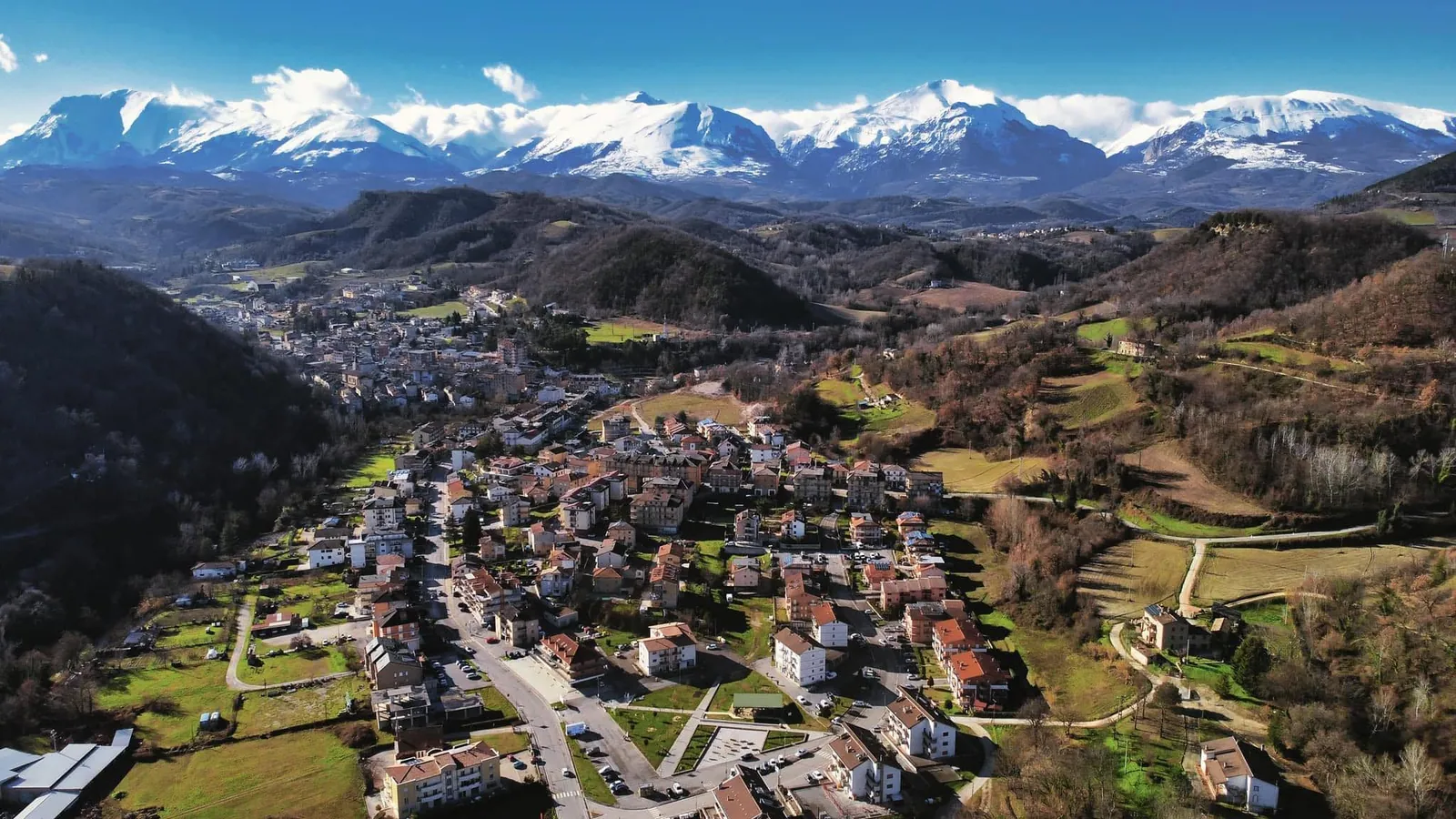
Comunanza is a town of 2,915 residents in the province of Ascoli Piceno, in Le Marche, at the foot of the Sibillini Mountains. The main town sits at 448 meters above sea level in the valley of the Aso river. The river splits it in two: the historic center on the right bank and the newer urban area on the left bank. Right beneath the newer part, research campaigns by the University of Pisa in 2014 and 2015 located the ancient town of Novana. Novana was a Roman municipium, and Pliny the Elder mentions it in his Naturalis Historia.
The present-day town was founded in 1294. From 1932 to 1945 its official name was Comunanza del Littorio. Today it is the third-largest industrial hub in the province, yet the landscape changes as soon as you leave town. The municipal territory covers 54.4 km²: cultivated hills to the north, woods and pastures climbing toward the Sibillini to the south, and part of Lago di Gerosa. Comunanza has been hit by many earthquakes, most recently the 2016-2017 sequence, which caused damage, some of it severe, but no deaths within the municipality. In 2023, only two of the sixteen churches in the municipality were usable.
On the map
Points from the site database. Map © OpenStreetMap contributors · Protomaps.
What to see in Comunanza
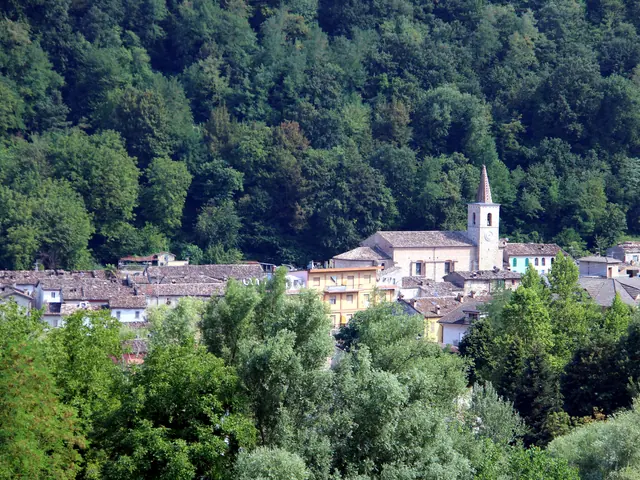
A visit starts in the historic center, on the right bank of the Aso, at the mother church of Santa Caterina d'Alessandria d'Egitto, one of the two churches that were usable in 2023. The church already appears in the Ascoli land register of 1381 as a church inside the castrum. It was rebuilt in the 19th century in the neoclassical style to a design by the Ticino-born architect Pietro Maggi. The bell tower was originally a tower of the medieval castrum. It preserves stones carved with old symbols of religious orders and guilds.
The interior has a single nave. There are stuccoes and statues by the Ascoli artist Domenico Paci and an 18th-century Via Crucis of the Carracci school. There are also paintings by Giuseppe and Pierleone Ghezzi and by Antonio Mercurio Amorosi, including a Madonna di Loreto. Above the entrance, on a wooden choir loft, stands the monumental two-manual organ. It came to Comunanza in the 19th century from the Basilica di Loreto, while the church was being rebuilt, and was rediscovered in recent years. It has played again after more than thirty years of silence and six years of restoration. A local tradition says the young Mozart once played it.
Palazzo Pascali houses the Museo Sistino of sacred art, with goldsmith work and paintings. Among the exhibits are the reliquary of Sant'Ercolano and an 18th-century processional cross. The Christ on this cross dates from the 15th century and bears the signature of the Ascoli goldsmith Vannini. The old village is also home to the church of San Francesco d'Assisi. It stayed closed for more than half a century because of serious structural damage, made worse by the 2016 earthquake. Its reopening was planned for September 2026, so it is worth checking whether it is open before visiting.
Outside the center, in the hamlet of Santa Maria, stands the church of Santa Maria a Terme, the other church that was usable in 2023. It belonged to the Benedictine monks of the abbey of Farfa: the estate of Santa Maria already appears in 967 among the privileges granted by Emperor Otto I. Its old name, Santa Maria "de Teràmo", recalls the Roman baths of Novana. The portal has bas-reliefs of animals and plants, meant to ward off negative energies. The interior has a single nave divided into three bays, with a barrel vault.
Traces of Novana can be found at several points across the territory:
- in the urban area, the Roman baths, excavated and protected by a roof in 2019;
- at Colle Terme, a kiln;
- at Santa Maria, a necropolis;
- in the historic center, remains of walls in opus caementicium, a temple cornice and a fragment of a limestone shrine;
- in the hamlet of Gerosa, a humpback Roman bridge over the Aso, along the route of the ancient Via Salaria Gallica.
At Christmas the town stages a living nativity, which reached its 42nd edition in 2019. Each site is described in full on the page things to do in Comunanza.
Nature and trails near Comunanza
The main natural attraction near Comunanza is Lago di Gerosa, an artificial reservoir at 650 meters. It was formed by the Gerosa dam, southwest of the main town, and its waters stretch across the municipalities of Comunanza, Montefortino and Montemonaco. The lake was created in the 1980s and is fed by the Aso. Trees and old ruins remain on the bottom, as they were not removed before the basin was filled. The lake hosts canoeing, sailing and fishing competitions. In summer the small beaches along the shore are popular, and there are picnic areas and playgrounds for children. The right bank is wooded and less accessible, but suited to walks and Nordic walking. Roe deer, porcupines and badgers live in the woods. On the water, grebes dive for fish and migrating ducks stop over.
East of the main town lies a second lake, Lago di Belloca, formed by the Villa Pera dam.
An easy hike links Lago di Gerosa to the church of Santa Maria Assunta di Polverina. The route follows the lake and passes near the church of San Giorgio all'Isola, in the municipality of Montemonaco, one of the very rare churches with a tower facade. At the locality of Piantabete, a small road climbs to the panoramic ridge above the Aso valley. The Polverina church dates from the 13th century and is one of the "Sette Sorelle" (Seven Sisters), with views of the Sibillini. The route takes about 2 hours and 30 minutes, with about 250 meters of elevation gain.
Comunanza is also a stage stop on the Cammino Francescano della Marca, which arrives from Sarnano and continues toward Venarotta. From the town hall the route enters the historic center across the bridge over the Aso and passes through the small square of Santa Caterina. On the stage to Venarotta there are no fountains until Palmiano, so it is best to set off with a good supply of water. The view ranges from the Sibillini to the Monti della Laga and as far as the Gran Sasso. Before any hike it is wise to check the weather, especially in winter.
Where to stay in Comunanza
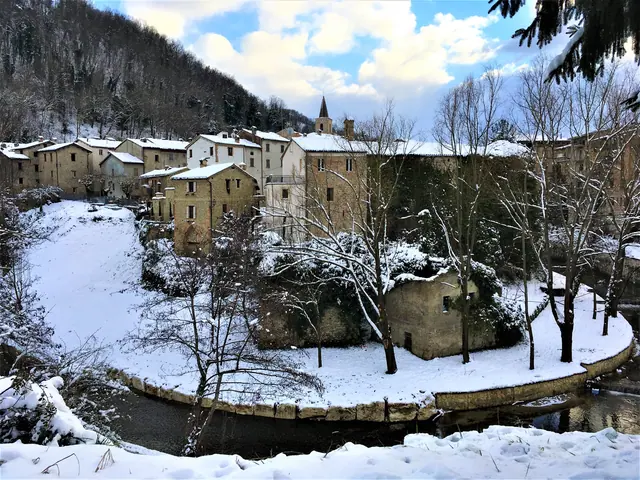
Comunanza has accommodation for those who want to use the town as a base for Lago di Gerosa and the Aso valley. Walkers on the Cammino Francescano della Marca can stop here at the end of a stage. The list of places is on the page where to stay in Comunanza.
Where to eat in Comunanza
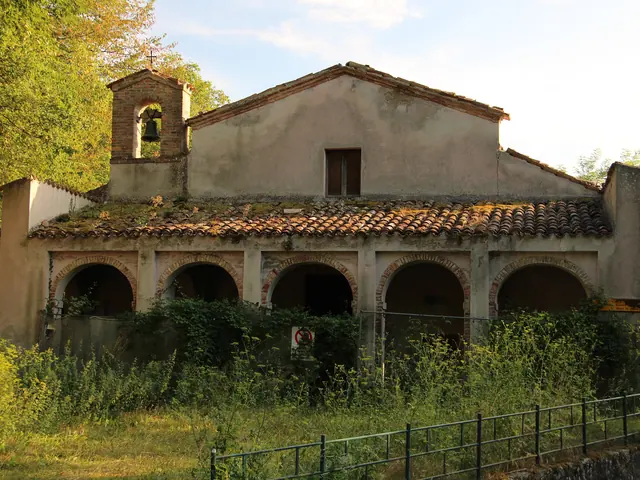
The town's best-known food event is the Festa delle Pro Loco nei Sibillini, which lasts two days. Pro Loco associations from the provinces of Ascoli Piceno and Fermo take part, each preparing a different menu with typical dishes from its own area. The 2024 edition took place in September. In 2026 the festival received a special mention from UNPLI for the "Sagra di Qualità" label. Local eateries are listed on the page Comunanza restaurants.
Local products of Comunanza
During the year Comunanza holds festivals devoted to its traditional products, such as the chestnut festival and the polenta festival. Local shops and producers are gathered on the page Comunanza local products and shops.
Weather and how to get to Comunanza
Comunanza has an Apennine climate: winters are harsh and cold, with frequent snowfall, and summers are hot. Humidity is high in the Aso valley, especially in autumn and winter.
By car, the town is reached from the A14 highway. From the north, exit at Pedaso, drive through the town and take the SP 238 via Rubbianello, then follow the signs for Comunanza. From the south, follow San Benedetto del Tronto – Ascoli Piceno on the RA11 link road, then take the SS 4 toward Rome and the SP 237 through Roccafluvione. By car, Ascoli Piceno to Comunanza takes about 28 minutes.
Without a car, take the train to Pedaso station and continue on Start buses, which serve the town. By bus the trip between Comunanza and Ascoli Piceno takes about 45 minutes. Pescara airport is about 115 km away, Ancona-Falconara airport about 120 km. Other towns in the area are described on the page villages of the Sibillini Mountains.
In this section
4 results
 Things to do in Comunanza5 places
 Where to stay in Comunanza8 places to stay
 Comunanza restaurants10 places
- Comunanza local products and shops3 places
No results with these filters.