


Cammino Francescano della Marca: Assisi to Ascoli Piceno
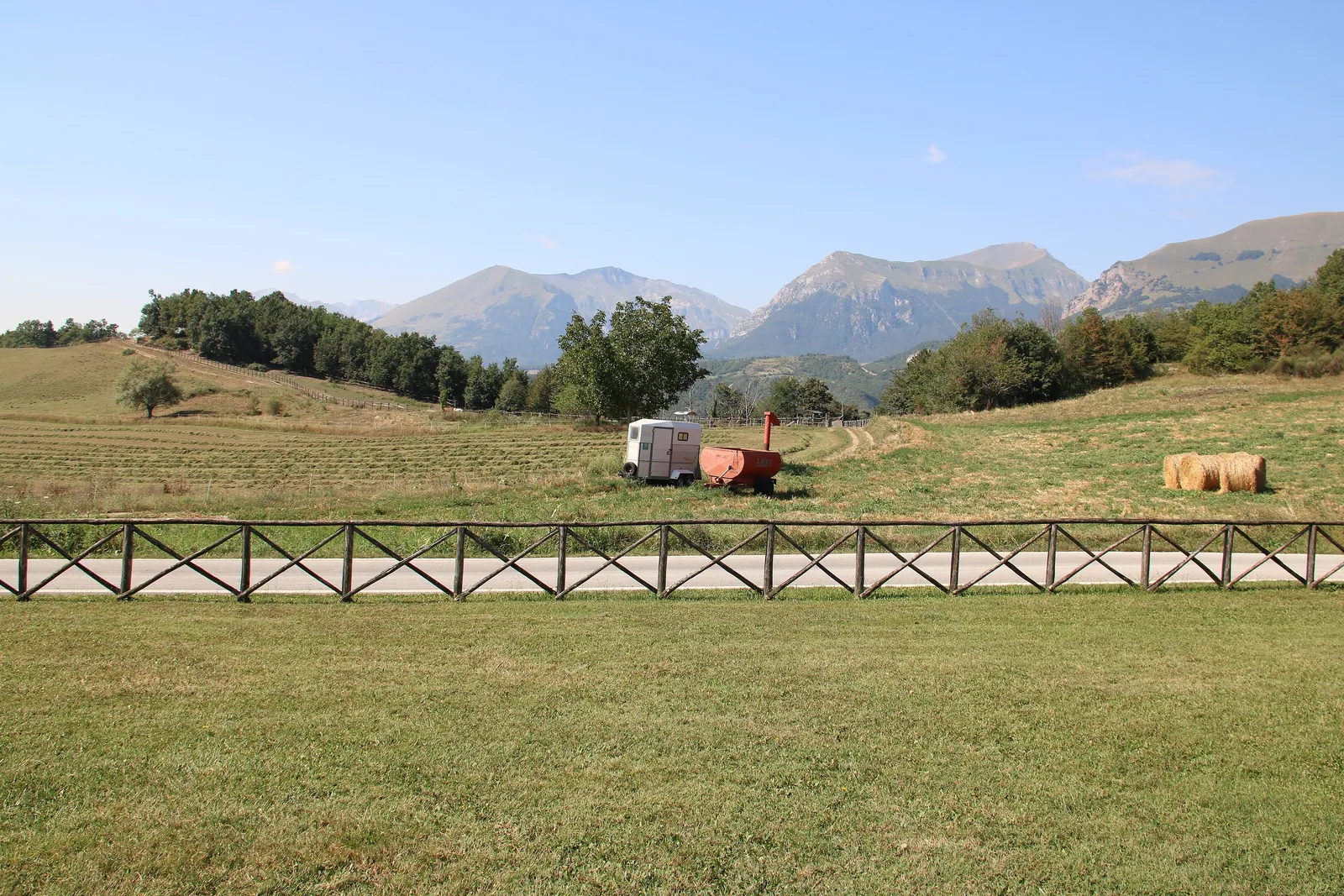
The Cammino Francescano della Marca (Franciscan Way of the Marche) is a one-way route of 167 km between Umbria and the Marche. It links Assisi with Ascoli Piceno and is walked in 8 stages. It crosses two regions, four provinces and 17 municipalities, and halfway along it enters the Sibillini National Park in the Sibillini Mountains. The route follows the ancient path walked by St. Francis on his preaching journeys. It is waymarked throughout with the code CFM.
The landscape changes often. The walk starts from Monte Subasio and the olive groves above the Valle Umbra, then crosses the uplands and marshes of Colfiorito. After the regional border it follows the Chienti river among parish churches and castles, then climbs through gorges, abbeys and villages of the Sibillini, up to the Porta Cappuccina gate of Ascoli Piceno. As far as Pievefavera the walk coincides with the Via Lauretana, the medieval route of pilgrims heading to Loreto.
Before you go
Forecast at the start
- Today13° / 6°0.0 mmPartly cloudy
Forecast by MET Norway, updated automatically · license CC BY 4.0
Rules and orders: Park website. Snow and avalanches: Meteomont bulletin.
The stages on the map
Map and track: © OpenStreetMap contributors (ODbL).
The stages
6 results
- TrailCammino Francescano della Marca Stage 3Camerino · Difficulty E · 26.8 km · +455 m · 8:20 h
- TrailCammino Francescano della Marca Stage 4Caldarola · Difficulty E · 18.7 km · +710 m · 6:25 h
- TrailCammino Francescano della Marca Stage 5Cessapalombo · Difficulty T · 19.5 km · +756 m · 6:55 h
- TrailCammino Francescano della Marca Stage 6Amandola · Difficulty E · 22.9 km · +734 m · 7:45 h
- TrailCammino Francescano della Marca Stage 7Comunanza · Difficulty E · 21.4 km · +813 m · 7:30 h
- TrailCammino Francescano della Marca Stage 8Ascoli Piceno · Difficulty E · 14.3 km · +361 m · 4:50 h
No results with these filters.
The stages of the Cammino Francescano della Marca
There are eight stages, from Assisi to Ascoli Piceno:
- Assisi – Foligno
- Foligno – Colfiorito
- Colfiorito – Polverina
- Polverina – Montalto di Cessapalombo
- Montalto di Cessapalombo – Sarnano
- Sarnano – Comunanza
- Comunanza – Venarotta
- Venarotta – Ascoli Piceno
The detailed pages for the Marche sections are: Cammino Francescano della Marca stage 3 (Colfiorito – Polverina), Cammino Francescano della Marca stage 4 (Polverina – Montalto di Cessapalombo), Cammino Francescano della Marca stage 5 (Montalto di Cessapalombo – Sarnano), Cammino Francescano della Marca stage 6 (Sarnano – Comunanza), Cammino Francescano della Marca stage 7 (Comunanza – Venarotta) and Cammino Francescano della Marca stage 8 (Venarotta – Ascoli Piceno).
The difficulty varies. Assisi – Foligno and Sarnano – Comunanza are classified as easy. The section from Montalto di Cessapalombo to Sarnano, by contrast, is listed as demanding, with dirt roads and footpath. It is therefore wise to pace yourself and check the times and elevation changes of each stage before setting off.
The route of the Cammino Francescano della Marca
From Assisi the walk first reaches Spello and then Foligno, skirting the Monte Subasio park. After Assisi, cart tracks and dirt roads among the olive trees lead past the Fonte di San Francesco to the medieval center of Spello. Here, in the Chiesa di Santa Maria Maggiore, pilgrims find services such as restrooms, a small refectory, a water fountain and the office for credential stamps. Foligno is a Franciscan place: here Francis stripped himself of his worldly goods to embrace poverty and founded one of the first hospices. After the hamlets of Scanzano and Belfiore the route enters the Altolina park and climbs to the Colfiorito uplands.
Past the marshes of the Colfiorito park, the route leaves Umbria and enters the Marche, climbing Monte Parivecchio. It then follows the Chienti through Serravalle di Chienti, Muccia and Pievebovigliana. In Muccia stands the hermitage of Blessed Rizzerio, where the remains of one of Francis's closest companions rest. At Pievebovigliana the route skirts the Castello di Beldiletto and Lago di Polverina, as far as the parish church of San Giusto, in the hamlet of San Maroto. It continues to Valdiea, Fiungo and Valcimarra, home of the Santuario della Madonna del Sasso.
At Pievefavera, near Lago di Caccamo, the walk leaves the Via Lauretana and turns south toward Caldarola. After the Montalto Castle in Cessapalombo the route takes the sentiero dei carbonai (charcoal burners' trail), which recalls the area's old production of charcoal. A variant passes the Grotta dei Frati cave and descends into the Gole del Fiastrone gorge, but it is now closed by ordinance. It then climbs back to the abbey of San Salvatore and the village of Monastero. The Santuario di San Liberato, in the municipality of San Ginesio, comes before the arrival in Sarnano.
Between Sarnano and Comunanza the route passes an old mill and a humpback Roman bridge. After crossing the Tennacola stream it reaches Amandola, then crosses the Tenna to the Chiesa della Madonna delle Grazie. It then climbs toward Gesso, Tavernelle and Palmiano and reaches Venarotta. From here a detour to Montedinove is possible, to visit Franciscan places such as Poggio Canoso. The last section follows the Chiaro river, passes Tirabotte, Curti and the Santuario della Madonna di Porto di Gimigliano, and enters Ascoli Piceno through the Porta Cappuccina.
How to plan the Cammino Francescano della Marca
The walk is 167 km long and is divided into 8 stages, so a good week is needed including travel there and back. The itinerary is one-way and can be walked in either direction. It can be done on foot or by bike, on mountain trails and dirt roads. The best season runs from May to September. Checking the weather before each stage is advisable.
The waymarking consists of white directional arrows with a red-and-white tail, with the walk's orange logo and the code CFM. An important notice concerns the Sarnano – Comunanza section. Near Amandola the trail was found to be cut off by the collapse of a bridge over the Vetemastro stream, and an alternative track has been published. Before departure it is best to check on the official website of the walk whether the situation has changed.
The pilgrim credential is used to collect stamps. The walk uses the one issued by the Confraternita di San Jacopo di Compostela. Since May 15, 2021 the new credentials are available in Assisi, at the Statio peregrinorum of the Basilica di San Francesco; in Ascoli Piceno, at the Duomo di Sant'Emidio and at the IAT tourist office; and in Sarnano and Amandola, at the IAT. A stamp can be requested at each stage from the town halls or the places that host pilgrims. On arrival, in Assisi or Ascoli Piceno, the testimonium can be collected.
It is advisable to split luggage into two parts: one with what is needed during the day and one with what is needed for the night. Those who prefer not to walk alone can choose a group walk. The Associazione Cammino Francescano della Marca organizes 8-day walks every year with guides, support vehicles for luggage, overnight stays and dinners.
Where to stay along the Cammino Francescano della Marca
In the cities, such as Assisi, Foligno and Ascoli Piceno, the choice is wide. Outside the larger towns the area crossed is sparsely populated and offers less accommodation. Along the route there are still few "ospitalità povera" (simple pilgrim hospitality) places, but there is a wide range of B&Bs, agriturismi (farm stays) and hotels. Reserving in advance and agreeing the arrival time with the hosts is advisable.
Religious hospitality is the cheapest option. With the support of parishes and religious orders it is possible to sleep at low prices or for a donation. Bunk beds and dormitories with shared bathrooms are possible, and sometimes it is worth bringing a sleeping bag and a shower towel. On the plus side, meals can be shared with other pilgrims. Alternatively, B&Bs, hotels, guesthouses, rooms for rent and apartments offer more privacy.
Along the walk, in Comunanza, Venarotta and Ascoli Piceno, there are three "Spedali" for pilgrims, created with funding from the Marche Region. After the 2016 earthquake some facilities had problems. In 2019 many places of hospitality were no longer usable or had been destroyed. It is therefore prudent to check the availability and condition of each facility in advance, especially in the small villages of the Sibillini.
For meals, food can be bought in grocery stores and supermarkets, or there are restaurants in the towns and villages.