


Things to Do in Montefortino
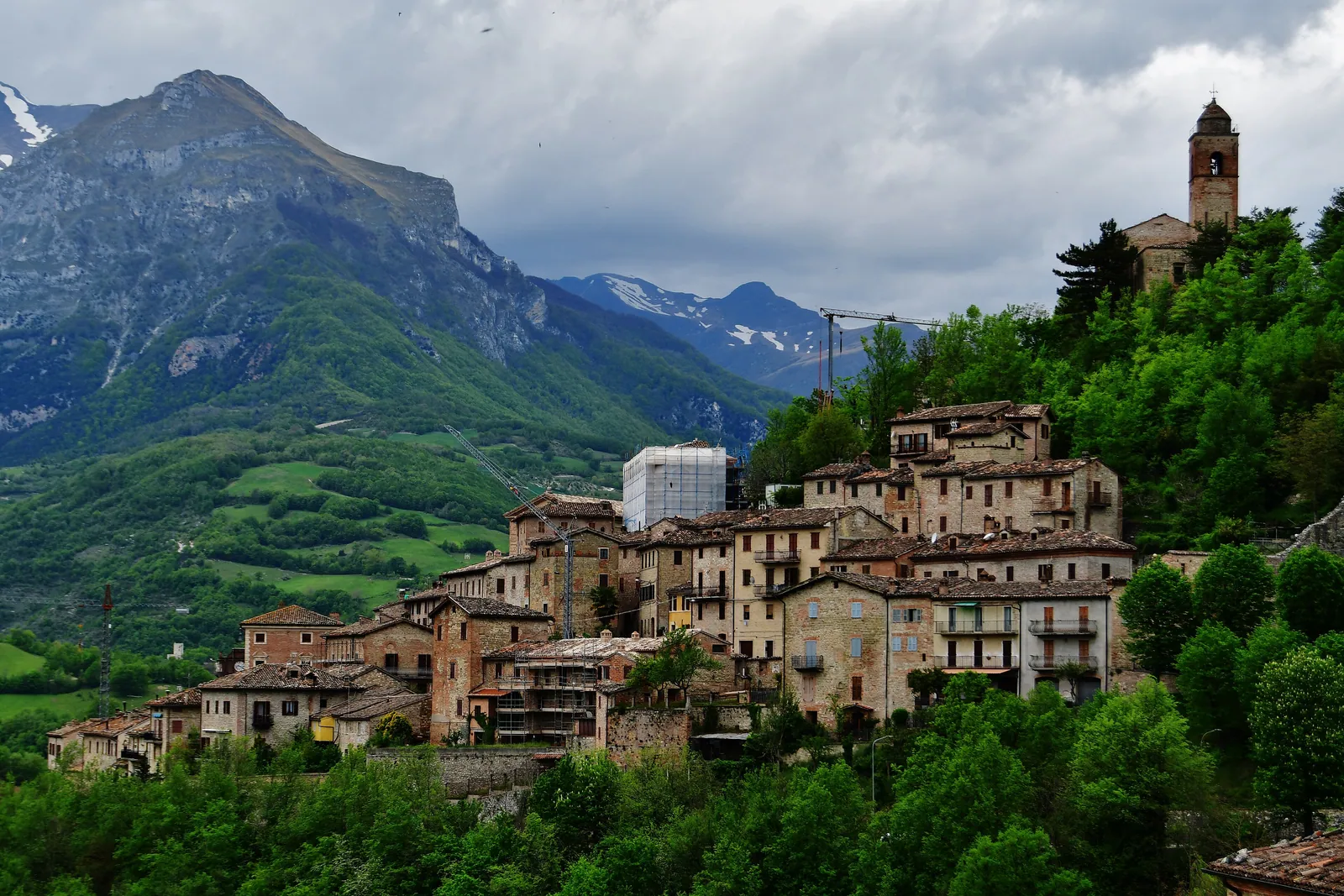
Montefortino, at over 600 m, is a mountain village with a compact historic center, to be explored on foot among stone lanes, stairways, medieval gates and churches. The things to do in Montefortino include, in the village, Palazzo Leopardi, piazza Re Umberto I with its viewpoint and the churches of San Francesco, Sant'Agostino and Madonna delle Grazie. Outside the village, within the municipality, are the Sanctuary of Madonna dell'Ambro and the Gole dell'Infernaccio gorge.
The village is laid out in concentric semicircles, like a single architectural body rising in tiers toward the top of the hill. The lanes are free of traffic. Among medieval arches, flowers at the windows and views opening onto the mountains, the visit is a slow walk. From the viewpoints peaks such as the Vettore, the Sibilla and Monte Priora, also called Pizzo della Regina, can be seen.
The places
20 results
- Historic building or squareFortunato Duranti's House (Montefortino)Historic building or square · Montefortino
 Church of Sant'Agostino (Montefortino)Church · Montefortino
- ChurchChurches of the Historic Center of MontefortinoChurch · Montefortino
- Sanctuary or hermitageHermitage of San Leonardo al Volubrio in MontefortinoSanctuary or hermitage · Montefortino
- Museum or art galleryFattoria La Rocca Small Wool Museum (Montefortino)Museum or art gallery · Montefortino
- Museum or art galleryMuseum of Sacred Art (Montefortino)Museum or art gallery · Montefortino
- Wildlife Museum of the Sibillini Mountains (Montefortino)Guide
- Museum or art galleryFortunato Duranti Civic Art Gallery in MontefortinoMuseum or art gallery · Montefortino
- Ruins or archaeological sitePrato Porfidia in MontefortinoRuins or archaeological site · Montefortino
- ChurchSan Michele Arcangelo in MontefortinoChurch · Montefortino
 Santa Maria delle Grazie in MontefortinoChurch · Montefortino
 Sanctuary of Madonna dell'Ambro (Montefortino)Sanctuary or hermitage · Montefortino
- CapotennaGuide
- WaterfallCascata del Rio in MontefortinoWaterfall · Montefortino
- WaterfallCascata della RotaWaterfall · Montefortino
- PeakCima VallelungaPeak · Montefortino
- LakeLaghetto dell'InfernaccioLake · Montefortino
- LakePescollettaLake · Montefortino
- PeakPizzo AcutoPeak · Montefortino
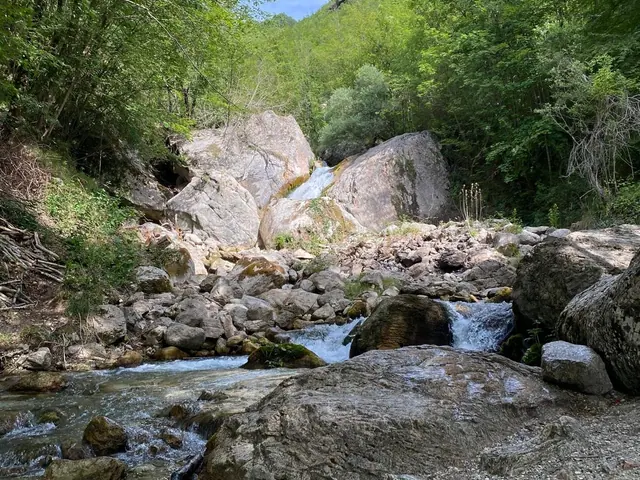 Valle dell'AmbroGuide
No results with these filters.
On the map
Points from the site database. Map © OpenStreetMap contributors · Protomaps.
Things to do in Montefortino: the map
To get oriented, it helps to distinguish three areas: the entrance to the village, the historic center and the places in the municipal territory.
The first building met outside the castle walls is the church of the Madonna delle Grazie, also called Madonna della Fonte. From there the route continues to Porta Santa Lucia, the main entrance to the historic center. The other two medieval gates are San Biagio, also called Portarella, and Porta di Valle, also called di Vetice.
Inside the walls, the main street leads to piazza Re Umberto I. On the square and in the nearby streets are Palazzo Leopardi, Palazzo Spagnoli, Palazzo Amorosi and the churches of the center. The list of churches is on the page churches of the historic center of Montefortino.
Outside the village, but in the municipality of Montefortino, are the Santuario della Madonna dell'Ambro, at the end of a closed valley at the foot of the Sibillini, and the Gole dell'Infernaccio, carved by the Tenna river. A general overview is on the page Montefortino: what to see and do.
Montefortino sights not to miss
The village and its gates. Porta Santa Lucia is medieval in origin and built in mixed masonry. Beside it is a flanking tower with two gun ports topped by arrow slits. Not far away is Porta di Valle, simpler, built of rubble stone and brick and set on a stairway. It takes its name from the fact that the inhabitants of the hamlets in the valley below entered and left through it. Next to the gate, a small panoramic balcony looks over the valley and the Sibillini.
Piazza Re Umberto I. It is the center of the village and works as a natural viewpoint over the Sibillini. Palazzo Spagnoli, imposing and elegant, faces the square. Together with Palazzo Leopardi and Palazzo Amorosi it shows how important Montefortino was in past centuries. Among the historic buildings of the center is also the Casa delle Colonne, known as the Tempietto dell'Orologio, in Neoclassical style.
Palazzo Leopardi and the Pinacoteca civica Fortunato Duranti. Palazzo Leopardi is a 16th-century Renaissance building. It is the seat of the municipal administration and houses the civic art gallery dedicated to the painter Fortunato Duranti, born in Montefortino, and a wildlife museum devoted to the Sibillini National Park. After the 2016 earthquake the palazzo stayed closed for about a decade and in 2025 it reopened on an exceptional basis for the FAI Spring Days (Giornate FAI di Primavera): before planning the visit, check its current status.
Chiesa di San Francesco. It dominates the village and was built in the 16th century, where an old fortified stronghold once stood. Construction dates from the middle of the century.
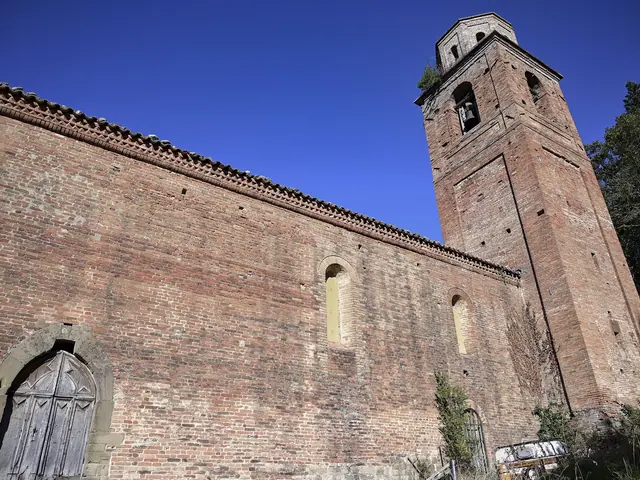
Church of Sant'Agostino. It dates from the 12th century and has an old portal and pointed-arch windows.
Parish church of San Michele Arcangelo. It is a Neoclassical building from 1860.
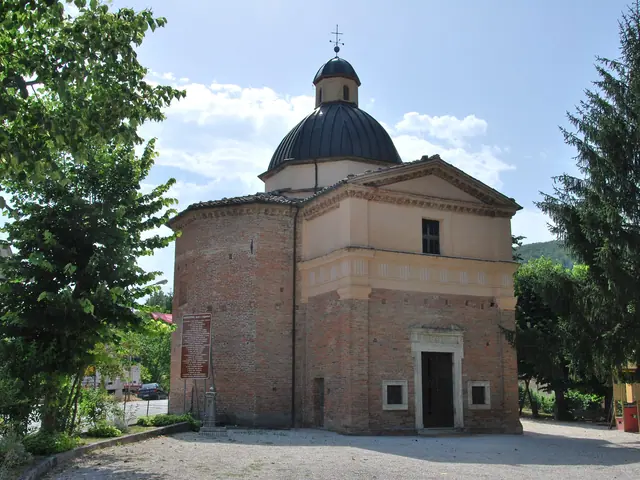
Chiesa della Madonna delle Grazie. It was built in 1647 at the wish of some local families, to house the image of the Virgin considered miraculous. It has a Greek-cross plan and an octagonal copper-covered dome, decorated with Baroque stucco.
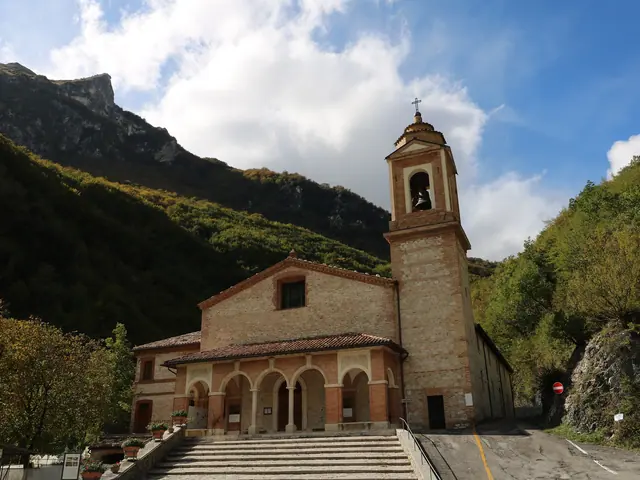
Santuario della Madonna dell'Ambro. It is in the municipal territory of Montefortino, not far from the village, in a narrow valley watered by the Ambro stream. The valley is closed and the sanctuary is surrounded by greenery at the foot of the Sibillini. It is called "the little Lourdes of the Sibillini".
Gole dell'Infernaccio. This natural gorge carved by the Tenna river lies in a landscape that draws many hikers. From the Valleria parking lot, at Rubbiano, trail E9 crosses the gorge and climbs to the Hermitage of San Leonardo al Volubrio, a destination for pilgrimages and hikes; from the hermitage a short path leads to the Cascata Nascosta waterfall. With ordinance no. 32 of July 17, 2026, the Comune di Montefortino reopened the trail as far as the second junction for the hermitage, with a mountaineering helmet required, while the section toward Capotenna remains closed.
Things to do in Montefortino: tips for the visit
The historic center is visited on foot. The streets are narrow and made of stairways, so comfortable shoes are needed. The best way to get to know Montefortino is to walk without any particular hurry: inscriptions, arches, windows and panoramic views are scattered in many small details.
A good route starts at Madonna delle Grazie, outside the walls, enters through Porta Santa Lucia and climbs to piazza Re Umberto I. From there, head down toward Porta di Valle and its panoramic balcony.
The churches and museums of a mountain village do not always keep regular hours. The palazzo that houses the Pinacoteca stayed closed for a long time after the 2016 earthquake. It is therefore best to check in advance which buildings can be visited.
The Gole dell'Infernaccio, the Eremo di San Leonardo and the Cascata Nascosta require a hike, with the care needed in the mountains. During weather alerts, access to the trail is prohibited by municipal ordinance. Before setting out, check the weather and choose clothing and gear accordingly.
To organize the stay, the pages where to stay in Montefortino and Montefortino restaurants gather useful information.