


Snowshoeing in Le Marche: Routes in the Sibillini Mountains
For snowshoeing in Le Marche, the Sibillini Mountains are one of the most striking areas in the region. Options range from beginner routes, such as Pintura di Bolognola, to the panoramic terraces of the Piani di Ragnolo, as far as Pian Perduto, near Castelluccio. From the Piani di Ragnolo, on clear days, the view reaches the Adriatic Sea. Guided outings take place when there is snow, usually between December and March.
Snowshoe hikes in the Sibillini Mountains are generally loops or out-and-back routes, across open plateaus and clearings alternating with wooded stretches. Below are the most frequently mentioned starting points on the Marche side and in some nearby areas, with useful information for choosing.
The trails
5 results
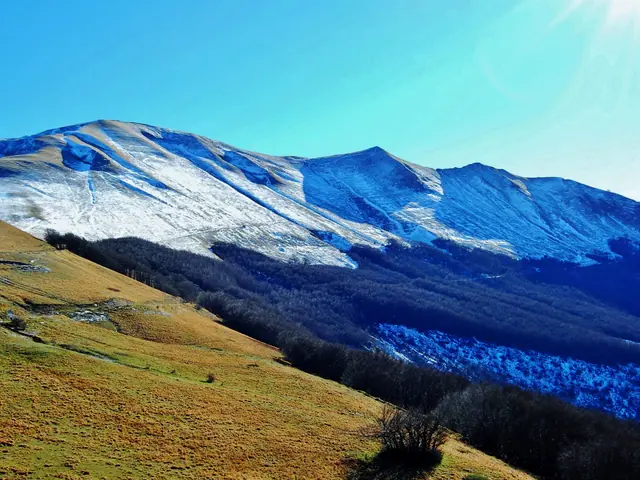 Bolognola ski resortGuide
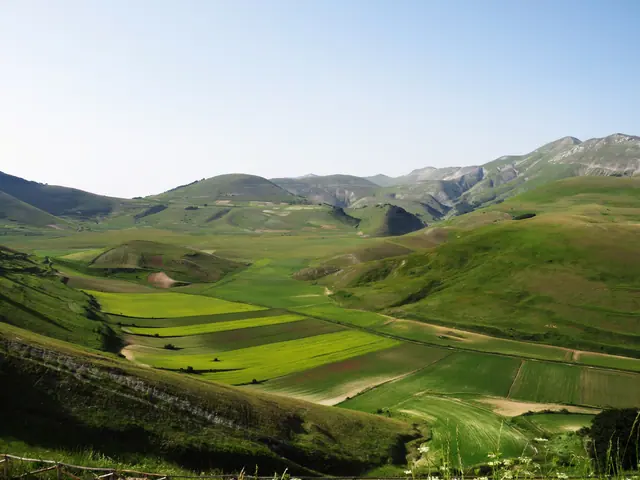 Pian PerdutoGuide
- Mountain passForca di GualdoMountain pass · Castelsantangelo sul Nera
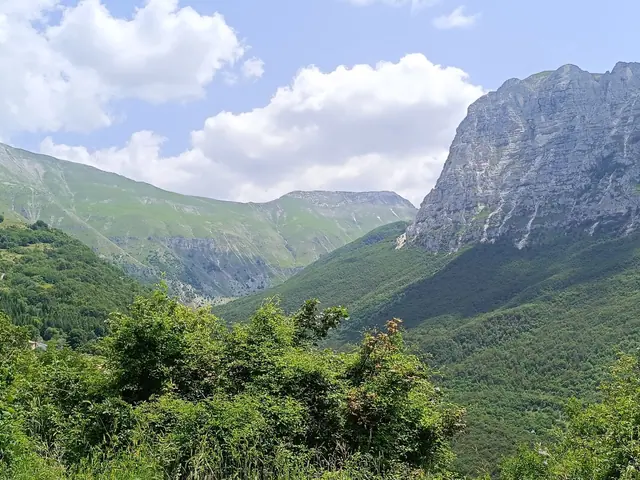 Monte BoveGuide
- Grande Anello dei Sibillini9 stages
No results with these filters.
On the map
Points from the site database. Map © OpenStreetMap contributors · Protomaps.
Snowshoeing in Le Marche: the Sibillini map
The itineraries are spread across several sectors of the Sibillini National Park. The Piani di Ragnolo are in the northern part of the Park. Bolognola, with Pintura, overlooks the northeastern area. Montemonaco, with Altino and the Piano della Gardosa at Foce, is in the central Adriatic-facing area. Further south opens the Castelluccio plateau: Castelluccio di Norcia is in Umbria, but Pian Perduto lies in the Marche municipality of Castelsantangelo sul Nera.
When choosing a starting point, it is worth considering elevation and exposure. The loops on the plateaus are wide and open, while those in the woods offer more shelter from the wind.
Snowshoeing in Le Marche: places not to miss
Piani di Ragnolo. This is the best-known route for snowshoeing in the Marche. It lies at over 1,400 m. The loop alternates wide treeless clearings with short stretches through the woods. One of the starting points is at the Baite di Ragnolo, in the municipality of Fiastra. The itineraries offered for the Piani di Ragnolo are suitable for children. The loop takes 2 to 2 and a half hours of walking, with about 250 m of elevation gain. From the plateau there are views of the snow-covered Sibillini, the Apennines and, on one guided outing, the Marche hills as far as Monte Conero. The area is also a center for cross-country skiing and snow kiting.
Pintura di Bolognola. It is described as a perfect route for beginners. From Pintura the hike to the Rifugio Casale di Vallecaprina mountain hut sets off. The route is out and back and offers wide views as far as the Adriatic Sea.
Pian Perduto and the Piani di Castelluccio. Pian Perduto is near Castelluccio di Norcia and suits all levels. A guided outing there describes wide, non-exposed routes chosen according to snow and weather. It is about 4 km long, with roughly 150 m of elevation gain and a duration of 2 to 2 and a half hours. For a longer loop there is the Val Canatra: 8 km with 300 m of elevation gain. In this case the start is the Pian Perduto parking lot, just before the climb to Castelluccio when coming from Forca di Gualdo.
Frontignano and Monte Bove. The route from Frontignano is 4.5 km long with 150 m of elevation gain and difficulty E. It enters a snowy pine forest, then takes the trail toward Monte Torrone.
Montemonaco: Sentiero dei Mietitori and Piano della Gardosa. The Sentiero dei Mietitori ("Reapers' Trail") starts from Altino, in the municipality of Montemonaco, and reaches the church of Santa Maria in Pantano (by tradition from the late 8th century). The start is in the village, at 1,035 m, and it partly follows the summer trail of the Grande Anello dei Sibillini. Another Montemonaco snowshoe hike takes place on the Piano della Gardosa, at Foce.
For more hiking ideas there are also the easy Sibillini Mountains walks and the loop hikes in the Sibillini.
Snowshoeing in Marche, Italy: tips for your visit
When to go. Snow and suitable conditions are needed. Organized outings are concentrated between December and March. When there is no snow, some guided hikes are replaced by a trek. The route can change depending on the weather and the guide's assessment.
Choosing the itinerary. Not all trails are safe in snow: steep slopes, gullies and exposed slopes can increase the avalanche risk. Loops on the plateaus and in the woods, such as those mentioned above, are the most prudent choice for beginners. Before setting off, it is worth checking the weather and snow conditions.
Guide and equipment. For first-time snowshoers, a professional guide or an organized snowshoe hike is recommended, and snowshoes can be rented. It is better to go in a group, so as to get help in case of sudden difficulties.
Clothing. Snowshoeing requires waterproof hiking shoes (not moon boots), a windbreaker, a fleece, a hat, gloves, waterproof pants, a liter of water, sunglasses and sunscreen. A snack is a good addition.