


Church of Sant'Agostino (Ascoli Piceno)
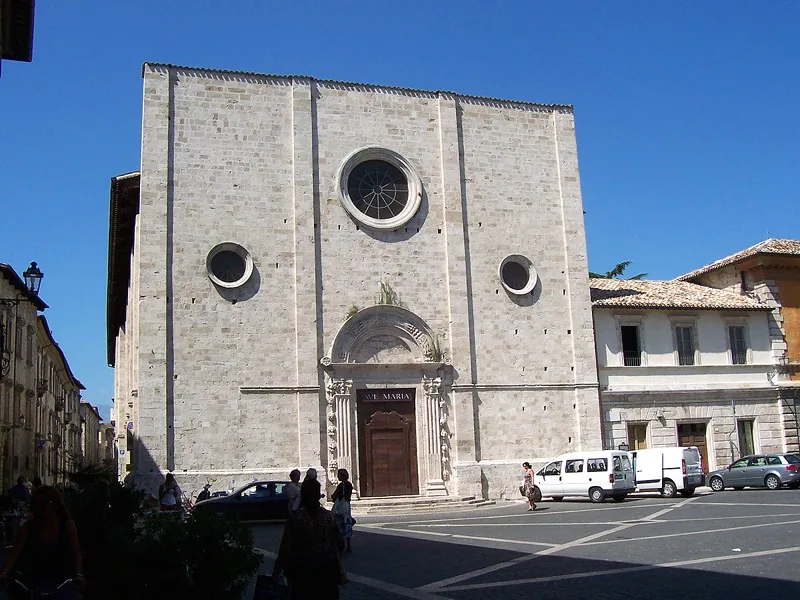
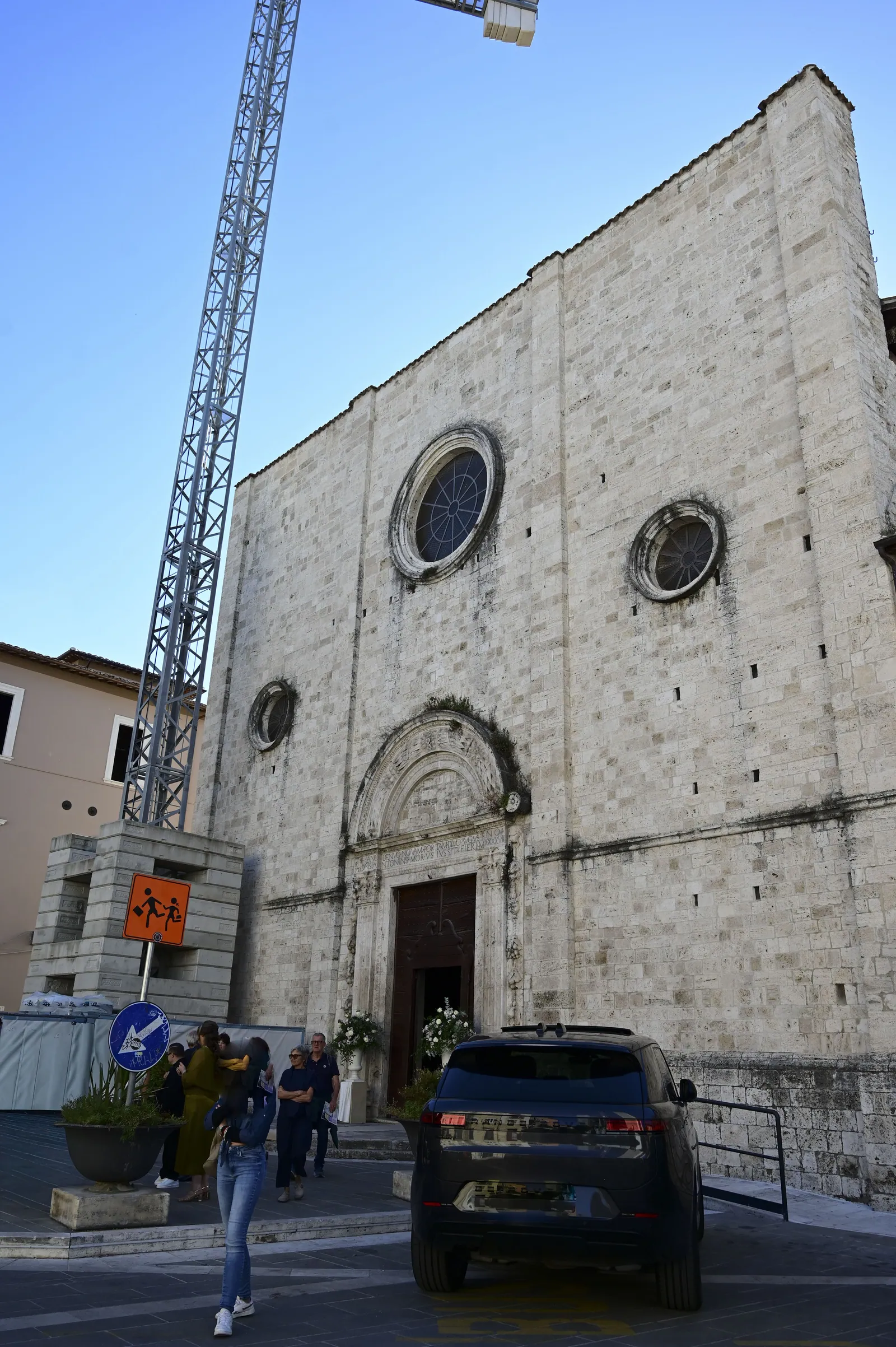
The Church of Sant'Agostino (Chiesa di Sant'Agostino) in Ascoli Piceno stands in the square of the same name, in the historic center, in the San Giacomo quarter. It is a Catholic church built in several phases between the 13th and the 16th century. The facade has three round windows and a portal dated 1547. Inside is the Madonna della Pace (Madonna of Peace), a painting very dear to the people of Ascoli.
Church of Sant'Agostino (Ascoli Piceno)
- Type
- Church
- Address
- Piazza Sant'AgostinoAscoli Piceno (AP)
- numeroverde.turismo@regione.marche.it
Source: site database, © OpenStreetMap contributors (ODbL).
On the map
Points from the site database. Map © OpenStreetMap contributors · Protomaps.
History of the Church of Sant'Agostino
A first place of worship, perhaps an oratory, was built in the first half of the 13th century in Romanesque style. The year 1242 is given as its construction date. The building was made of squared travertine blocks. Originally single-naved, it was enlarged with two side aisles in the 15th century.
In that century the layout was reversed. This is why the church has an unusual east-west axis. In the 16th century the facade and two portals were completed. The interior was enriched with Baroque altars and decoration, partly removed by the "restoration" work of the 20th century.
What to see in the Church of Sant'Agostino
The facade is rectangular and divided into three parts by pilasters and buttresses. The decorated portal is by the Lombard masters Ferrone and Comiso. An inscription on the lintel records that Antonino Moro had the door built in 1547. The south side, along corso Mazzini, has a portal from 1544 with Doric half-columns and a triangular pediment. At the back is the large pentagonal apse, topped by a bell gable.
The interior is austere. The pillars have Corinthian capitals and were reworked by Giuliano Zanobi di San Miniato from 1485. This is an almost unique case in Ascoli, where Lombard craftsmen usually worked. The altars, in marble and stucco, are concentrated in the right aisle. The first, dedicated to Sant'Eustachio, dates from 1720 and was commissioned by Corsican soldiers quartered in the city.
The second altar holds the Madonna della Pace, a tempera on panel traditionally attributed to Francescuccio Ghissi. It depicts the Madonna del Latte (Nursing Madonna). The city's factions swore peace before this image. The altar is by Lazzaro Giosafatti (1730-1731). The frame, from the early 19th century, is by Francesco Tartufoli. The church also has canvases by Vincenzo and Lattanzio Pagani and by Ludovico Trasi.
Visiting the Church of Sant'Agostino
The church has reopened to the public after a period when it could not be visited. Before going, it is worth checking that it is open. Contact details are in the information box on this page.
In July the Madonna della Pace is at the heart of the Quintana celebrations. The blessing of the jousting knights takes place in front of the painting.
Where the Church of Sant'Agostino is
The church is in the historic center of Ascoli Piceno, in piazza Sant'Agostino. It is reached by walking along corso Mazzini from Piazza del Popolo in Ascoli Piceno, heading uphill.
Around the Church of Sant'Agostino
The apse is largely incorporated into the former convent. It can be seen in a room of the Biblioteca comunale "Gabrielli" (municipal library), where it forms the back wall. The library is part of the Polo culturale Sant'Agostino. The nearby Church of San Pietro Martire has a facade with three similar round windows. The portal of Sant'Agostino recalls the one of the Cathedral of Sant'Emidio, known as "della Musa". For other stops in the city, see the page on things to do in Ascoli Piceno.
Frequently asked questions
Who made the portal of the facade?
Why is the Madonna della Pace so important to Ascoli?
What links the church to the Quintana?
Where can the church's apse be seen?
Nearby
What to see nearby
- Osvaldo Licini Gallery of Contemporary ArtMuseum or art galleryunder 100 m
- 100 m
- 100 m
Where to stay
- under 100 m
- 100 m
- 100 m
Where to eat
- LocandaImperfetta, Ascoli PicenoRestaurantunder 100 m
- Angolo Divino in Ascoli PicenoRestaurant100 m
- Pub Nicolò IV, Ascoli PicenoPub and brewery100 m
Straight-line distances.