


Museum of Ceramic Art
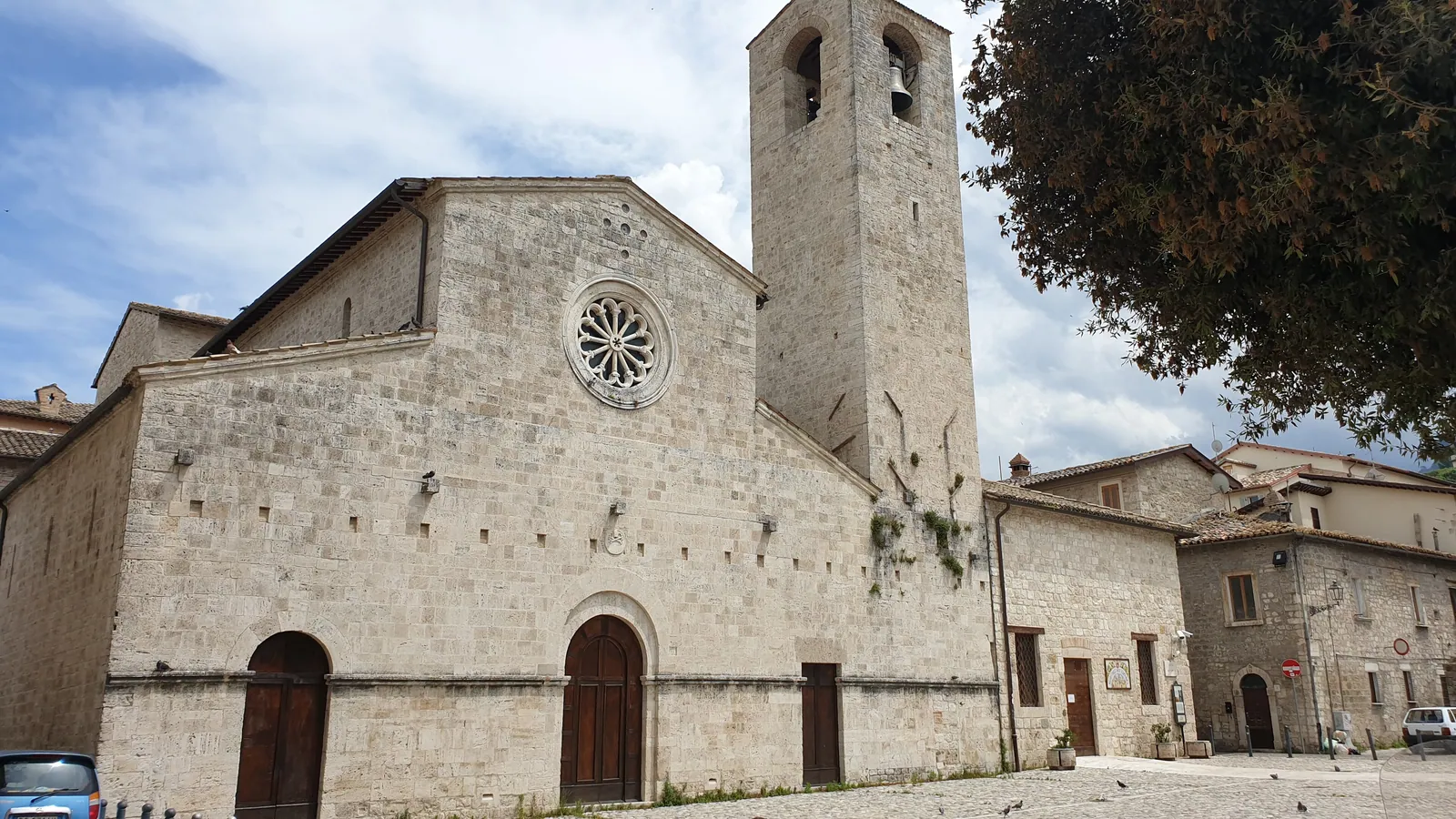
Museum of Ceramic Art
- Type
- Museum or art gallery
- Address
- Piazza San TommasoAscoli Piceno (AP)
- Hours
- From April 1: Saturday, Sunday, public holidays and the days before them 10:00-13:00 and 15:00-19:00; from October 1: Saturday, Sunday, public holidays and the days before them 15:00-18:00; December 24 and 31 10:00-13:00, December 25 closed, January 1 15:00-18:00
- Phone
- 0736240290
- info@ascolimusei.it
- Website
- ascolimusei.it
Source: site database, © OpenStreetMap contributors (ODbL).
The Museum of Ceramic Art (Museo dell'Arte Ceramica) in Ascoli Piceno occupies the cloister of the former convent of the Romanesque church of San Tommaso, in the square of the same name, in the historic center. It was inaugurated on June 1, 2007. Five sections trace the history of Ascoli ceramics, from the archaic majolica basins of the 15th century to the production of the 19th and 20th centuries.
The museum displays the municipal collections together with pieces on loan from the Fondazione della Cassa di Risparmio di Ascoli Piceno and the Matricardi family. It is part of the Musei Civici (civic museums) of Ascoli Piceno. It also has a workshop with a potter's wheel and kilns.
On the map
Points from the site database. Map © OpenStreetMap contributors · Protomaps.
History of the Museum of Ceramic Art
The museum has an ancient home. The church, the cloister and the part now used as a museum were built around 1064, together with the Collegiata dei Canonici Lateranensi of the Order of Saint Augustine, on the initiative of Bishop Bernardo II. The square has an even older history: the church incorporates spolia from the Roman amphitheater of the 1st century BC, which stood in the square in front. The amphitheater is covered on the page about the Roman Amphitheater in Ascoli Piceno.
The idea of a museum devoted to ceramics had long been cherished. The "Terra e Fuoco" project helped make it happen, drawn up by the Civic Art Gallery with financial support from the Ministry of Productive Activities. The restoration of the old monastery of San Tommaso made the spaces available.
Among the temporary exhibitions, in 2009 "Con il fuoco e con la Terra" told the story of Ascoli majolica from the end of the 14th century to the present day, with a large section on ceramists still active in the area.
What to see in the Museum of Ceramic Art
The route follows the evolution of Ascoli ceramics. The first section holds the oldest examples, including small plates similar to those that still decorate the facades of some churches in the city. These plates show the green obtained from copper oxide, called "ramina".
Two sections are of the greatest value. The first is the bequest of Antonio Ceci, a physician and collector from Ascoli, donated to the city in 1920. It includes objects from the workshops of Castelli, Deruta, Faenza, Montelupo Fiorentino, Savona and Genoa. Among the finest pieces are 17th-century plates from Montelupo, with caricature-like figures, and a rare 18th-century plate from the Doccia kilns of the Marquis Carlo Ginori.
The second is the series of tiles painted by the leading Castelli artists Francesco and Carlo Antonio Grue and Berardino Gentili, from the Ascoli convent of Sant'Angelo Magno. They were produced in Castelli, in Abruzzo.
The rooms devoted to the 19th and 20th centuries display vases, plates, urns, coffee pots and cups from the Paci workshop (1808-1856) and the Matricardi and Fama workshops. The workshop with a potter's wheel and kilns is also used for educational activities.
How to visit the Museum of Ceramic Art
The main entrance is on the west side of the complex and opens directly onto Piazza San Tommaso, where the ticket office is. From the ground floor you reach the exhibition rooms and the cloister. The museum covers a rectangular area of about 400 m², so the visit is compact.
Opening follows a seasonal calendar. From April the museum is open on Saturdays, Sundays, public holidays and the days before them, in the morning and afternoon; from October, on the same days, only in the afternoon. Days and hours are in the information box on the page. It is worth checking them before setting out, because the calendar may change.
Where the Museum of Ceramic Art is
The museum is in Ascoli Piceno, in Piazza San Tommaso, in the historic center, beside the Romanesque church of San Tommaso. The church serves as a landmark for finding it. For services in the city, such as the combined ticket office of the Musei Civici, a good starting point is the InfoPoint of the Musei Civici.
Near the Museum of Ceramic Art
The closest neighbor is the Church of San Tommaso in Ascoli Piceno, in Romanesque and Gothic style, whose construction began around 1064. The plain facade is made of travertine blocks and has a pediment with a rose window. To the right rises a square-based bell tower from 1283.
Those who want to continue with Roman history can visit the Anfiteatro romano, whose memory the square preserves. The other Musei Civici sites are the Pinacoteca Civica, Malatesta Fort in Ascoli Piceno, the Galleria d'Arte Contemporanea "O. Licini" and the Ventidio Basso Theater. To plan a day in the city, the page things to do in Ascoli Piceno gathers the other stops.
Frequently asked questions
When did the ceramics museum in Ascoli Piceno open?
What ceramics can you see at the Museum of Ceramic Art?
Who was Antonio Ceci?
Does the museum have a workshop?
Nearby
What to see nearby
- under 100 m
- Roman AmphitheaterRuins or archaeological siteunder 100 m
- Osvaldo Licini Gallery of Contemporary ArtMuseum or art galleryunder 100 m
Where to stay
- under 100 m
- 100 m
- 200 m
Where to eat
- LocandaImperfetta, Ascoli PicenoRestaurantunder 100 m
- Angolo Divino in Ascoli PicenoRestaurant200 m
- Pub Nicolò IV, Ascoli PicenoPub and brewery200 m
Straight-line distances.