


Church of Sant'Angelo Magno (Ascoli Piceno)
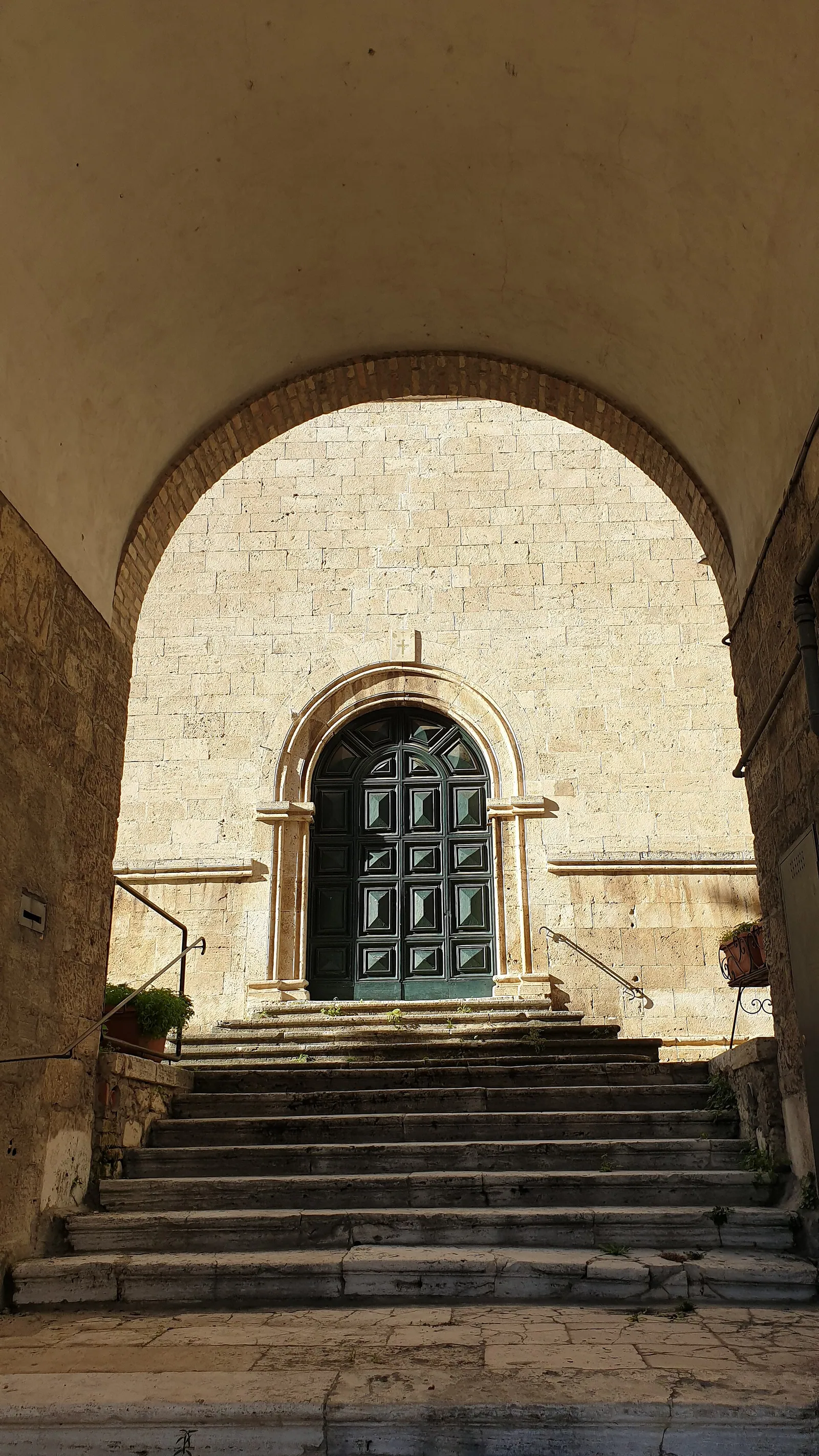
The Church of Sant'Angelo Magno (Chiesa di Sant'Angelo Magno) in Ascoli Piceno stands in the historic center, in the old Piazzarola district. The church and monastery date from the 9th century and are built entirely of travertine blocks. They began as a Lombard foundation dedicated to the Archangel Michael. The Romanesque facade bears the date 1292. The three-nave interior preserves the Baroque changes made by the Olivetan monks. After damage from the 2016 earthquake, the church is undergoing restoration work and currently cannot be visited.
Church of Sant'Angelo Magno (Ascoli Piceno)
- Type
- Church
- Address
- Via Sant'AngeloAscoli Piceno (AP)
Source: site database, © OpenStreetMap contributors (ODbL).
On the map
Points from the site database. Map © OpenStreetMap contributors · Protomaps.
History of the Church of Sant'Angelo Magno
The church began as a Lombard foundation, dedicated to the Archangel Michael and linked to a monastery. It was intended to house ladies of the Lombard aristocracy. The present facade dates from 1292 and its only ornament is the rose window with small Gothic columns.
The Olivetan monks, who arrived in the 15th century, transformed the church several times. In the mid-1650s Abbot Emidio Ciucci began a Baroque modernization and commissioned the carved and gilded wooden altars. In the early decades of the 17th century the Olivetans, who had succeeded the Benedictine nuns, had also built the cloister in its present form.
What to see in the Church of Sant'Angelo Magno
Outside, the striking features are the travertine facade, the portal approached by a flight of steps and the bell tower.
The interior has three naves. Among the oldest elements are two granite columns with Corinthian marble bases and capitals. The walls are decorated by Tommaso Nardini and Pietro Michelessi. On the 17th-century altars are canvases by Carlo Maratti, Giuseppe Ghezzi and Giacinto Brandi. A Madonna and Child with Santa Francesca Romana was delivered in 1656. In the same year Abbot Ciucci also bought a San Giovanni Battista by Gian Domenico Cerrini.
In the middle of the presbytery rises the baldachin made by Emidio Paci in 1830. It is topped by a dome resting on four plaster columns with terracotta capitals and bases. In the roof space above the presbytery are eight figures of Prophets, among the oldest examples of medieval painting in Ascoli.
The cloister has frescoes: one showing the birth of San Benedetto, attributed to Sebastiano Ghezzi, and three lunettes by Andrea Lilli, the painter's last work and the only one in the city.
Visiting the Church of Sant'Angelo Magno
The church was closed after damage from the 2016 earthquake. Repair and restoration work was handed over to the contractors in May 2025 and aims to repair the damage and improve the structure's earthquake resistance. In March 2026 work on the north wing of the complex was at an advanced stage. University classrooms and laboratories are planned there, along with the return of the historic seat of the Piazzarola sestiere (city district).
Before setting off, it is worth checking the progress of the work and access. The visit involves an uphill walk.
Where the Church of Sant'Angelo Magno is
The church is in the historic center of Ascoli Piceno, in the Piazzarola district. The monastery and church occupy the terrace above that of San Domenico, in a raised position compared with the surrounding houses. It is reached on foot along via Pretoriana, uphill.
Around the Church of Sant'Angelo Magno
Nearby is the Auditorium Mons. Silvano Montevecchi. To plan a wider visit of the city, the list of places to see is on the page about things to do in Ascoli Piceno.
Frequently asked questions
Is the Church of Sant'Angelo Magno open to the public?
Who founded the Church of Sant'Angelo Magno and who is it dedicated to?
Why does the facade bear the date 1292?
What works of art does the church hold?
Nearby
What to see nearby
- Auditorium Mons. Silvano Montevecchi, Ascoli PicenoTheater or auditoriumunder 100 m
- Annunziata CavesRuins or archaeological siteunder 100 m
- 200 m
Where to stay
- under 100 m
- under 100 m
- under 100 m
Where to eat
- Latteria Marini, Ascoli PicenoBar and café200 m
- Campobase pub in Ascoli PicenoPub and brewery300 m
- Qui Si Gode, Ascoli PicenoIce cream shop300 m
Straight-line distances.