


Church of Santa Maria della Carità (Ascoli Piceno)
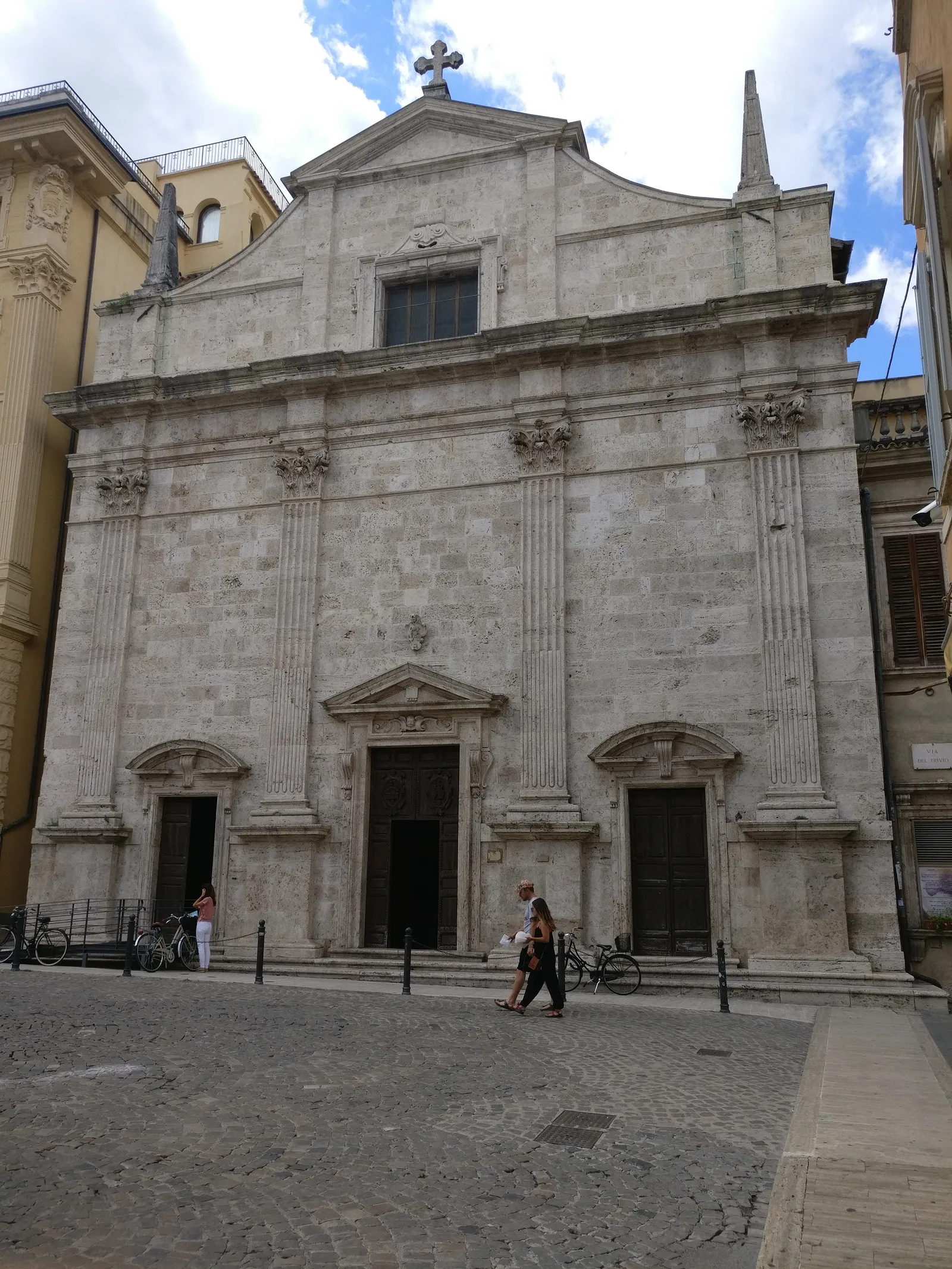
The Church of Santa Maria della Carità (Chiesa di Santa Maria della Carità), on piazza Roma in Ascoli Piceno, is known locally as the chiesa della Scopa (church of the broom). The nickname comes from the Confraternita dei Disciplinati: during processions its members inflicted corporal punishment on themselves with broom-shaped whips. The building is a protected cultural heritage site. The facade was designed by Cola dell'Amatrice, while the Baroque interior has a single nave with ten altars rich in stucco and paintings.
Church of Santa Maria della Carità (Ascoli Piceno)
- Type
- Church
- Address
- Via del TrivioAscoli Piceno (AP)
- Phone
- 3887773391
Source: site database, © OpenStreetMap contributors (ODbL).
On the map
Points from the site database. Map © OpenStreetMap contributors · Protomaps.
History of the Church of Santa Maria della Carità
The Confraternita dei Disciplinati is recorded from the 14th century, and the first place of worship was built in that period, with an oratory attached to the right of the church. The confraternity's main task was to assist people sentenced to death in their last hours. Processions to the scaffold, in the area of Porta Tufilla, set out from here. A detached fresco of the Madonna della Misericordia (Madonna of Mercy) from the mid-15th century, now in the Pinacoteca civica (civic art gallery), recalls this, with carved names of condemned people.
Rebuilding began in 1532 with the facade by Cola dell'Amatrice, who worked up to the level of the entablature. Work resumed between 1544 and 1554. The upper part was added later, perhaps when the confraternity joined the Pietà dei Carcerati of Rome in 1583, the year (MDLXXXIII) shown on the facade. The apse area, the scarsella, was designed by Antonio Giosafatti and built between 1603 and 1614. The bell tower with its brick onion spire dates from the late 17th century.
What to see in the Church of Santa Maria della Carità
The facade has four Corinthian pilasters with olive-leaf capitals and a portal with broken pediments and 16th-century wooden doors. The interior has a single nave, with a sail vault and five chapels on each side. On the upper walls and the inner facade runs a fresco cycle of biblical episodes by Girolamo Buratti, probably painted after 1630. The scenes concern Joshua and the Stories of Moses.
The scarsella serves as the mausoleum of the Miliani family, with two large tombs on the side walls. Among the chapels, that of the Virgin, made shortly before 1590, is the oldest. The chapel of San Pietro is the only one with an altar in polychrome marble. The first chapel on the left holds a copy of Guido Reni's Annunciation, because the original has been in the Ascoli art gallery since 1861.
Visiting the Church of Santa Maria della Carità
The church is a place of prayer known for perpetual Eucharistic adoration, so visitors should enter quietly. Opening hours may vary depending on services and events, so it is wise to check before going.
Where the Church of Santa Maria della Carità is
The church faces the small piazza Roma, in the historic center of Ascoli Piceno. It is a short walk from the very central Piazza del Popolo in Ascoli Piceno.
Around the Church of Santa Maria della Carità
Being so close to Piazza del Popolo makes it easy to combine the visit with the rest of the center. Guido Reni's Annunciation and the fresco of the Madonna della Misericordia can be seen in the Pinacoteca civica. Other sights in the city are on the page about things to do in Ascoli Piceno.
Frequently asked questions
Why is the Church of Santa Maria della Carità called the chiesa della Scopa?
Where is the Guido Reni Annunciation from the chiesa della Scopa?
When was the Church of Santa Maria della Carità built?
How many chapels does the chiesa della Scopa have?
Nearby
What to see nearby
- Palace of the Captains of the PeopleCastle or fortressunder 100 m
- 100 m
- 100 m
Where to stay
- Re house in Ascoli PicenoB&B or guesthouseunder 100 m
- L'Attichetto in Ascoli PicenoTourist accommodationunder 100 m
- Casa Ascenzi, Ascoli PicenoVacation rentalunder 100 m
Where to eat
- Campobase pub in Ascoli PicenoPub and breweryunder 100 m
- Pizzeria Stop 'n' Go, Ascoli PicenoFast food and street foodunder 100 m
- Bottega Panichi 1943 in Ascoli PicenoFast food and street foodunder 100 m
Straight-line distances.