


Lazzaro Morelli Aedicule
Lazzaro Morelli Aedicule
- Type
- Wayside shrine
- Municipality
- Ascoli Piceno (AP)
Source: site database, © OpenStreetMap contributors (ODbL).
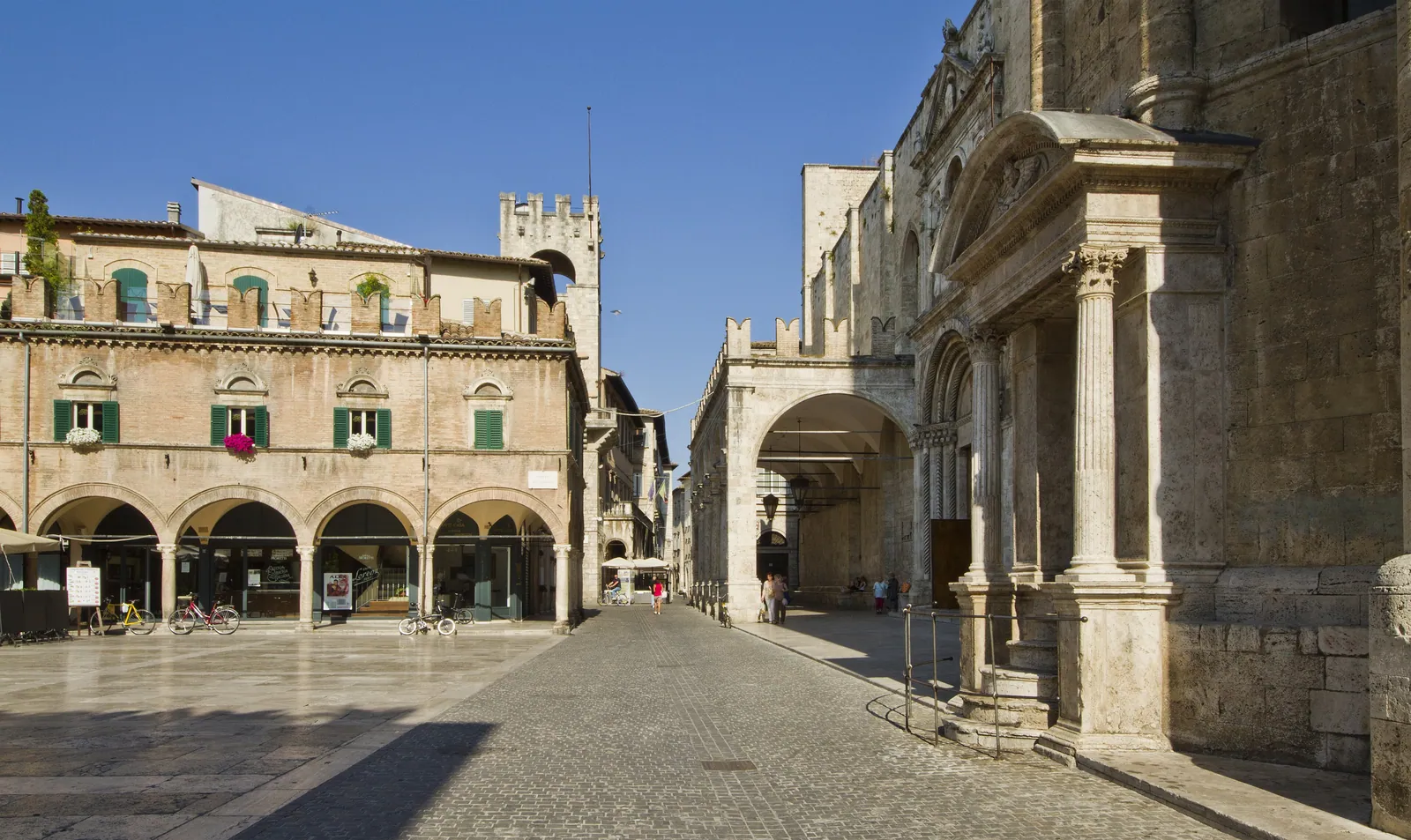
The Lazzaro Morelli Aedicule (Edicola di Lazzaro Morelli), in Ascoli Piceno, is a small classical-style shrine in travertine. It stands on Piazza del Popolo in Ascoli Piceno, set against an apse on the outer wall of the Chiesa di San Francesco. It was built in 1639 and dedicated to the Madonna di Reggio. The name recalls the sculptor to whom tradition attributed it, but recent studies assign it to Silvio Giosafatti.
On the map
Points from the site database. Map © OpenStreetMap contributors · Protomaps.
History of the Lazzaro Morelli Aedicule
The shrine was erected in 1639 at the wish of the governor, Monsignor Gerolamo dei conti Codebò of Modena. It was to replace an older shrine, worn by time and weather, in a place very dear to popular devotion.
By tradition the work is credited to Lazzaro Morelli, who in Rome would become one of Bernini's chief assistants. A recent reassessment has corrected its authorship. Morelli was born in San Severino Marche in 1619 and was a minor at the time of the commission. He worked under his uncle, the master stonemason Silvio Giosafatti, to whom the shrine is now attributed. Its style indeed recalls his altar dossals.
The spot is also linked to a ritual: those condemned to death were allowed to stop in front of the image of the Madonna for their last prayers. They were then led outside the town gate, to Campo Parignano, for execution.
What to see at the Lazzaro Morelli Aedicule
The shrine rests on a high base with semicircular steps. On either side rise two small fluted columns with Corinthian capitals, on pedestals bearing inscriptions. Between the columns and the rear pilasters opens an arched niche, which once held the painted image of the Madonna di Reggio.
Today the niche contains a 19th-century terracotta relief panel by the artist Paci, protected by a small wrought-iron gate. Above, the entablature has coffers with rosettes on its underside. The segmental arched pediment has a tympanum decorated with a festoon framing a cherub's face.
How to visit the Lazzaro Morelli Aedicule
The shrine is on the outer side of the Chiesa di San Francesco, facing Piazza del Popolo, and can be viewed directly from the square. It is worth stopping to look at the carved details, such as the capitals, inscriptions and cherub, and at the panel behind the small gate.
Where the Lazzaro Morelli Aedicule is
The shrine is in Ascoli Piceno, on the north side of Piazza del Popolo, closed off by the Gothic flank of the Chiesa di San Francesco. The square is rectangular and opens at the junction of Corso Giuseppe Mazzini and Via del Trivio.
Near the Lazzaro Morelli Aedicule
Piazza del Popolo itself has much to see. On the west side is the facade of the Palace of the Captains of the People, and the rest of the perimeter is framed by a loggia with 59 arches. The paving of travertine slabs takes on a mirror effect when it rains. The Quintana also parades through the square, a historical reenactment with flag-wavers, ladies, archers and musicians, before the start of the tournament. More sights in town are on the page about things to do in Ascoli Piceno.
Frequently asked questions
Who actually made the shrine on Piazza del Popolo?
What is inside the niche of the shrine today?
Why is the shrine linked to people condemned to death?
Nearby
What to see nearby
- Great Cloister of San Francesco (Ascoli Piceno)Monastery or abbeyunder 100 m
- Palace of the Captains of the PeopleCastle or fortressunder 100 m
- Ventidio Basso Theater (Ascoli Piceno)Theater or auditorium100 m
Where to stay
- under 100 m
- under 100 m
- 100 m
Where to eat
- Caffè Sestili in Ascoli PicenoBar and caféunder 100 m
- Gelateria Arcobaleno, Ascoli PicenoIce cream shopunder 100 m
- Andrè gelato shop in Ascoli PicenoIce cream shopunder 100 m
Straight-line distances.